Condo Fees

Learn what condo fees are in Canadian real estate, how they're calculated, what they cover, and how they affect the cost of owning a condominium.

Condo Fees


What are Condo Fees?

Condo fees, also known as maintenance fees, are monthly payments made by condominium owners to their condominium corporation to cover the upkeep and operation of the building and shared amenities.

Why Condo Fees Matter in Real Estate

In Canadian real estate, condo fees are a significant and ongoing cost associated with owning a condominium. These fees fund the maintenance of common areas such as lobbies, hallways, elevators, fitness centres, and parking garages, as well as services like snow removal, landscaping, and security.

Condo fees also contribute to the building’s reserve fund—a savings account set aside for major future repairs like roof replacements or structural upgrades. The size of the fee depends on the building’s size, age, amenities, and location. Units with larger square footage or premium locations (e.g., corner units or penthouses) often pay higher fees.

Buyers should factor condo fees into their monthly housing budget, as they directly impact affordability and mortgage qualification. A well-managed condo corporation will provide a clear financial breakdown and a healthy reserve fund. Prospective buyers are advised to review the condominium’s status certificate to understand financial health, fee history, and any pending increases.

Understanding condo fees helps buyers compare buildings, assess long-term affordability, and anticipate shared ownership responsibilities.

Example of Condo Fees in Action

A condo owner in Vancouver pays $450/month in condo fees, which cover heating, building insurance, maintenance, and contributions to the reserve fund.

Key Takeaways

  • Monthly payments that cover shared building expenses.
  • Vary based on unit size, amenities, and building condition.
  • Include contributions to a long-term reserve fund.
  • Impact affordability and should be reviewed before purchase.
  • Documented in the condominium’s status certificate.

Related Terms

  • Reserve Fund
  • Condominium Corporation
  • Status Certificate
  • Property Management
  • HOA Fees

Additional Terms

Public Realm Improvements

Public realm improvements are enhancements to public spaces such as sidewalks, parks, plazas, and streetscapes, often funded or contributed by. more

Mortgagee in Possession

A mortgagee in possession is a lender who takes control of a property after borrower default, but before foreclosure or power of sale. The lender. more

Lease Surrender Agreement

A lease surrender agreement is a negotiated contract between a landlord and tenant that ends a lease before its scheduled expiration. Terms may. more

Green Infrastructure

Green infrastructure refers to natural or engineered systems that manage stormwater, reduce heat, and improve sustainability in developments.. more

Escrow Holdback

An escrow holdback is a portion of funds withheld at closing and held in escrow until specific conditions are met, such as completion of repairs,. more

Underused Housing Tax

The Underused Housing Tax (UHT) is a federal annual 1% tax on the value of vacant or underused residential property owned by non-resident,. more

More For You

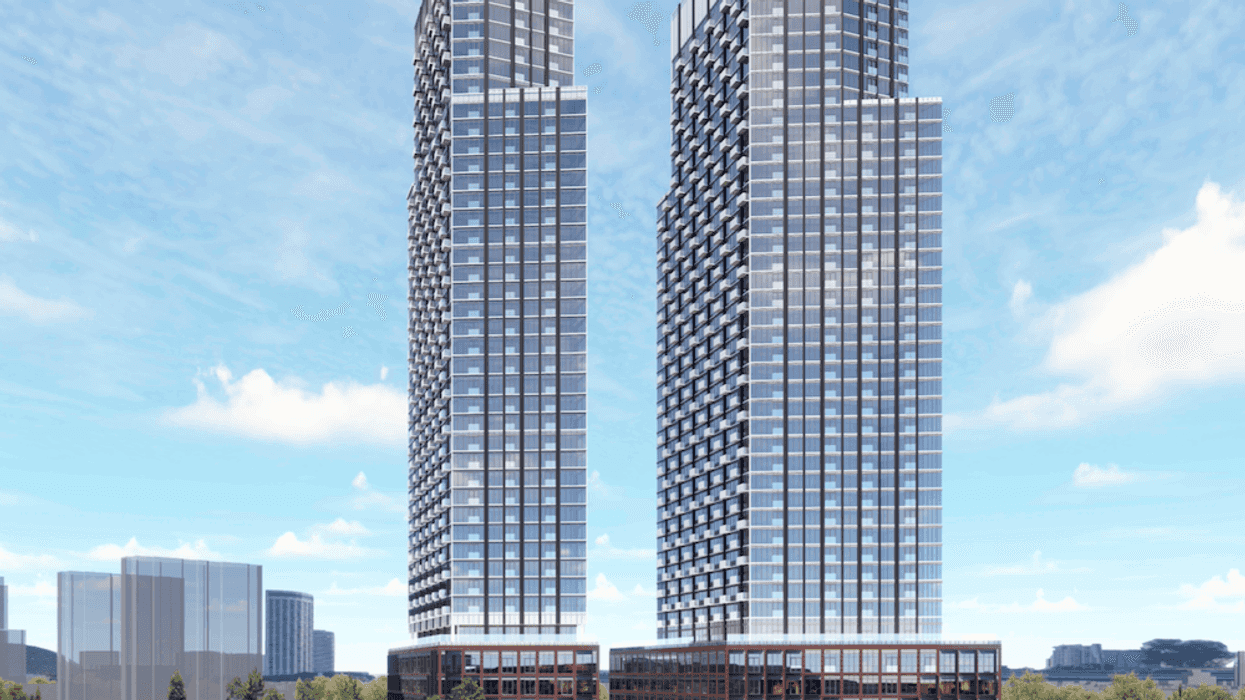
Altree Adds Second 43-Storey Tower To Weston Village Proposal

Rendering of 1705 Weston Road in Toronto/Graziani + Corazza Architects

Toronto-based Altree Developments is upping the ante, once again, on its plans to bring new housing, height, and density to Toronto’s Weston Village. The firm submitted a proposal to the City in mid-April for a 43-storey “east” tower at 1693-1709 Weston Road and 6-10 Victoria Avenue East, which would mirror a 43-storey “west” tower, approved for the site in July 2025.

“Since the 2025 Approval, the owners have acquired the properties at 6 and 8 Victoria Avenue East so that the assembly now includes all lands between Weston Road and the rail corridor, on the north side of Victoria Avenue East, extending north to the Metrolinx property and parking lot,” says the planning letter that went to the City on behalf of Altree last month.

Keep ReadingShow less

There are Muskoka cottages, and then there are Muskoka cottages.

The cedar Panabode at 1041 Crockford Lane S. in Bracebridge is firmly the latter — a classic of the region, sitting at the end of a quiet road on over an acre of private waterfront, with 130+ feet of Muskoka River shoreline.

Keep ReadingShow less
Canadian Office Vacancy Expected To Hit Pre-Pandemic Levels By 2029
Shutterstock

Six years later, office markets across the country (and beyond) are still feeling the impacts of the COVID-19 pandemic, which changed the world forever by making remote work mainstream. But things are on the upswing.

In Q1 2020, at the onset of the pandemic, the national office vacancy rate was just under 8% according to commercial real estate services firm Colliers. Since then, it has been steadily increasing every quarter until about midway through 2025, when it peaked at 14.9%.

Keep ReadingShow less
Pender Island Home Blurs The Line Between Indoors And Out

realtor.ca

Five acres of Pender Island for $1.2 million — with a fig orchard, a private pond, and a renovated West Coast–style home already on it.

That's the pitch at 5582 Hooson Rd, a property tucked into the Hope Bay area with south and west exposure, and enough open space to make you forget the rest of the world exists.

Keep ReadingShow less
LISTED: Pender Island Home Blurs The Line Between Indoors And Out
Cressey Advances Burquitlam Condo Tower And Rental Build After 2024, 2025 Fires

The proposal for 727 North Road in Coquitlam. (Chris Dikeakos Architects, Cressey Development)

On Monday, Coquitlam City Council granted approval to a high-rise project in the Burquitlam neighbourhood by Cressey Development Group, advancing a project that has been in the works for at least three years and was impacted by a fire.

The site of the project is 727 North Road, a 0.94-acre site between Como Lake Avenue and Clarke Road on the eastern side of the the City of Burnaby boundary. The site is immediately north of the two-tower Smith & Farrow project by Boffo, and about a block away from the Millennium Line SkyTrain’s Burquitlam Station, making it a Tier 1 transit-oriented area (TOA) under provincial legislation.

Keep ReadingShow less

Stafford and Deveraux Group of Companies have announced a strategic development partnership — and their first joint project is already underway.

The pair announced Thursday that they're co-developing a 12-storey, 159-unit purpose-built rental building at 914 Bathurst Street in The Annex.

Keep ReadingShow less
MUST READ: Stafford And Deveraux Group To Bring 159 Rentals To The Annex
StreetSide Proposing 35-Storey Condo Tower, 6-Storey Rental In Burquitlam

The 400-unit project is set for 602, 606, 610 Tyndall Street and 605, 611, 615 Claremont Street in Coquitlam and consists of 339 strata units and 61 rental units.

On Monday, Coquitlam City Council advanced a new rezoning application by StreetSide Developments, a subsidiary of Qualico, for a new high-rise tower in the Burquitlam neighbourhood of Coquitlam.

The site of the project is 602, 606, 610 Tyndall Street and 605, 611, 615 Claremont Street: A 1.1-acre land assembly consisting of three single-family lots on Claremont Street and three single-family lots on Tyndall Street, on the northern side of Como Lake Avenue near the intersection with Clarke Road.

Keep ReadingShow less
Bank Of Canada Holds Rate At 2.25% As Housing Activity Stays Muted
Bank of Canada

The Bank of Canada held its overnight rate at 2.25% on April 29, keeping borrowing costs steady as the country navigates a turbulent global backdrop shaped by the conflict in the Middle East and ongoing US trade policy uncertainty.

For Canadian real estate, the decision offers little relief in the near term. The Bank's April outlook paints a cautious picture for housing: activity declined in the fourth quarter of 2025 and remains constrained by slow population growth, economic uncertainty, and affordability challenges that have yet to meaningfully ease. GDP growth is projected at a modest 1.2% for 2026, rising gradually to 1.6% in 2027 and 1.7% in 2028 — a trajectory that suggests any meaningful recovery in housing demand is still some distance away.

Keep ReadingShow less