Foreign Buyer Ban
Explore Canada’s Foreign Buyer Ban, who it affects, what exceptions exist, and how it shapes the real estate market for non-resident purchasers.

May 22, 2025
What is the Foreign Buyer Ban?
The Foreign Buyer Ban refers to a Canadian federal policy that prohibits certain non-Canadians from purchasing residential real estate in Canada for a specified period.
Why the Foreign Buyer Ban Matters in Real Estate
Officially known as the Prohibition on the Purchase of Residential Property by Non-Canadians Act, this ban came into effect on January 1, 2023. It aims to curb housing speculation and improve affordability by reducing foreign demand in overheated markets.
Under the ban, foreign individuals and commercial entities are generally prohibited from buying residential property in Canada for two years. The law applies primarily to urban areas and covers properties like detached homes, condos, and townhouses. Certain exceptions exist, including:
- Permanent residents and refugees
- International students meeting specific criteria
- Temporary foreign workers
- Purchases of recreational properties in non-urban areas
Violations may result in fines up to $10,000 and the forced sale of the property. Real estate professionals must verify a buyer’s eligibility before facilitating a transaction.
Understanding the Foreign Buyer Ban is essential for international clients, real estate agents, and investors evaluating Canadian housing markets.
Example of the the Foreign Buyer Ban in Action
A non-resident foreign investor attempts to buy a condo in Vancouver in 2023. The sale is blocked under the Foreign Buyer Ban, as the buyer does not meet the exemption criteria.
Key Takeaways
- Restricts most non-Canadians from purchasing residential property.
- Enacted to address affordability and reduce speculation.
- Includes defined exemptions for specific groups.
- Applies primarily to urban residential properties.
- In effect for two years starting January 1, 2023.
Related Terms
- Non-Resident Buyer
- Property Transfer Tax
- Speculation and Vacancy Tax
- Investment Property
- Permanent Resident
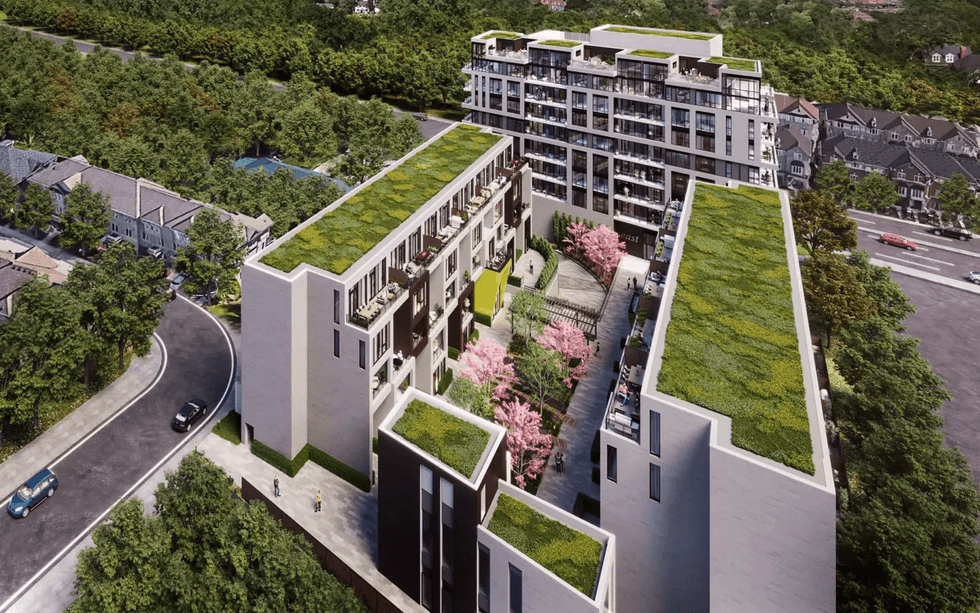 A rendering of the EverHome project. (The Sher Corporation)




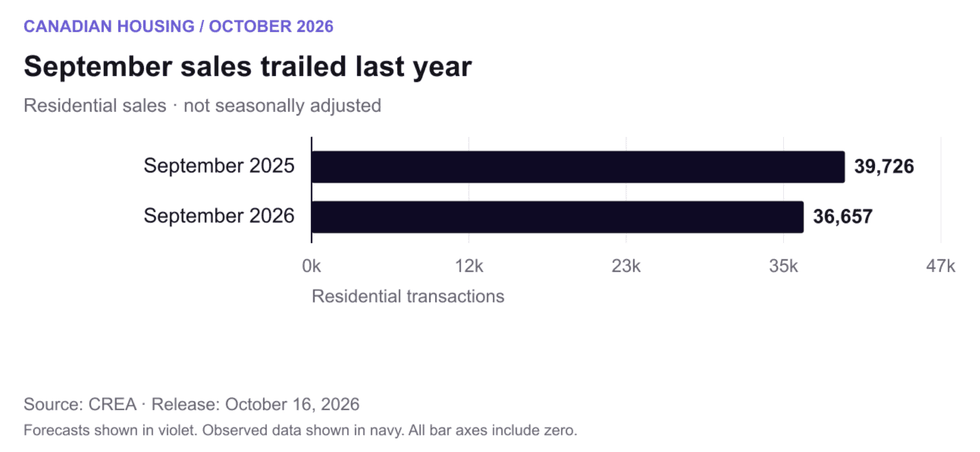 September residential sales, not seasonally adjusted; the annual comparison uses CREA’s revised figures. Chart:
 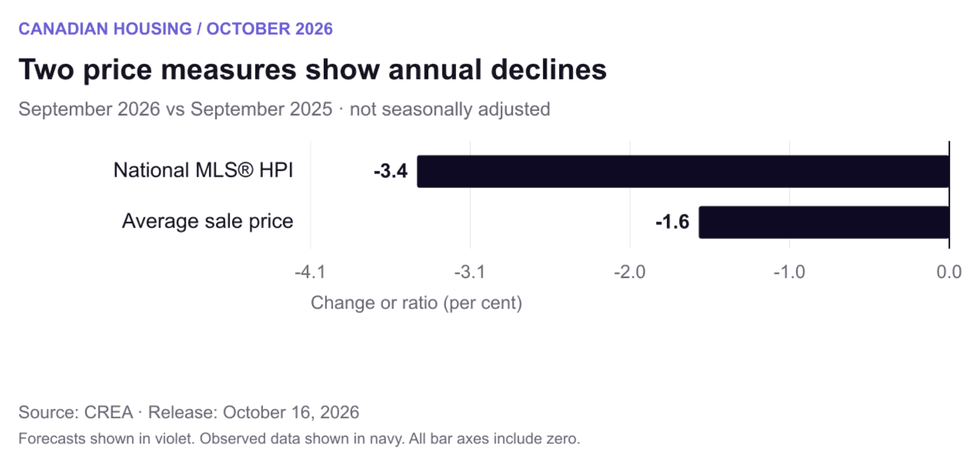 Annual changes in the unadjusted national MLS® HPI and average sale price. The average is affected by the mix of transactions. Chart:
 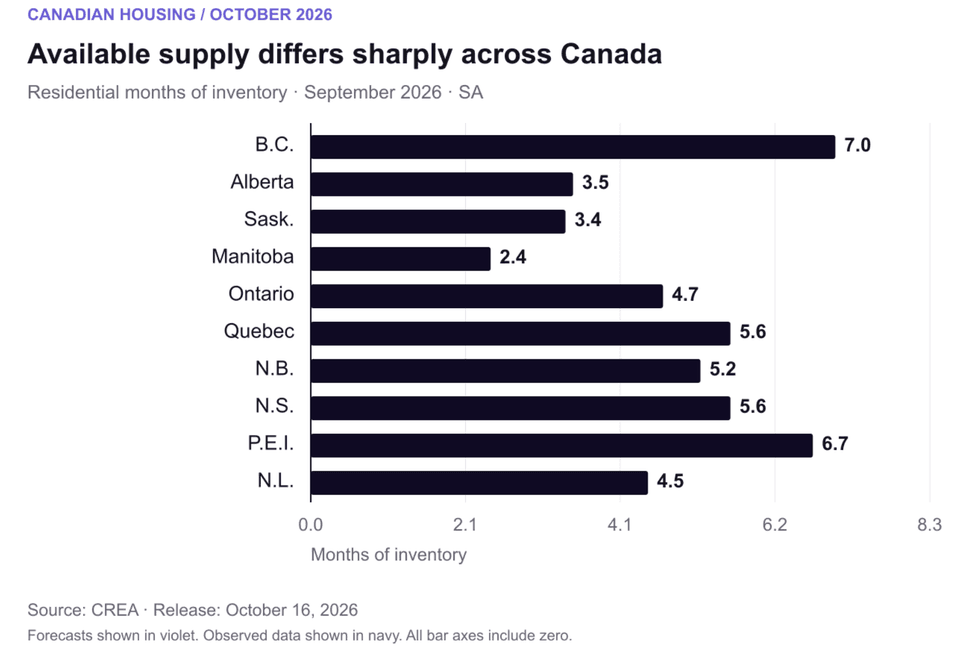 Seasonally adjusted residential months of inventory by province. Local property types can differ substantially. Chart:
 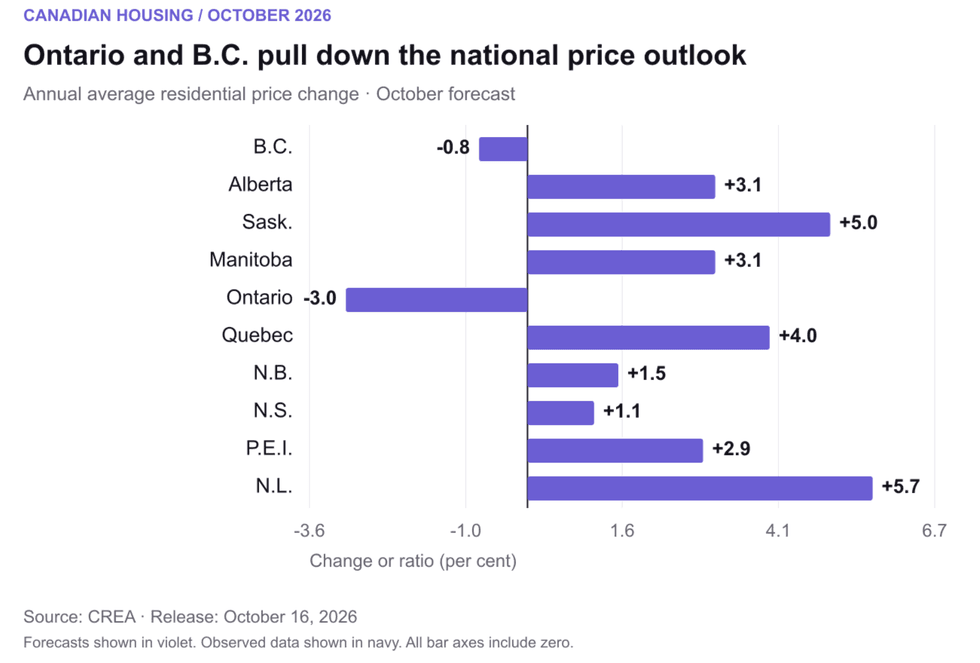 Ontario and B.C. are the two provinces with forecast annual average-price declines in 2026. Chart:
 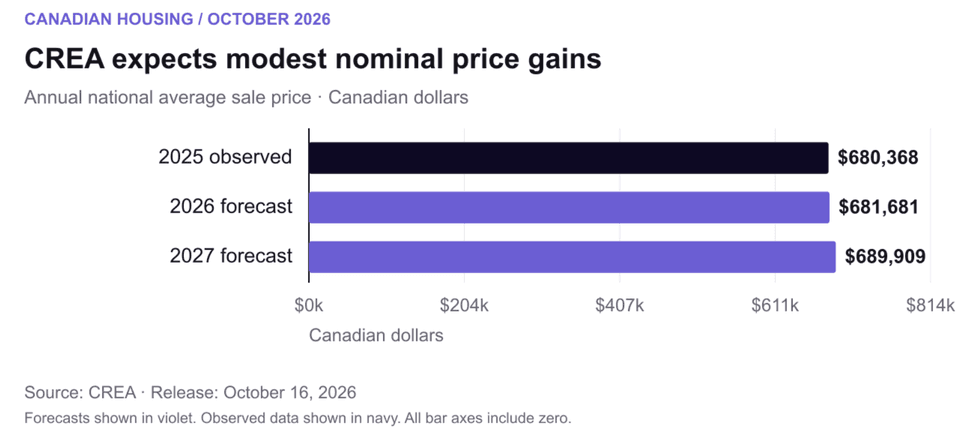 Annual average transaction prices in Canadian dollars. Forecast values are not December price targets. Chart:
 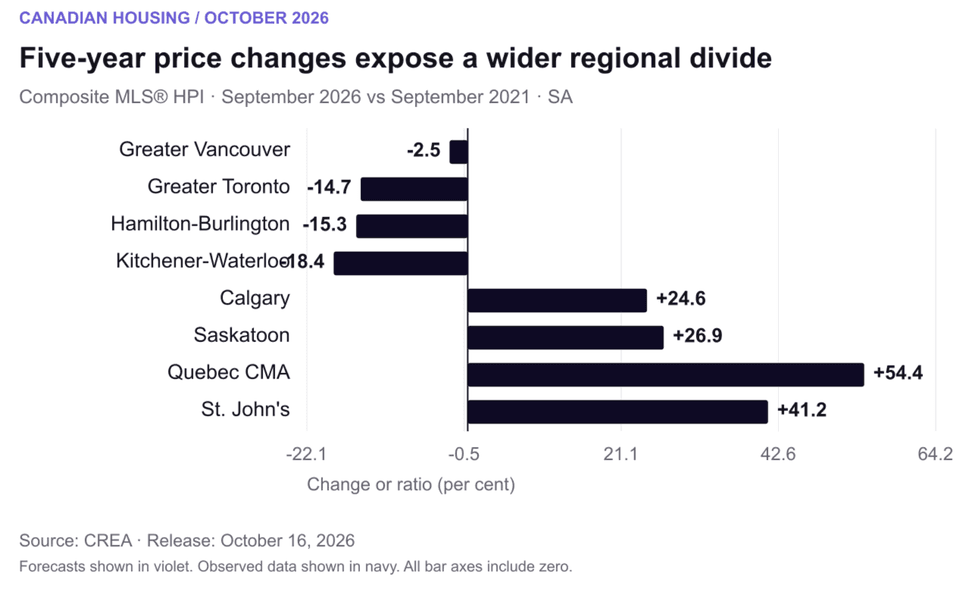 Five-year changes in seasonally adjusted composite MLS® HPI benchmarks, September 2021 to September 2026. Chart: