Bridge Loan
Learn what bridge loan means in Canadian real estate, how it works in holding deposits and documents, and why it's important for a secure property transaction.

May 22, 2025
What is a Bridge Loan?
A bridge loan is a short-term financing option that allows homeowners to borrow against the equity in their current property to fund the purchase of a new home before their existing home is sold.
Why Bridge Loans Matter in Real Estate
Bridge loans are often confused with bridge financing but refer more specifically to the actual loan product used to facilitate the transition between two real estate transactions. In the Canadian market, a bridge loan is typically secured against the borrower’s current home and is repaid in full once that home is sold.
This type of loan is particularly useful when closing dates don’t align – such as when a buyer must close on a new home before the sale of their old home goes through. By providing short-term liquidity, bridge loans prevent the need for rushed sales or missed purchase opportunities.
Bridge loans are generally offered for a period of a few weeks to a few months and often carry higher interest rates than conventional mortgages. The approval process typically requires a firm sale agreement for the current home, demonstrating a reliable repayment plan.
Buyers must weigh the cost of the loan against the convenience it provides, including interest, administrative fees, and possible overlap in carrying two homes. Still, for many, the flexibility can make the difference in securing their ideal next property.
Example of a Bridge Loan
A couple in Ottawa buys a home set to close in August but won’t receive funds from their existing home's sale until September. They take out a bridge loan to cover the $80,000 down payment and repay it when their home sale completes.
Key Takeaways
- A short-term loan used to bridge the gap between buying and selling homes.
- Secured against the current home and repaid upon its sale.
- Offers financial flexibility but includes higher interest and fees.
- Requires a firm sale agreement in most cases.
- Useful for avoiding delays or rushed transactions.
Related Terms
- Bridge Financing
- Down Payment
- Home Equity
- Firm Offer
- Closing Date


 Rendering of 86 and 100-108 Lombard St and 103 Richmond St E/WZMH Architects
 Rendering of 60 Overlea Blvd/Sweeny&Co Architects
 Rendering of 7 Labatt Ave and 77 River St/Giannone Petricone Associates
 Rendering of 4632-4648 Yonge St and 16-18 Cameron Ave/Arcadis
 Rendering of 1234 Islington Ave/Sweeny&Co Architects







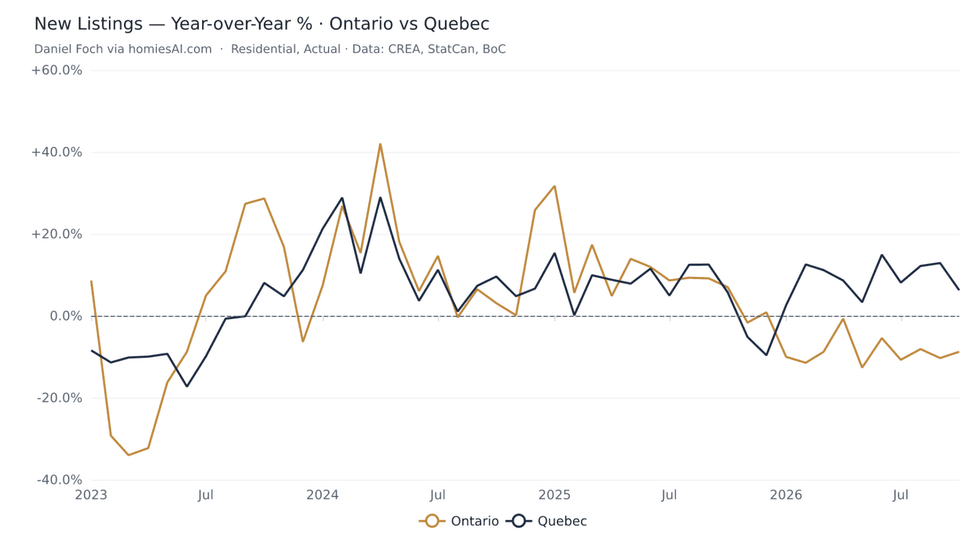 Chart: New listings, year-over-year %, Ontario vs Quebec. Daniel Foch via homiesai.com/stats. Data:
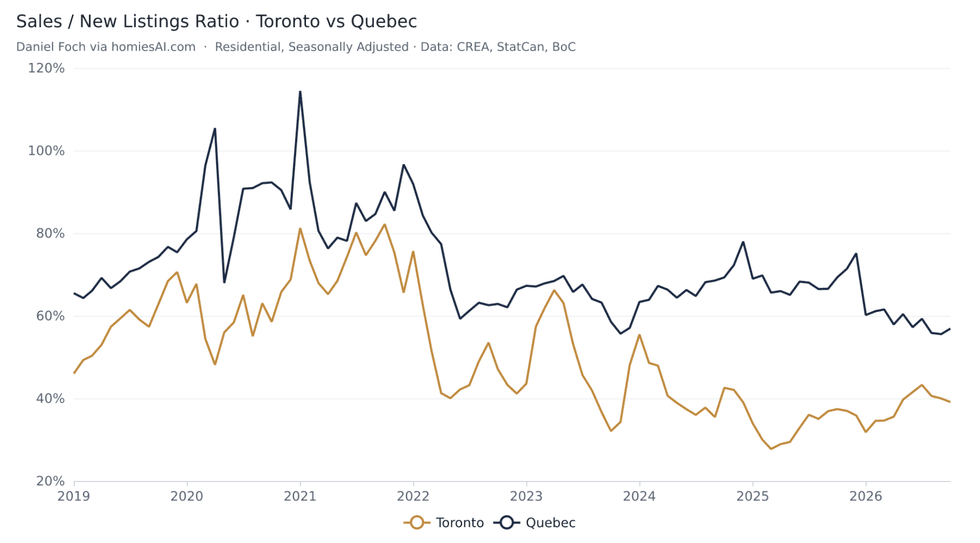 Chart: Sales-to-new-listings ratio, seasonally adjusted. Toronto vs Quebec. Daniel Foch via homiesai.com/stats. Data: CREA.
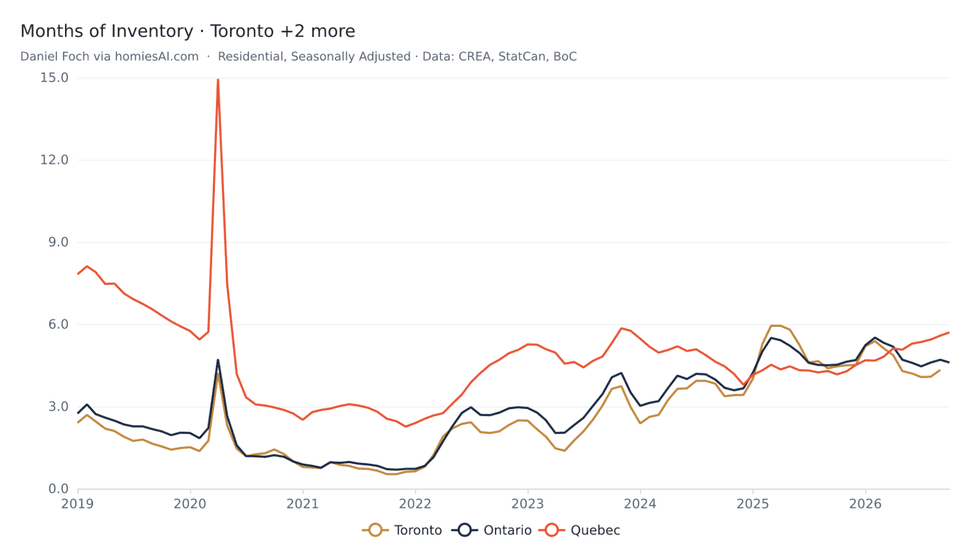 Chart: Months of inventory, seasonally adjusted. Daniel Foch via homiesai.com/stats. Data: CREA.
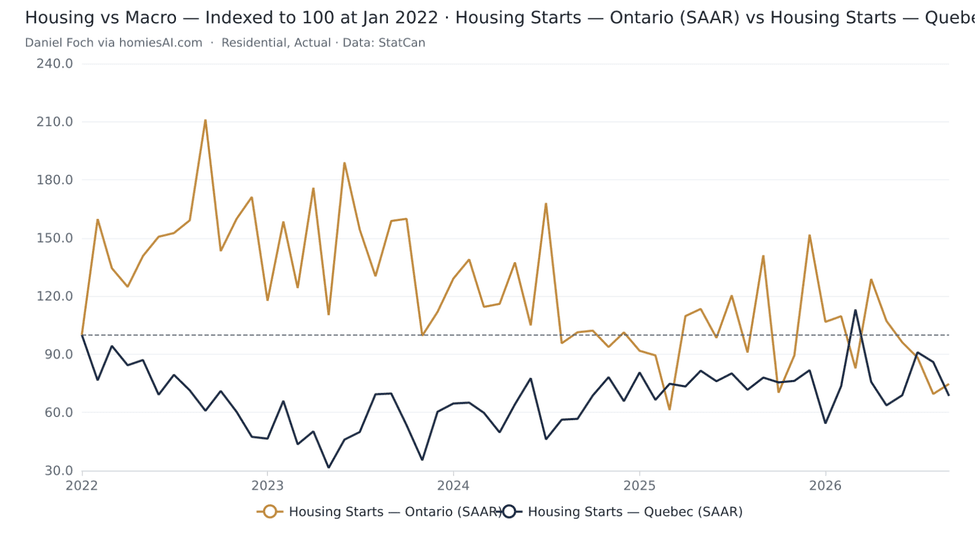 Chart: Housing starts, seasonally adjusted annual rate, Ontario vs Quebec, indexed to January 2022. Daniel Foch via homiesai.com/stats. Data: CMHC via Statistics Canada.
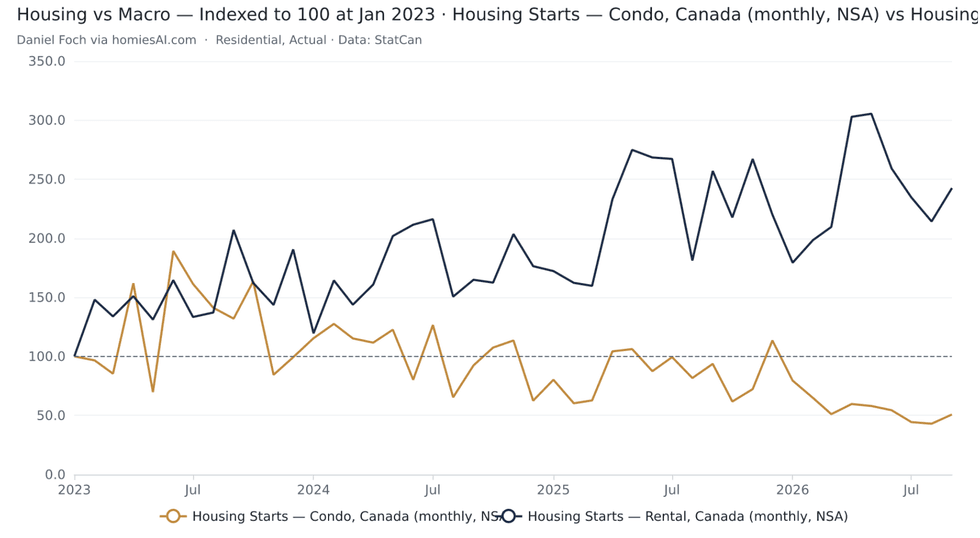 Chart: Condo vs rental housing starts, Canada, indexed to January 2023. Daniel Foch via homiesai.com/stats. Data: CMHC via Statistics Canada.
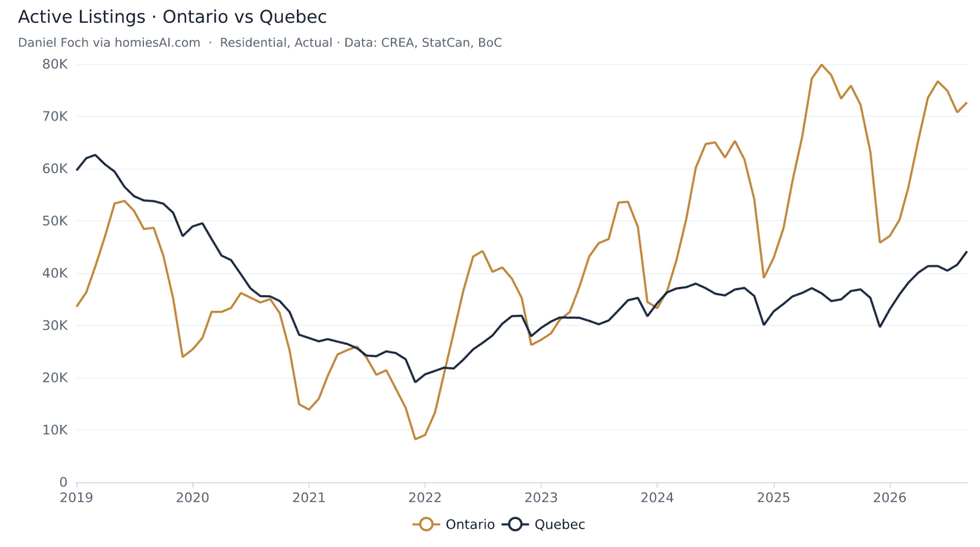 Chart: Active residential listings, Ontario vs Quebec. Daniel Foch via homiesai.com/stats. Data: CREA.

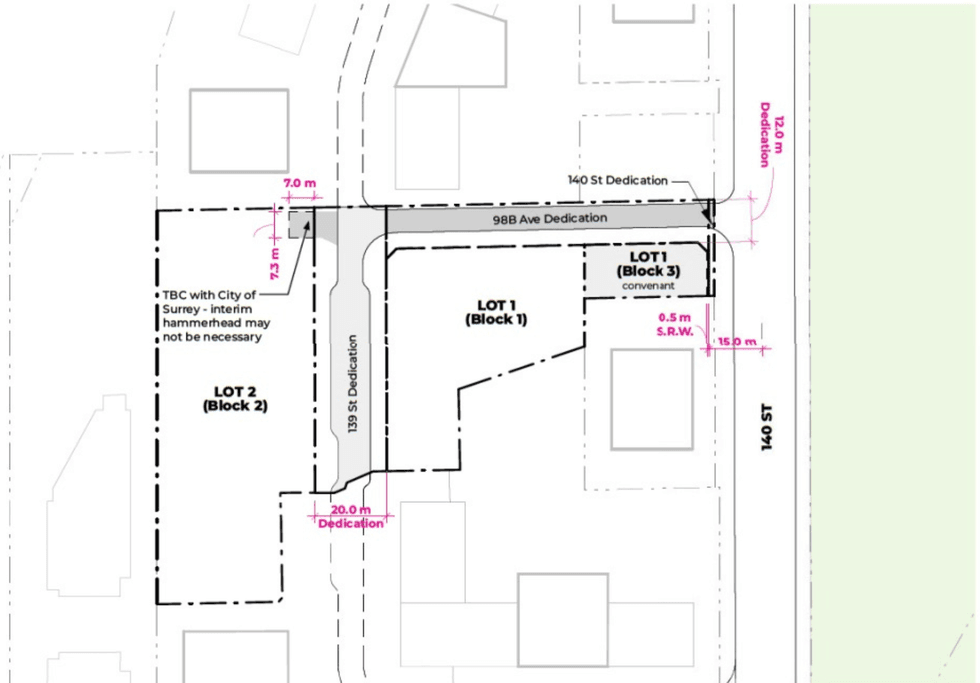 9883 140 Street and the proposed road dedications. (WW+P Architects, Entre Nous Femmes Housing Society)
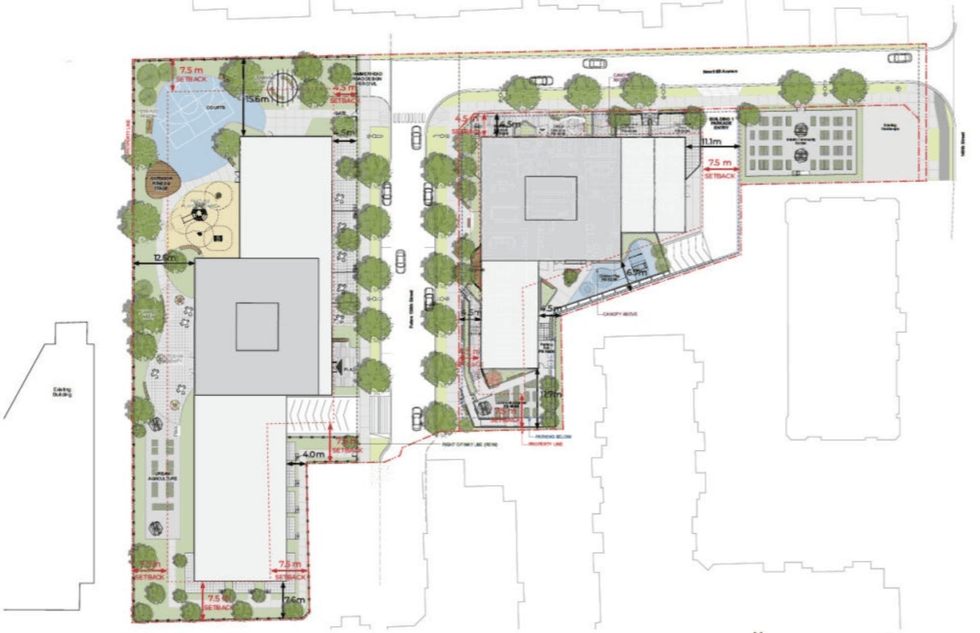 The
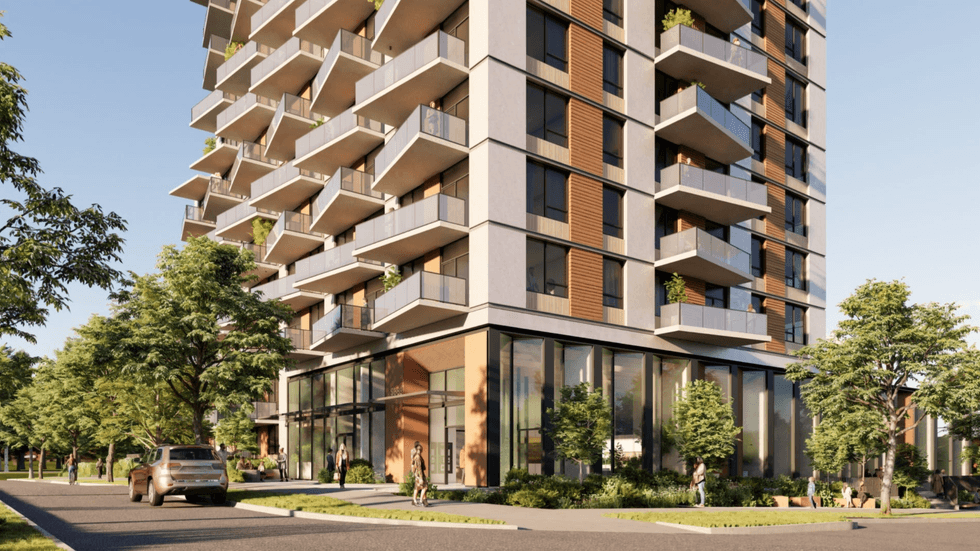 One of the towers proposed for 9883 140 Street. (Entres Nous Femmes Housing Society)

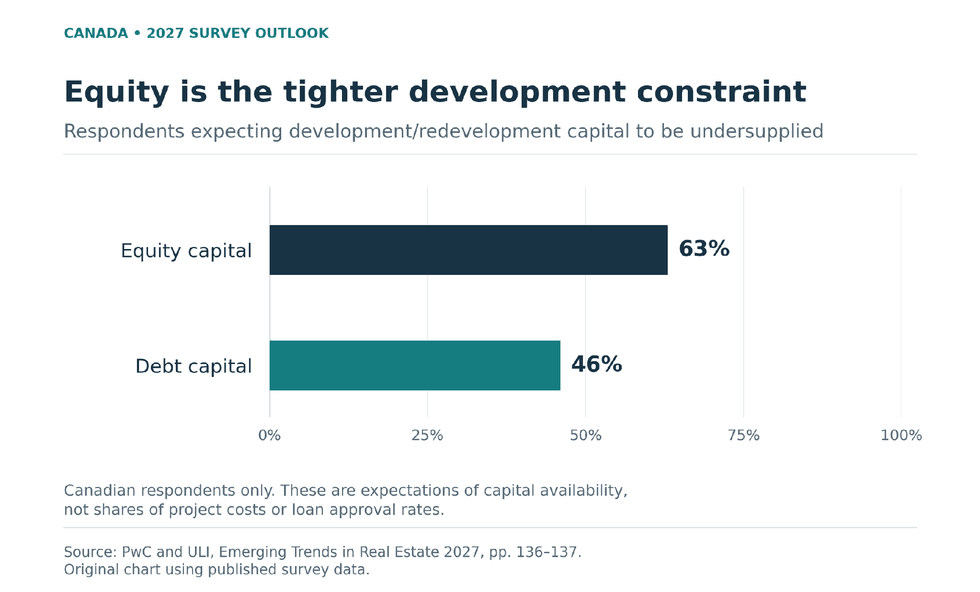 Canadian respondents were more likely to expect an undersupply of development/redevelopment equity capital (63%) than debt capital (46%) in 2027. These are survey expectations, not measured financing volumes. Source: PwC and ULI, Emerging Trends in Real Estate 2027, pp. 136–137. Original chart.
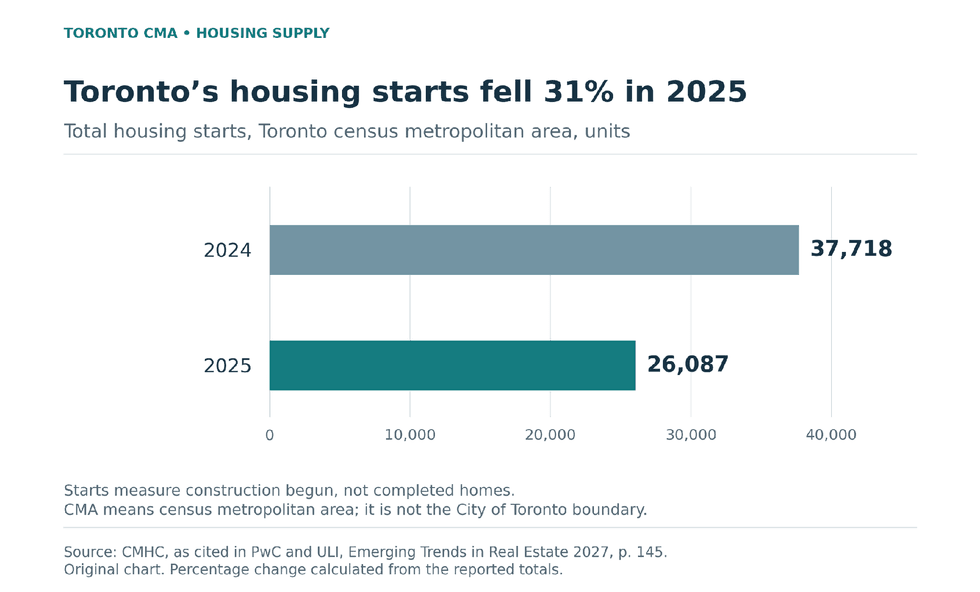 Toronto census metropolitan area housing starts fell from 37,718 units in 2024 to 26,087 in 2025, a 30.8% decline (rounded to 31%). Starts measure construction begun, not completed homes. Source: CMHC, as cited in PwC and ULI, Emerging Trends in Real Estate 2027, p. 145. Original chart.