Fractional Ownership
Fractional ownership is a real estate model that divides ownership among several buyers, who share costs, schedules, and responsibilities.

September 30, 2025
What is Fractional Ownership?
Fractional ownership divides property ownership among multiple individuals who each hold a legal share or interest. This model is common for vacation homes, resorts, and high-value assets. Owners typically share costs proportionally and follow a usage schedule that governs access to the property. Some arrangements are deeded interests, while others may involve shares in a holding company.
Why Fractional Ownership Matters in Real Estate
Fractional ownership matters because it increases accessibility to expensive real estate, allowing more people to participate. It requires strong governance agreements to address cost-sharing, scheduling, resale restrictions, and dispute resolution. Clear rules reduce conflicts and protect investment value.
Example of Fractional Ownership in Action
A group of eight buyers purchases deeded interests in a luxury vacation property. Each is entitled to six weeks of use annually, with a rotating calendar to ensure fairness. A management company maintains the property and collects fees.
Key Takeaways
- Fractional ownership allows multiple buyers to share property.
- Requires strong agreements for management.
- Expands access to luxury or high-cost properties.
- Involves clear scheduling and cost-sharing rules.
- May restrict resale and exit options to protect value.
Related Terms
- Co-Ownership Agreement
- Timeshare
- Governance
- Usage Schedule
- Exit Strategy

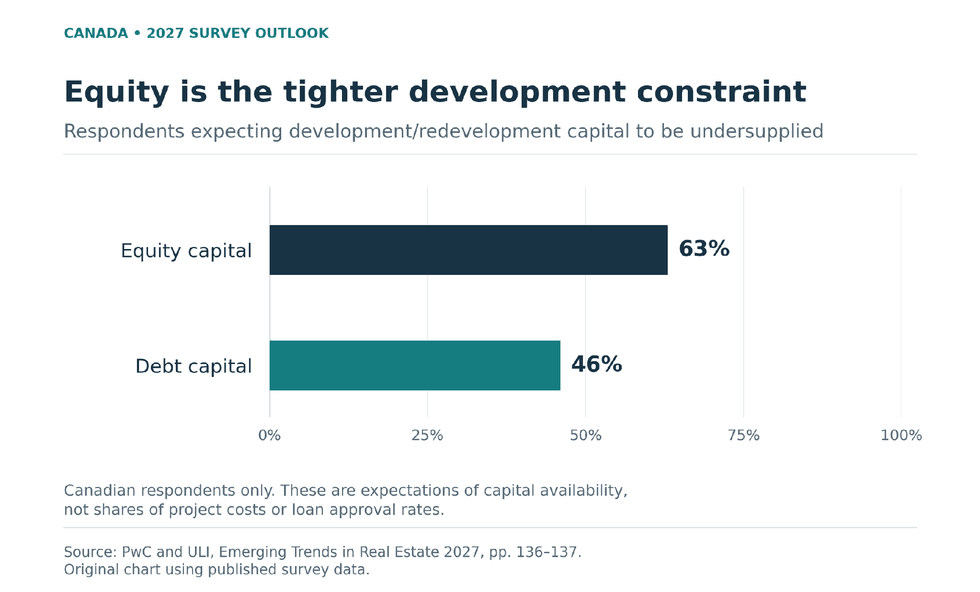 Canadian respondents were more likely to expect an undersupply of development/redevelopment equity capital (63%) than debt capital (46%) in 2027. These are survey expectations, not measured financing volumes. Source: PwC and ULI, Emerging Trends in Real Estate 2027, pp. 136–137. Original chart.
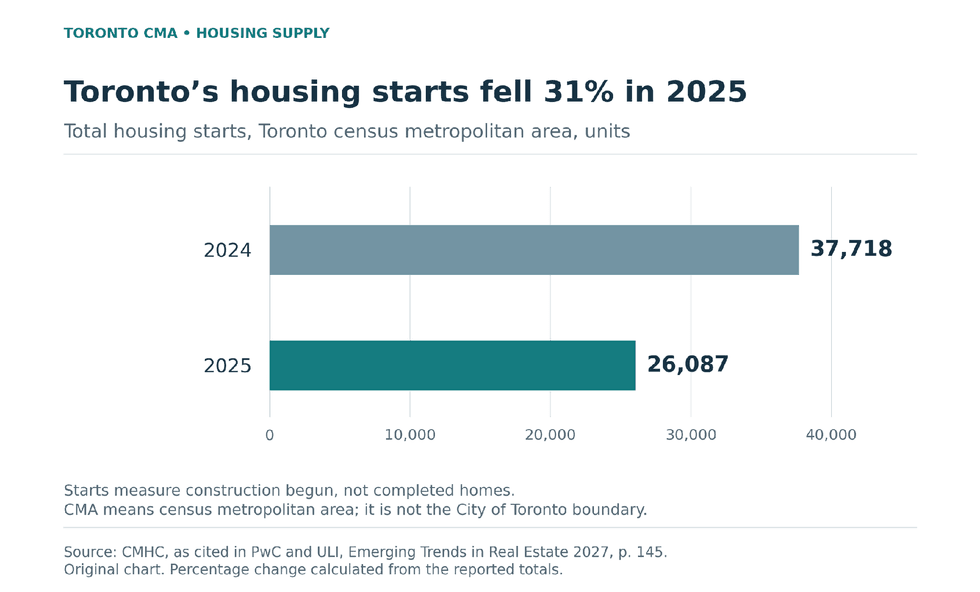 Toronto census metropolitan area housing starts fell from 37,718 units in 2024 to 26,087 in 2025, a 30.8% decline (rounded to 31%). Starts measure construction begun, not completed homes. Source: CMHC, as cited in PwC and ULI, Emerging Trends in Real Estate 2027, p. 145. Original chart.






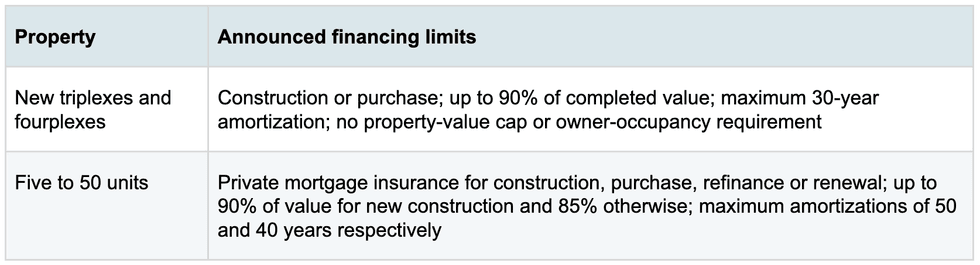
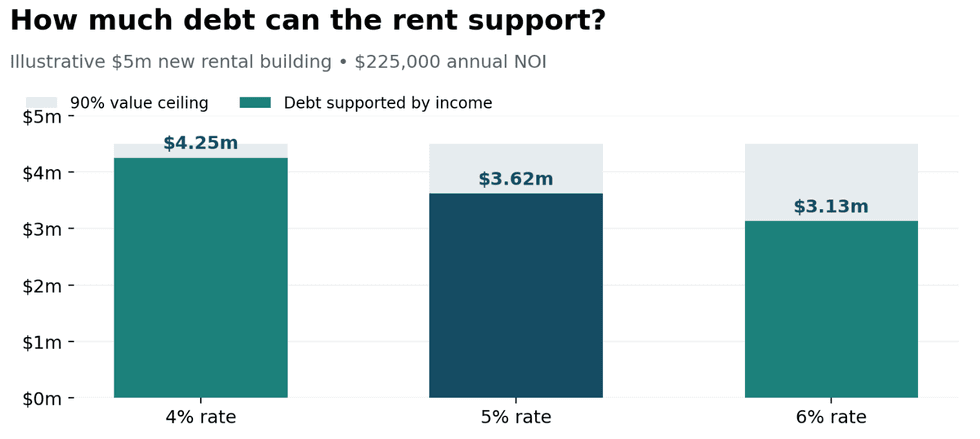 Illustrative calculation: a $4.5-million value ceiling versus income-based capacity of about $4.25 million at 4%, $3.62 million at 5% and $3.13 million at 6%. Assumes 50-year amortization and 1.15 debt coverage.
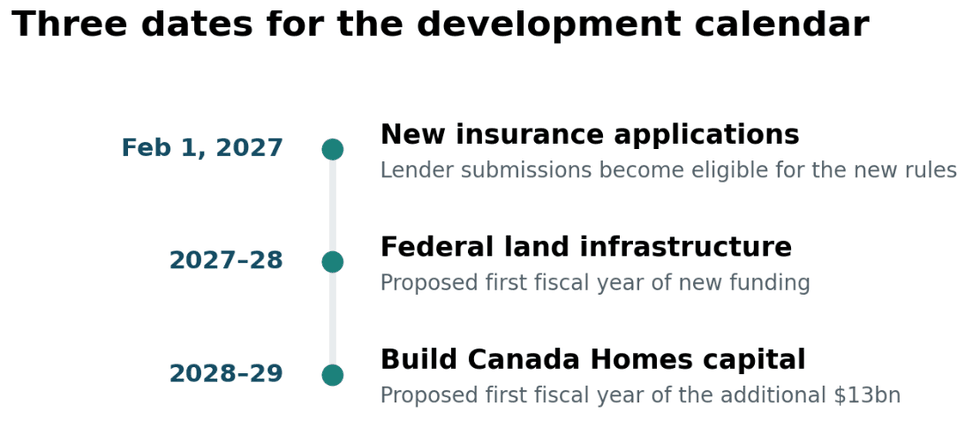 Source: Department of Finance missing-middle backgrounder and Budget 2026 Chapter 3, November 5, 2026. Fiscal-year funding starts are not home-completion dates.