Floodplain
Explore floodplains in Canadian real estate, how they impact development, insurance, and buying decisions near water-prone areas.

May 30, 2025
What is a Floodplain?
A floodplain is a low-lying area near a water source that is prone to flooding during heavy rainfall or snowmelt.
Why Do Floodplains Matter in Real Estate?
In Canadian real estate, properties located in floodplains may face elevated risk, increased insurance premiums, and development restrictions.
Floodplain risks and regulations include:
- Requirements for flood-proof construction
- Limits on new development or additions
- Mandatory flood insurance in some areas
- Environmental impact assessments
Floodplain maps are published by municipalities or conservation authorities and are essential for property due diligence.
Understanding floodplain status helps buyers assess long-term risk and financing implications, while developers can plan around environmental zoning.
Example of Floodplains in Action
Before buying a riverside lot, the buyer checks the local floodplain map and confirms building restrictions with the municipality.
Key Takeaways
- Area at risk of flooding near water bodies.
- May have building and insurance restrictions.
- Affects property value and development.
- Requires due diligence before buying.
- Shown on municipal floodplain maps.
Related Terms
- Water Table
- Drainage System
- Home Insurance
- Environmental Assessment
- Zoning

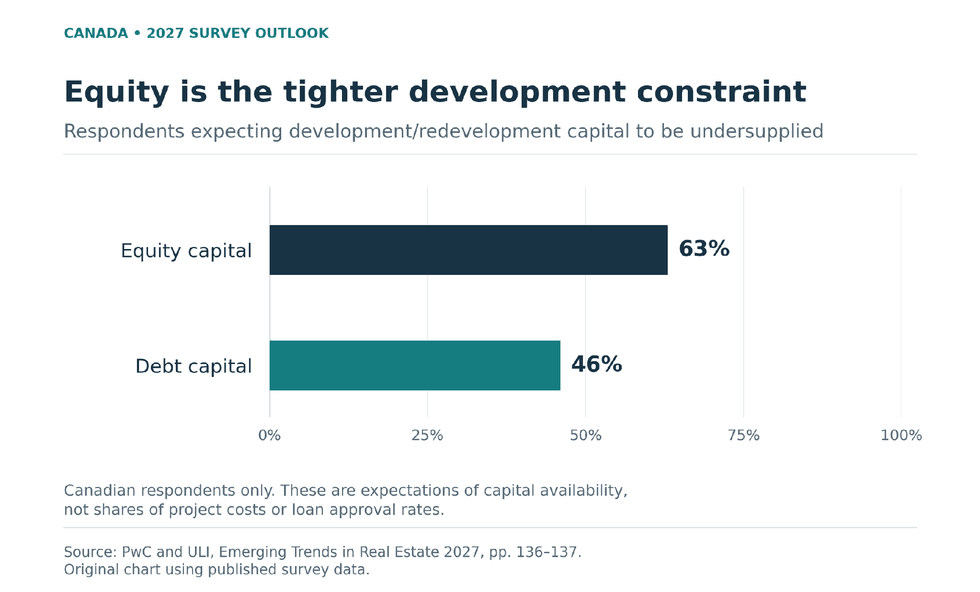 Canadian respondents were more likely to expect an undersupply of development/redevelopment equity capital (63%) than debt capital (46%) in 2027. These are survey expectations, not measured financing volumes. Source: PwC and ULI, Emerging Trends in Real Estate 2027, pp. 136–137. Original chart.
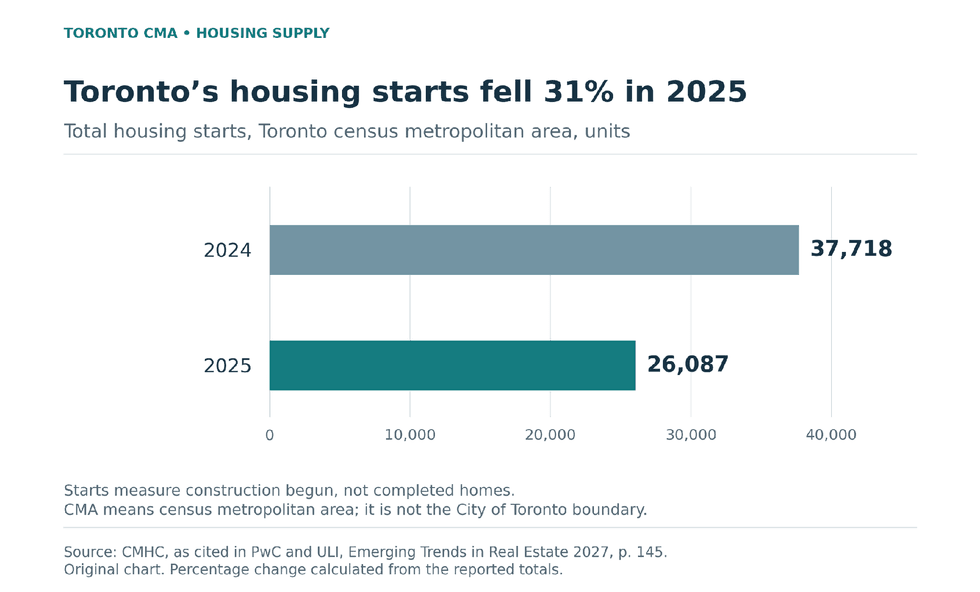 Toronto census metropolitan area housing starts fell from 37,718 units in 2024 to 26,087 in 2025, a 30.8% decline (rounded to 31%). Starts measure construction begun, not completed homes. Source: CMHC, as cited in PwC and ULI, Emerging Trends in Real Estate 2027, p. 145. Original chart.









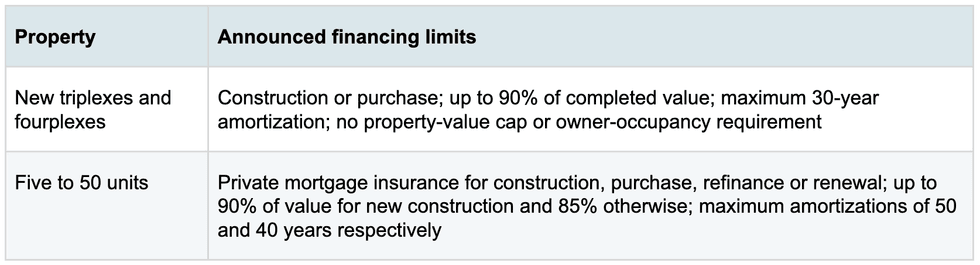
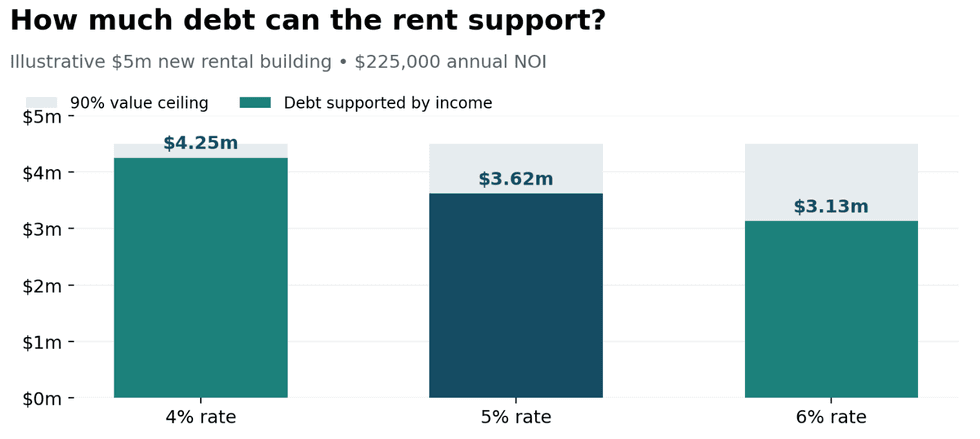 Illustrative calculation: a $4.5-million value ceiling versus income-based capacity of about $4.25 million at 4%, $3.62 million at 5% and $3.13 million at 6%. Assumes 50-year amortization and 1.15 debt coverage.
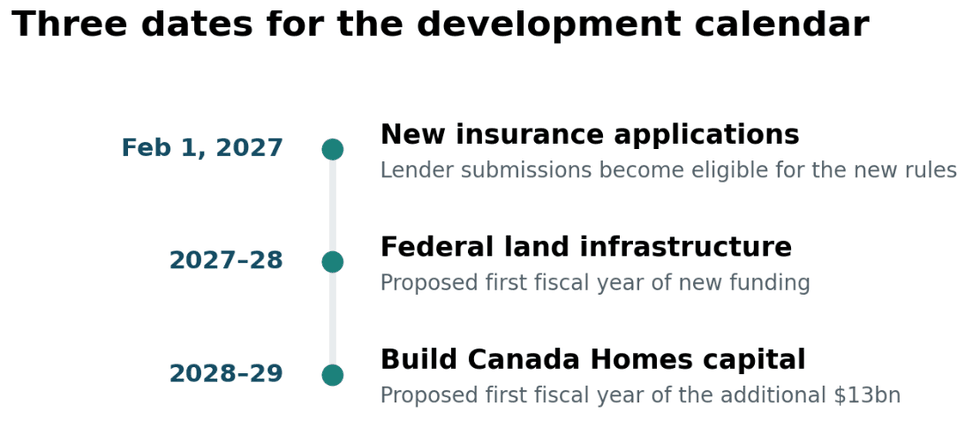 Source: Department of Finance missing-middle backgrounder and Budget 2026 Chapter 3, November 5, 2026. Fiscal-year funding starts are not home-completion dates.