Eminent Domain
Understand eminent domain in Canadian real estate — what it means, how it works, and how property owners are compensated.

July 27, 2025
What is Eminent Domain?
Eminent domain is the government’s legal right to expropriate private property for public use, with fair compensation to the owner.
Why Eminent Domain Matters in Real Estate
In Canadian real estate, eminent domain (called expropriation) allows governments to acquire land for highways, utilities, or public facilities.
Key aspects:
- Must serve a public purpose
- Requires fair market compensation
- Subject to legal process and appeal
Understanding eminent domain protects property owners’ rights and informs negotiations when land is taken.
Example of Eminent Domain in Action
The city exercised eminent domain to acquire land for a new light rail line, compensating the owners at market value.
Key Takeaways
- Government right to take private land
- Requires compensation at fair value
- Used for public projects
- Involves legal process and rights
- Known as expropriation in Canada
Related Terms
- Expropriation
- Fair Market Value
- Land Assembly
- Zoning
- Official Plan
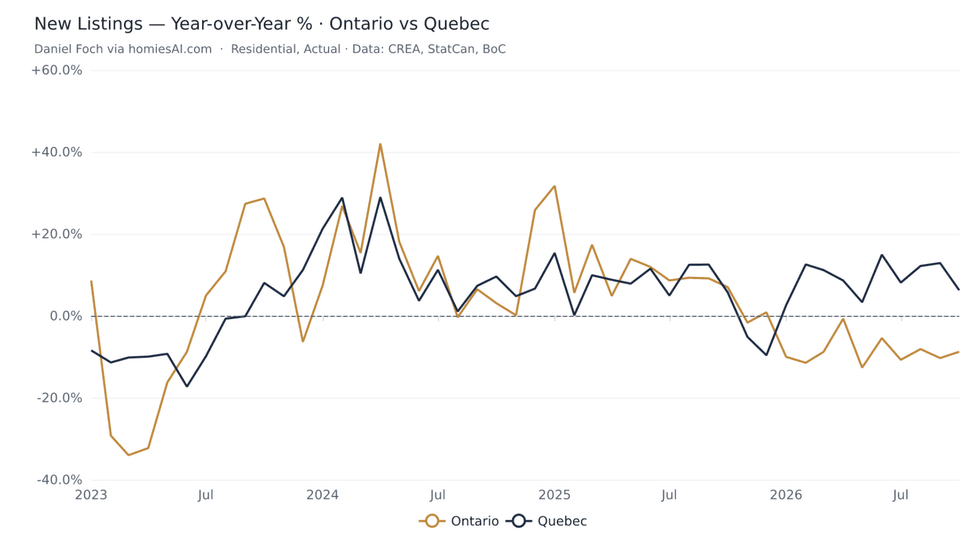 Chart: New listings, year-over-year %, Ontario vs Quebec. Daniel Foch via homiesai.com/stats. Data:
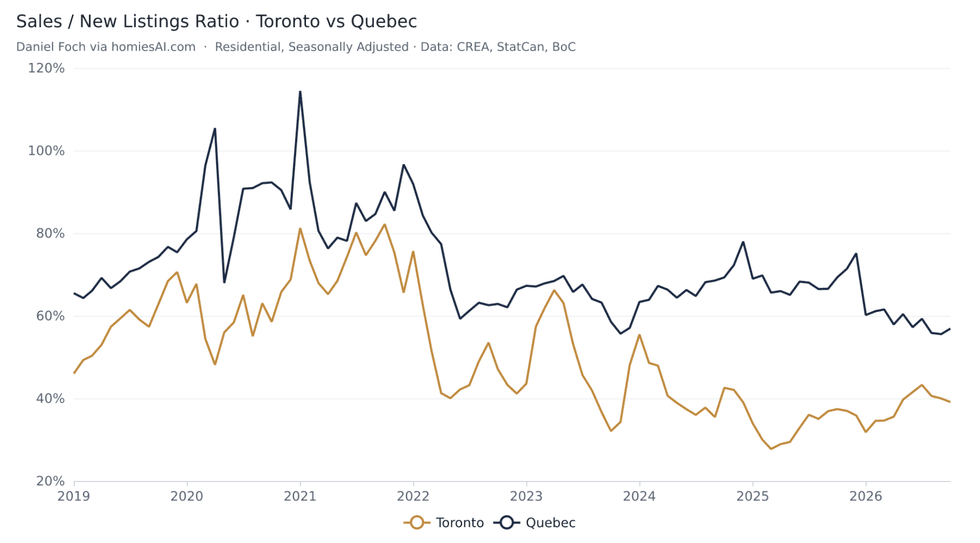 Chart: Sales-to-new-listings ratio, seasonally adjusted. Toronto vs Quebec. Daniel Foch via homiesai.com/stats. Data: CREA.
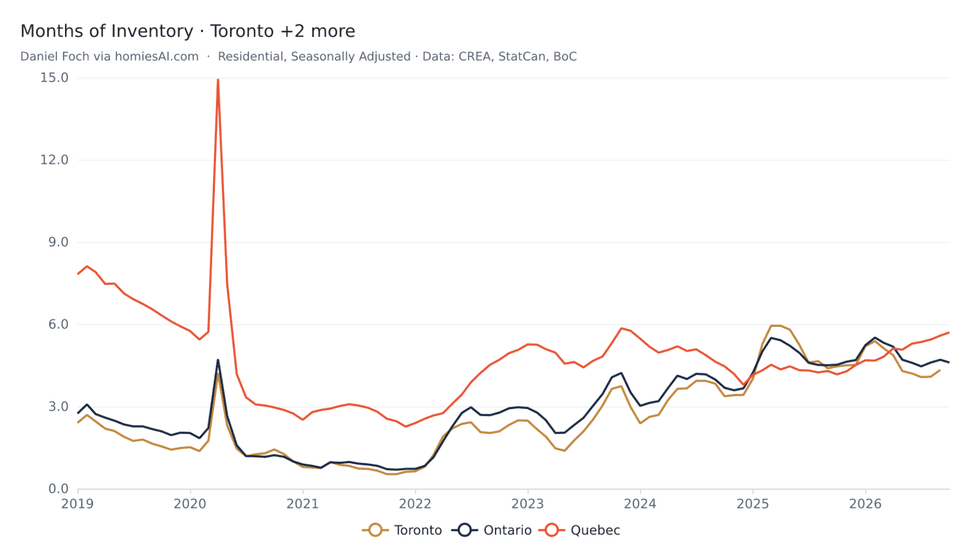 Chart: Months of inventory, seasonally adjusted. Daniel Foch via homiesai.com/stats. Data: CREA.
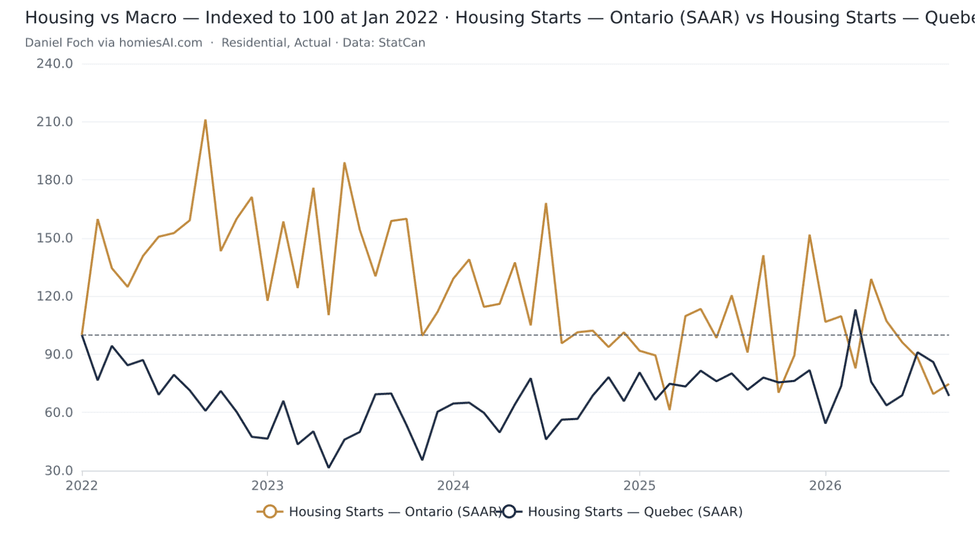 Chart: Housing starts, seasonally adjusted annual rate, Ontario vs Quebec, indexed to January 2022. Daniel Foch via homiesai.com/stats. Data: CMHC via Statistics Canada.
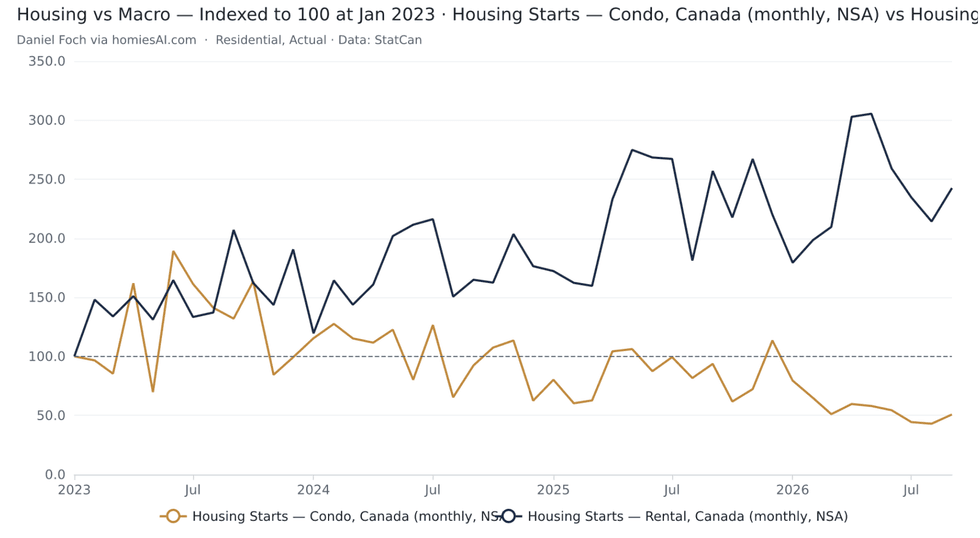 Chart: Condo vs rental housing starts, Canada, indexed to January 2023. Daniel Foch via homiesai.com/stats. Data: CMHC via Statistics Canada.
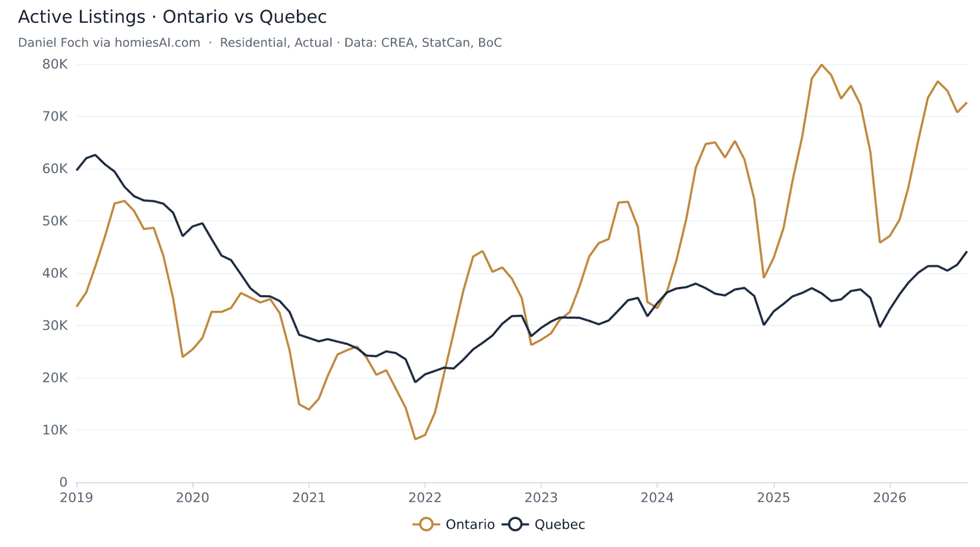 Chart: Active residential listings, Ontario vs Quebec. Daniel Foch via homiesai.com/stats. Data: CREA.




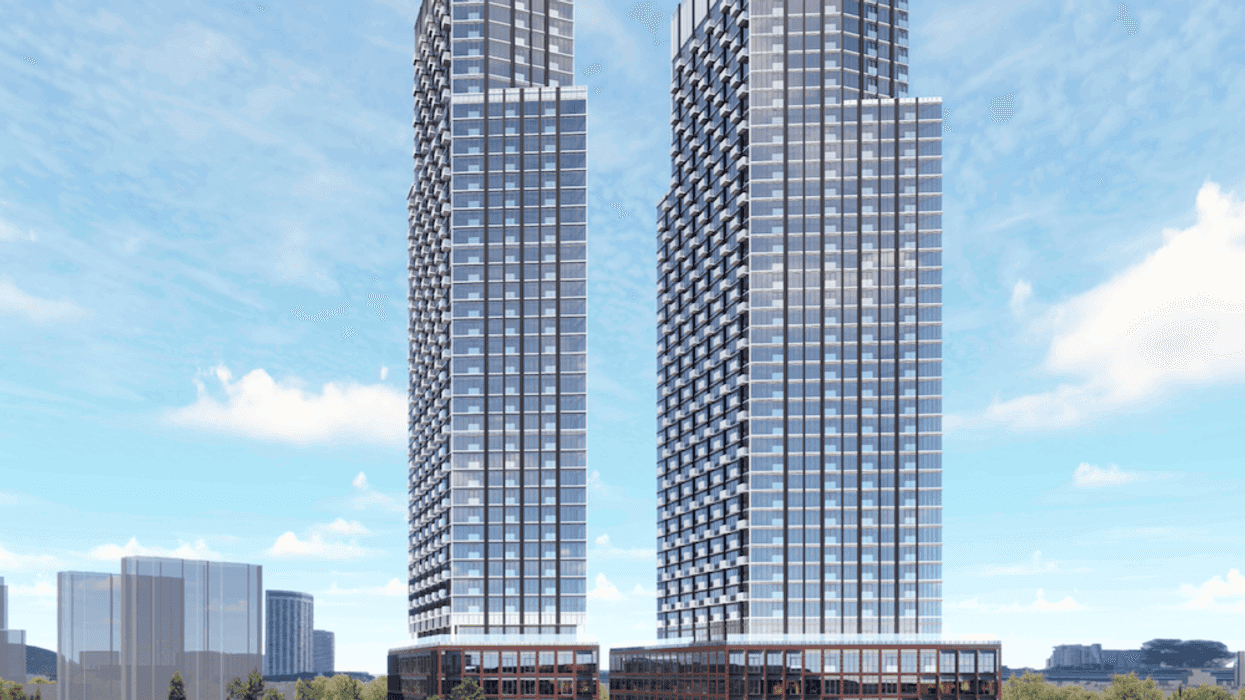

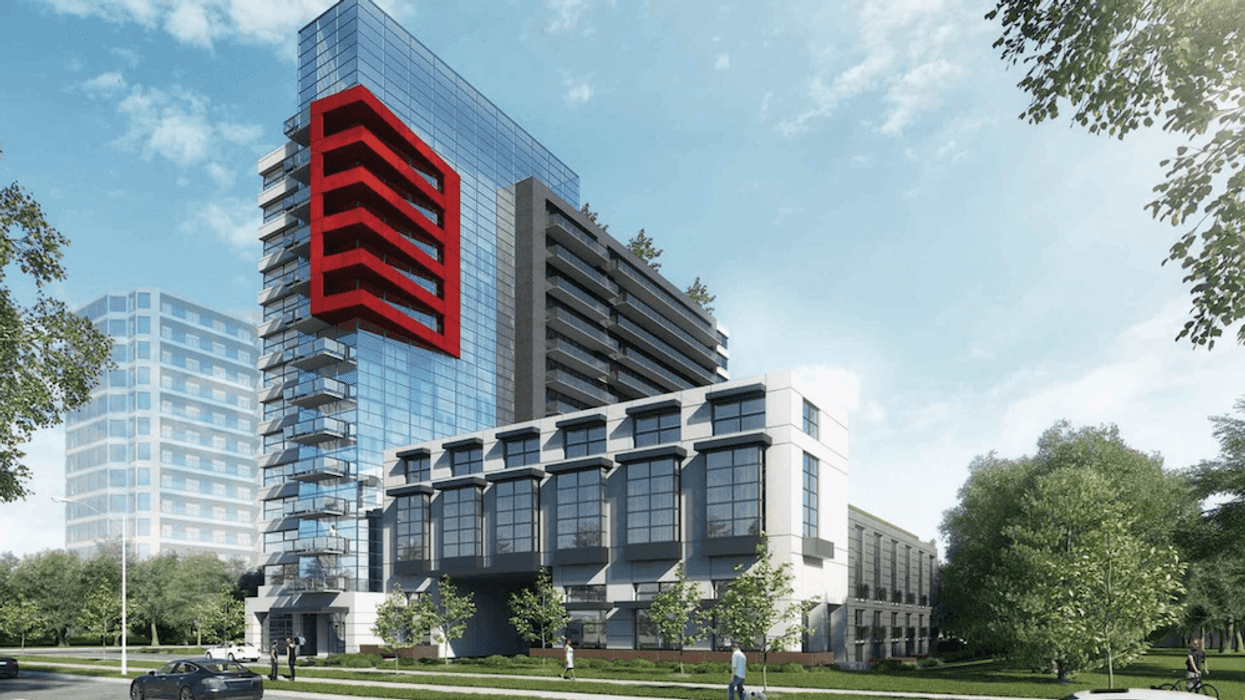
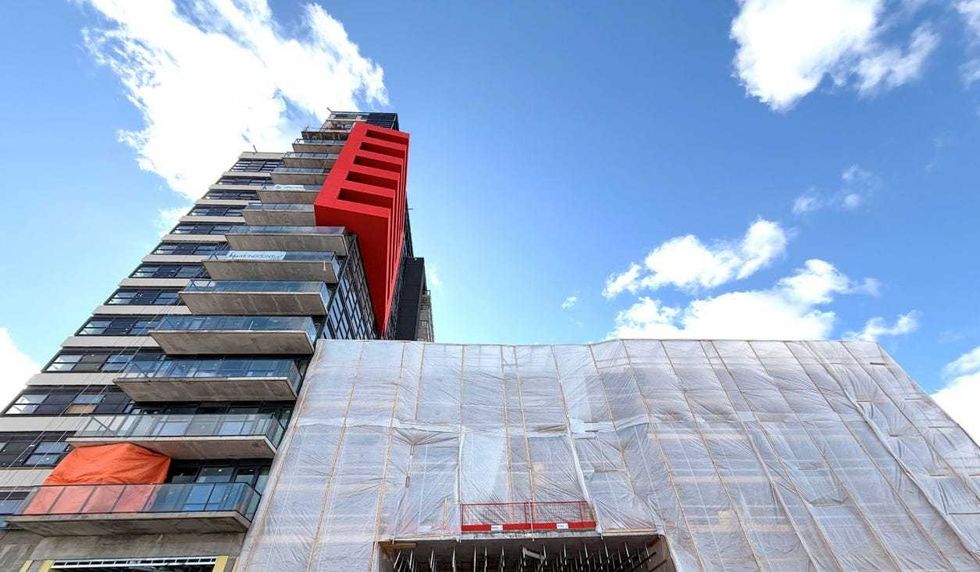 The Highlight of Mississauga as of March 2026. (Grant Thornton)

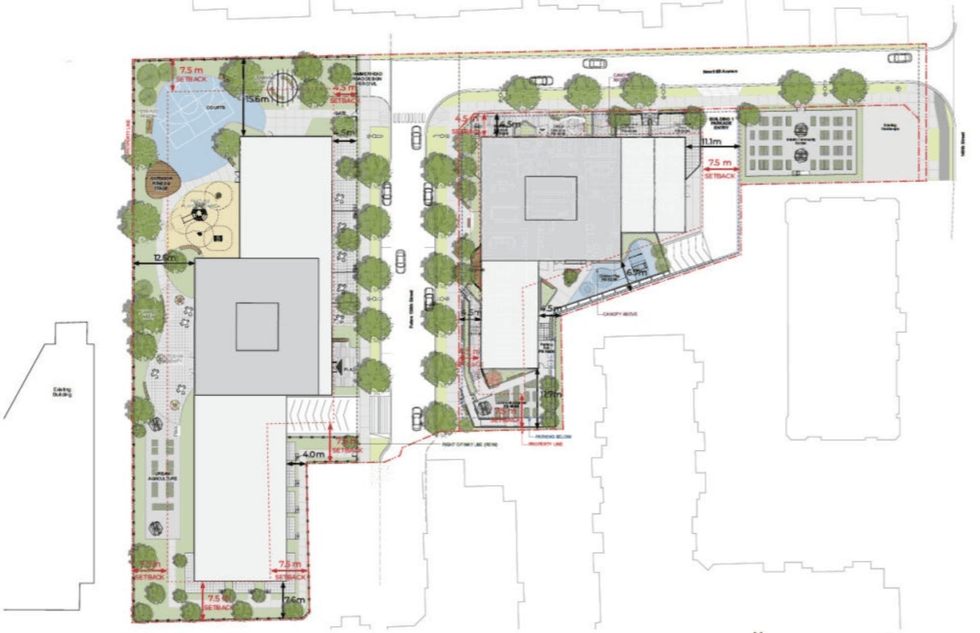
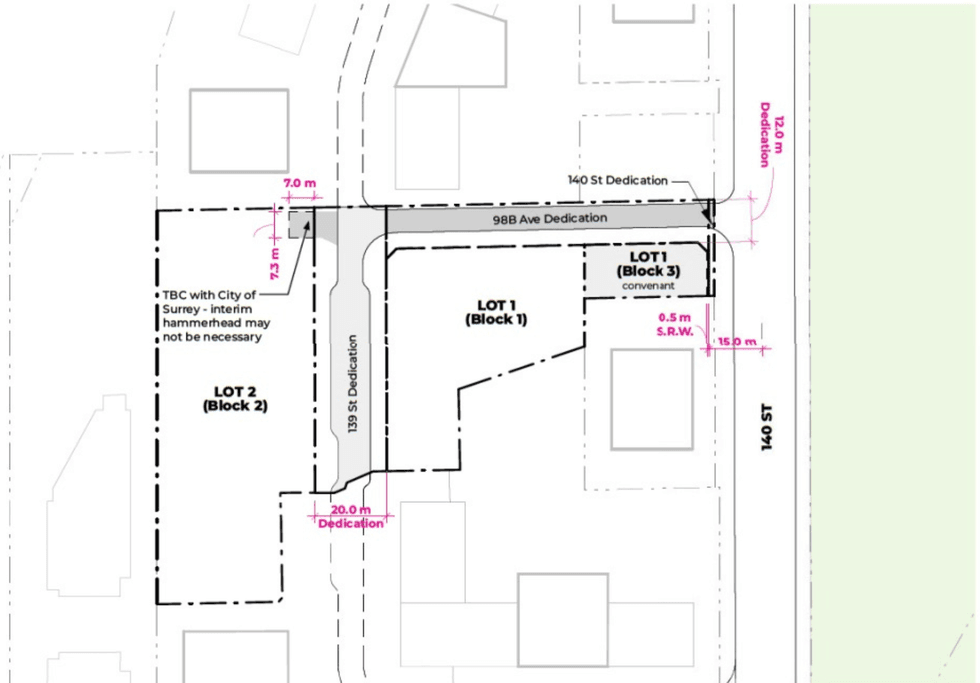 9883 140 Street and the proposed road dedications. (WW+P Architects, Entre Nous Femmes Housing Society)
 The
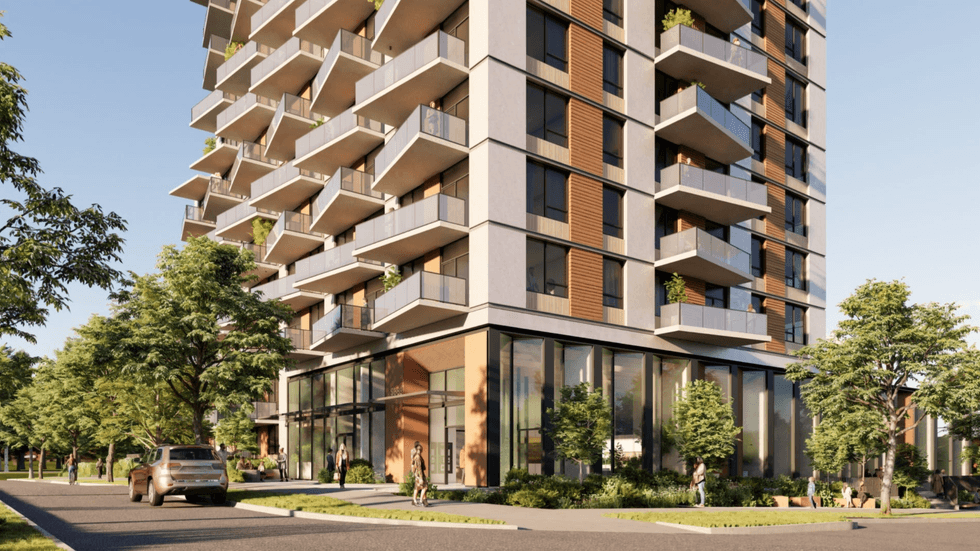 One of the towers proposed for 9883 140 Street. (Entres Nous Femmes Housing Society)

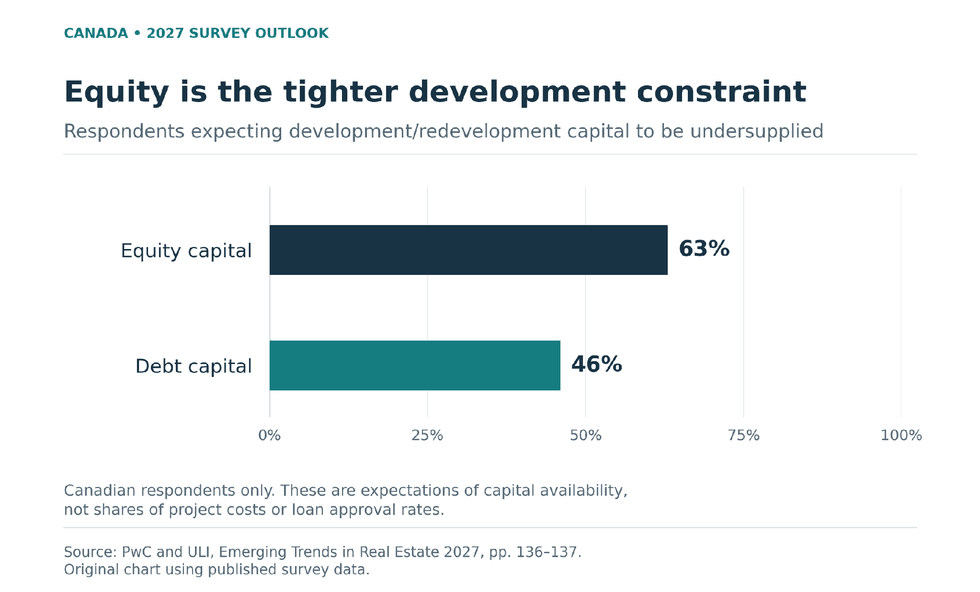 Canadian respondents were more likely to expect an undersupply of development/redevelopment equity capital (63%) than debt capital (46%) in 2027. These are survey expectations, not measured financing volumes. Source: PwC and ULI, Emerging Trends in Real Estate 2027, pp. 136–137. Original chart.
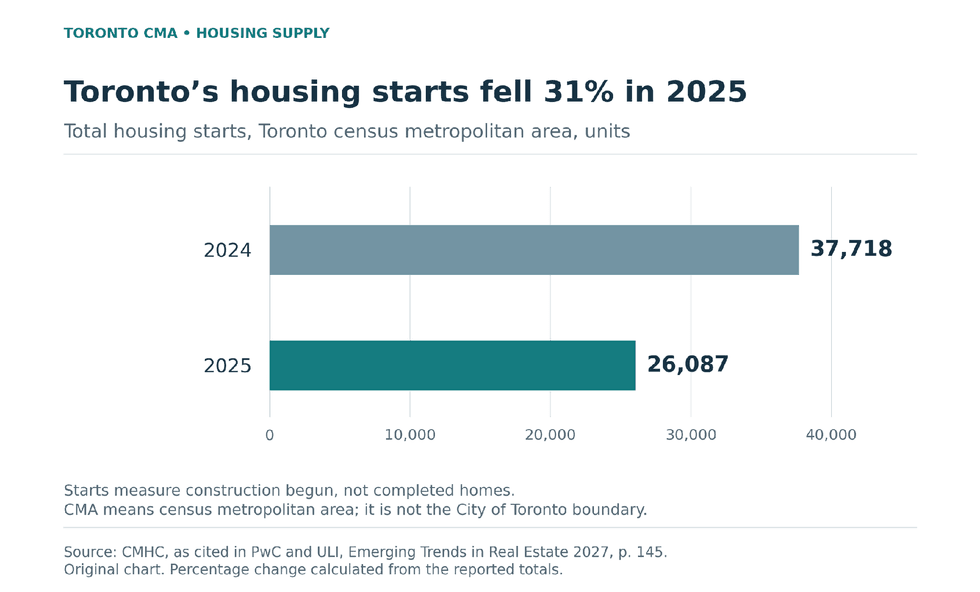 Toronto census metropolitan area housing starts fell from 37,718 units in 2024 to 26,087 in 2025, a 30.8% decline (rounded to 31%). Starts measure construction begun, not completed homes. Source: CMHC, as cited in PwC and ULI, Emerging Trends in Real Estate 2027, p. 145. Original chart.


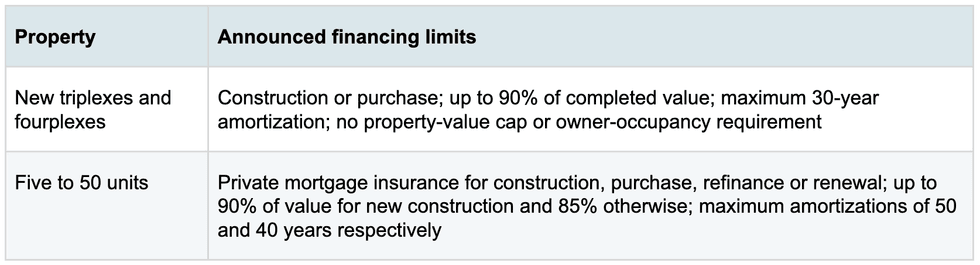
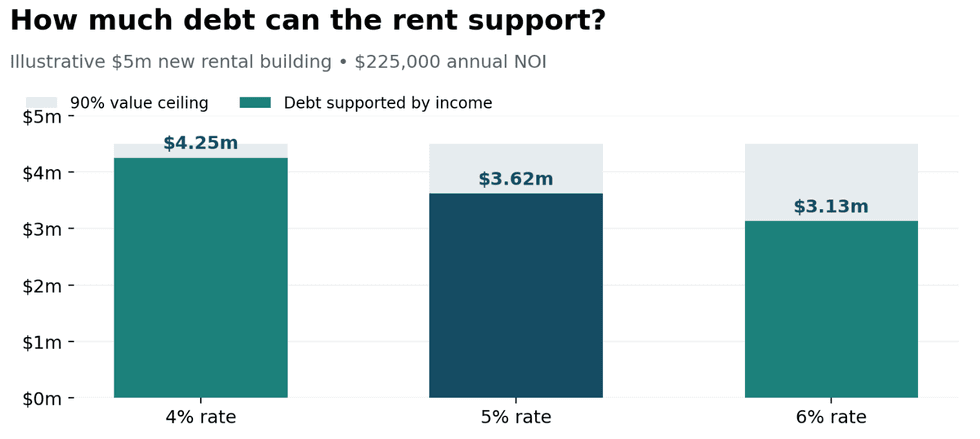 Illustrative calculation: a $4.5-million value ceiling versus income-based capacity of about $4.25 million at 4%, $3.62 million at 5% and $3.13 million at 6%. Assumes 50-year amortization and 1.15 debt coverage.
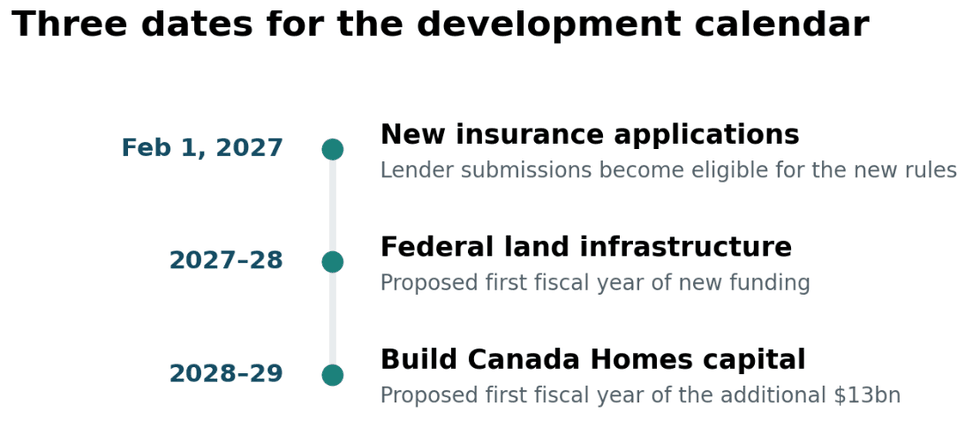 Source: Department of Finance missing-middle backgrounder and Budget 2026 Chapter 3, November 5, 2026. Fiscal-year funding starts are not home-completion dates.
 A rendering of Fraser Academy’s new campus. (Fraser Academy)