Last week, Rentals.ca published their latest rental market report, noting that the average asking rent in Canada declined by 4.7% year over year in May, marking the 20th consecutive month to see a year-over-year decline.
“Since reaching a low of $1,662 in April 2021 during COVID-19, average rents have risen 22.1%, but have declined 7.8% from the high of $2,202 in May 2024,” they said.
Also last week, CMHC published their 2026 Mid-Year Rental Market Update, providing a deeper look at the rental market and some of the microtrends that have taken form.
Here are the key takeaways.
Rising Supply and Slowing Demand
Economics 101: When supply is increasing while demand is decreasing, prices come down. That’s what’s happening in the rental market, according to CMHC, with asking rents for available units continuing to decline in major markets like Toronto, Vancouver, Calgary, and Ottawa.
The increased supply also means more competition for landlords, which CMHC says “increasingly rely on incentives to attract tenants, along with lowering asking rents”; also saying “market intelligence suggests these incentives have intensified over the past 6 months, reaching as high as several months of free rent.” They often also include additional incentives like discounted parking, cash bonuses, or gift cards.
Higher Vacancies In New Units
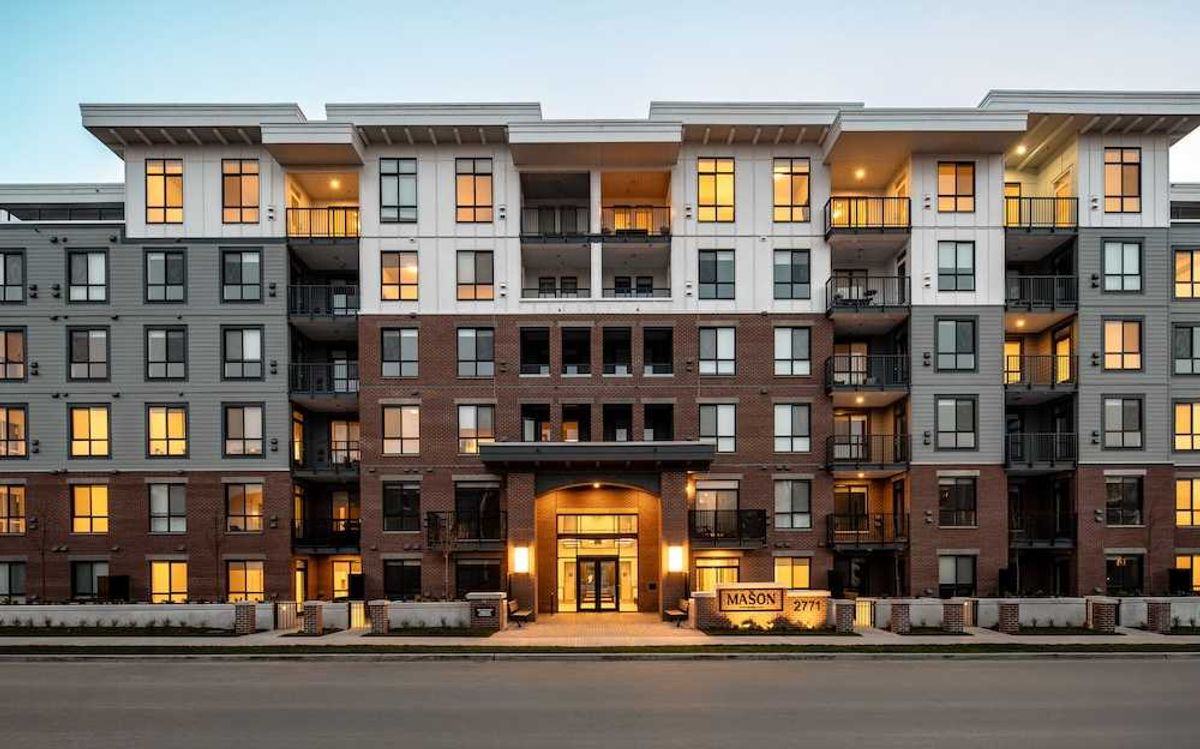
Not all buildings are equal, and a gap has started to form between older buildings and newer buildings, with CMHC saying “vacancies were highest in structures built after 2020 and in units located near post-secondary institutions” while “older stabilized buildings and family-sized units continue to experience tighter market conditions.”
CMHC describes this as a “short-term imbalance” between supply and demand in newer — higher-priced — buildings, and that operators are reporting that newer units are taking longer — sometimes months — to rent out.
Redefining Balance
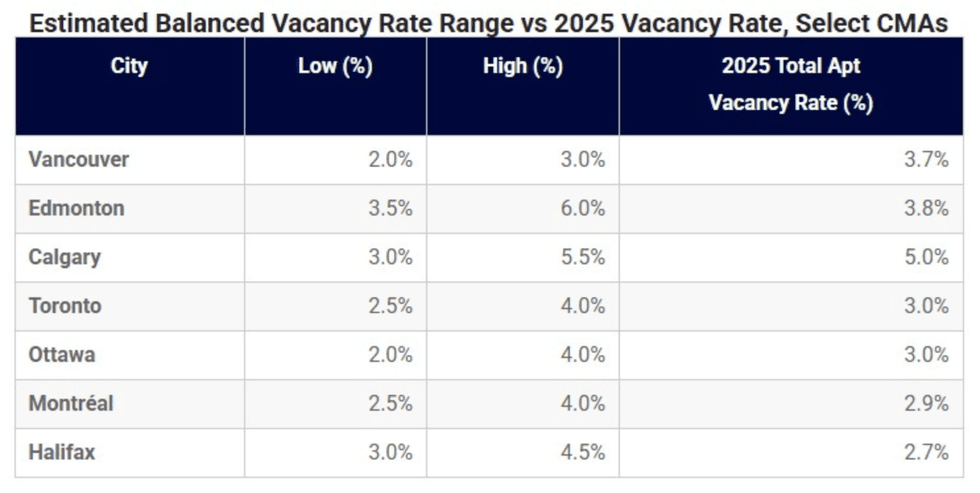
A balanced rental market is one where rent growth, after inflation, is near zero. Traditionally, a vacancy rate of 3% has served as the industry benchmark, with average rents expected to rise faster than inflation if the vacancy rate drops past that and average rents expected to fall below inflation if the vacancy rate rises above it.
However, CMHC says its analysis shows that this 3% vacancy rate is not a good benchmark that holds true across all markets, because different markets often have unique market factors. The 3% works better for Vancouver, but the benchmark for other markets should be closer to 4% and markets in Alberta over 5%, said CMHC.
 (CMHC)
Existing Tenancies vs. New Tenancies
Similar to older buildings and newer buildings, there’s also a gap between existing tenancies and new tenancies, in terms of affordability. Asking rent-to-income ratios have dropped for new leases, while affordability is deteriorating for existing renters.
“In Q1 2026, affordability for existing tenants has worsened across most key markets as compared to a year ago,” said CMHC. “Edmonton and Toronto are the exceptions, where a combination of slower rent growth due to higher supply and strong wage growth has led to improved affordability. Calgary and Halifax stand out for experiencing the most significant deterioration in recent years. Affordability ratios in these markets are now approaching levels currently seen in Toronto.”
Turnovers
A byproduct of the aforementioned competition among landlords and the increased amount of incentives is that tenants have shown willingness to move for incentives, suggesting that “new high-end supply was drawing in higher-income renters and potentially freeing up lower-priced units.”
“Overall, our analysis shows that tenant turnover was the highest among the most expensive rent quartiles, and much lower for the most affordable rent quartiles,” said CMHC, noting that vacancy and turnover increased across most rent quartiles in Toronto and Vancouver.
Renter Population Growth
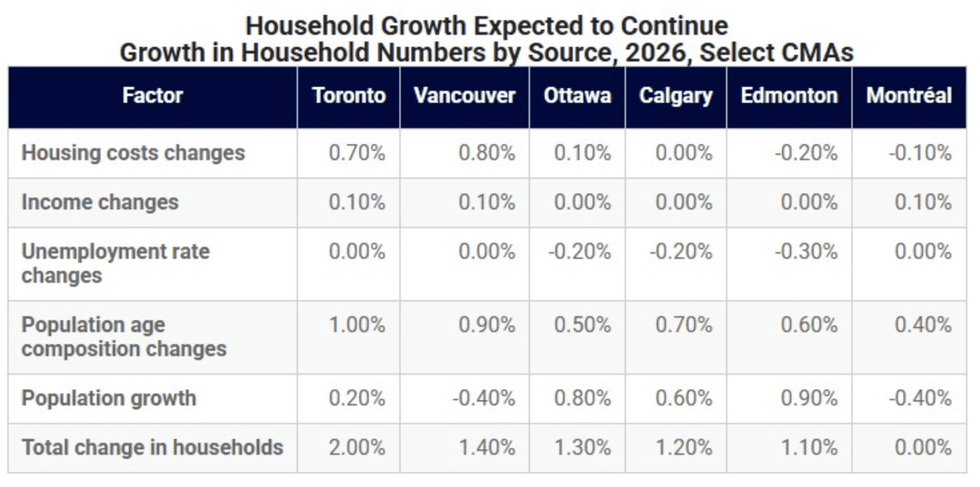
Immigration is a key factor with real estate. and while immigration is currently in a degree of flux due to federal policy changes, the population of renters is expected to continue growing, says CMHC, as a result of increased affordability, young adults seeking independence, and other factors.
“Household formation will continue in 2026,” said CMHC. “It will be led by younger cohorts, who are more likely to rent. This is especially true amid economic uncertainty and lower costs compared to ownership. Notably, easing housing costs are expected to support growth in Toronto and Vancouver. This will enable previously suppressed households to form.”
 (CMHC)