Airspace Rights
Learn about airspace rights in Canadian real estate — what they are, how they’re used, and their impact on property value.

August 01, 2025
What are Airspace Rights?
Airspace rights are the legal rights to control, use, or sell the space above a parcel of land, separate from the ownership of the land itself.
Why Airspace Rights Matter in Real Estate
In Canadian real estate, airspace rights can be a valuable asset in dense urban areas where vertical development potential exists.
Key facts:
- Can be sold, leased, or transferred independently
- Governed by municipal zoning and height restrictions
- Often leveraged to build upwards or develop bridges and overpasses
Understanding airspace rights allows property owners to maximize land value and development potential.
Example of Airspace Rights in Action
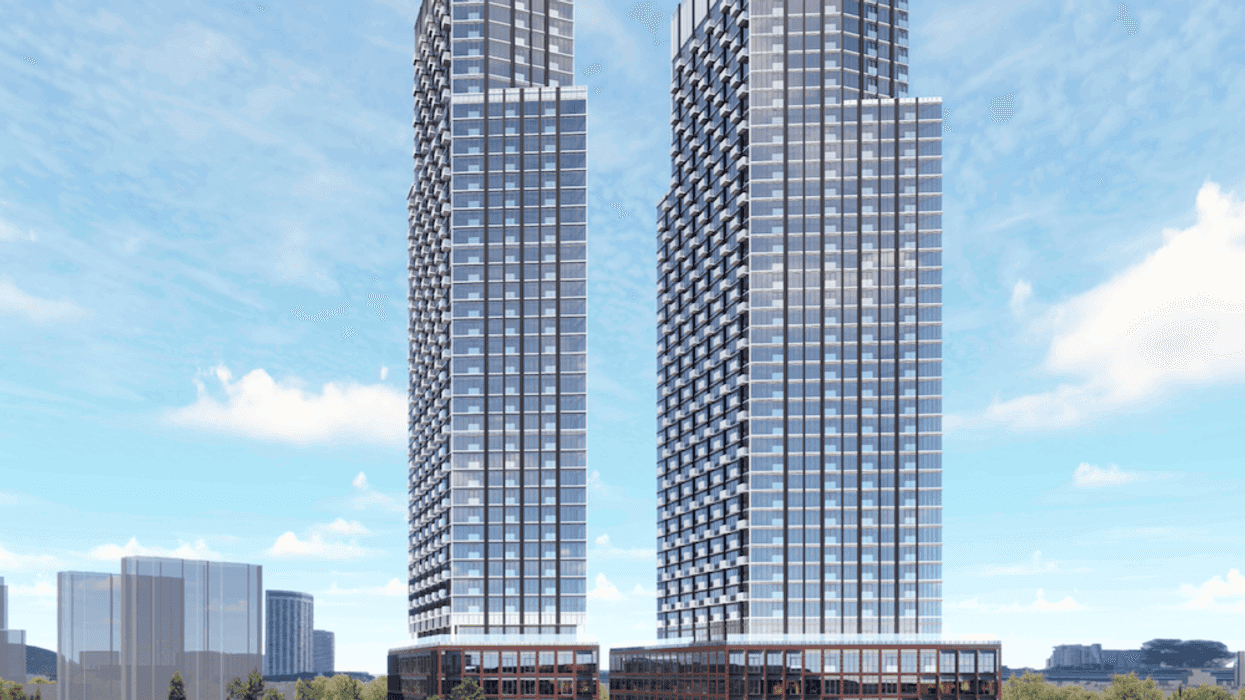
The developer acquired airspace rights from a neighbouring building to construct additional floors on their tower.
Key Takeaways
- Grants legal control over space above land
- Can be separated from land ownership
- Valuable in urban high-density markets
- Subject to local planning regulations
- Enhances property development opportunities

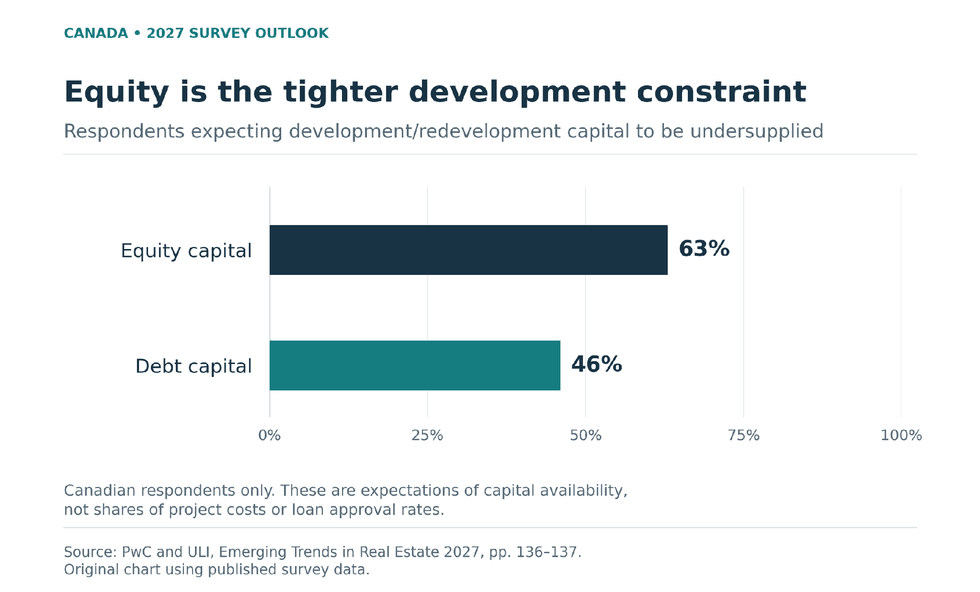 Canadian respondents were more likely to expect an undersupply of development/redevelopment equity capital (63%) than debt capital (46%) in 2027. These are survey expectations, not measured financing volumes. Source: PwC and ULI, Emerging Trends in Real Estate 2027, pp. 136–137. Original chart.
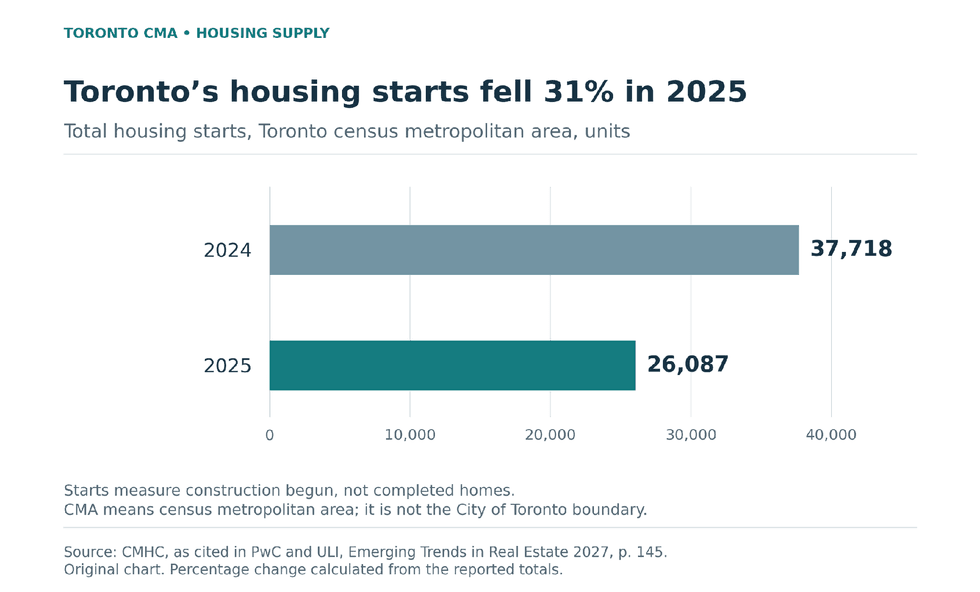 Toronto census metropolitan area housing starts fell from 37,718 units in 2024 to 26,087 in 2025, a 30.8% decline (rounded to 31%). Starts measure construction begun, not completed homes. Source: CMHC, as cited in PwC and ULI, Emerging Trends in Real Estate 2027, p. 145. Original chart.








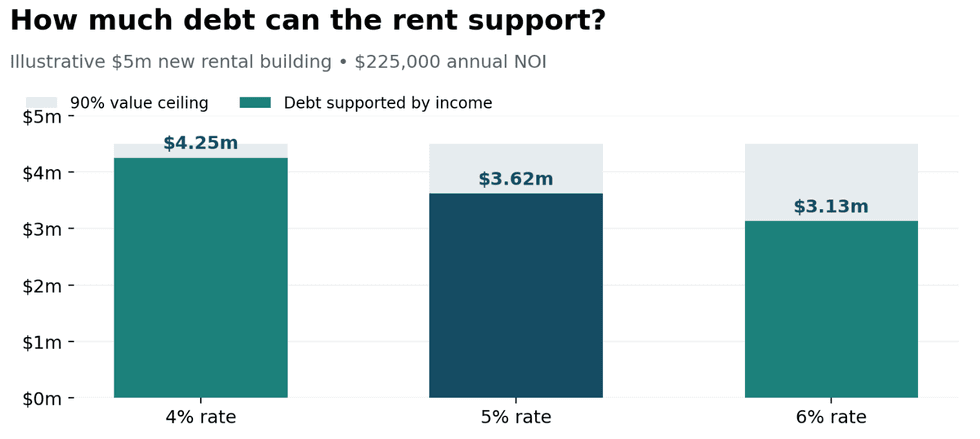 Illustrative calculation: a $4.5-million value ceiling versus income-based capacity of about $4.25 million at 4%, $3.62 million at 5% and $3.13 million at 6%. Assumes 50-year amortization and 1.15 debt coverage.
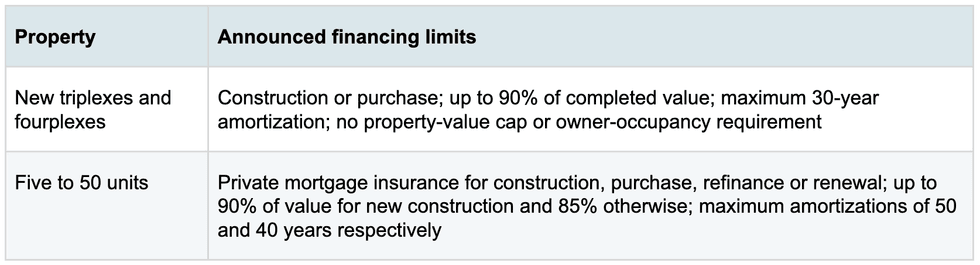
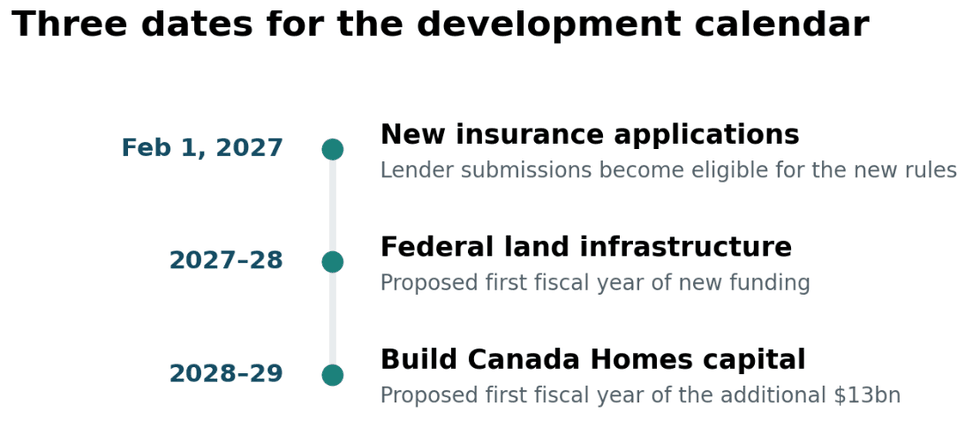 Source: Department of Finance missing-middle backgrounder and Budget 2026 Chapter 3, November 5, 2026. Fiscal-year funding starts are not home-completion dates.