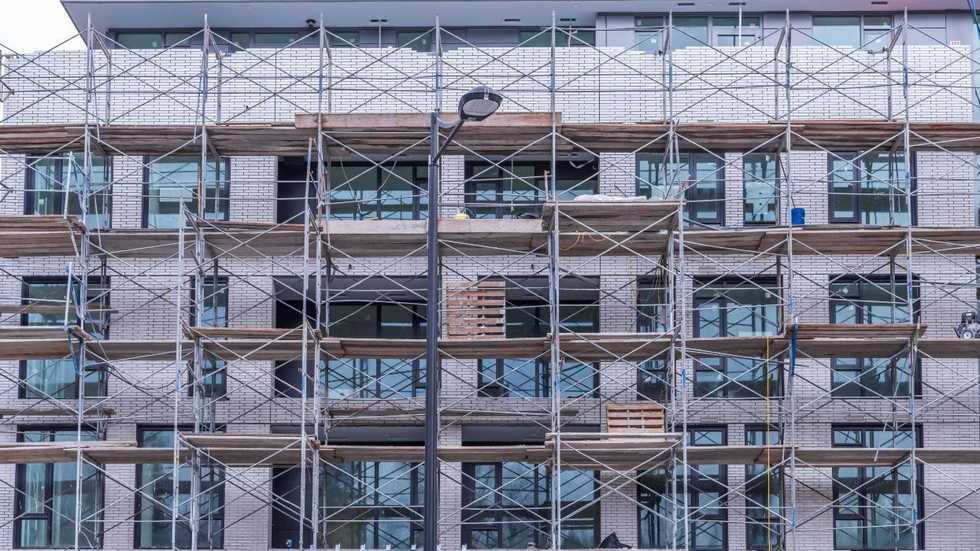
Ontario was sitting on roughly $10.5 billion in development charge (DC) reserves by the end of 2024, according to a recent report from Desjardins that argues municipalities have become overly accustomed to the fees as a source of revenue.
More controversial still, DCs remain one of the most serious obstacles to new housing in a province where affordability is crumbling.
DCs are levied on residential and non-residential construction to help municipalities pay for infrastructure needed to support growth — think: roads, water and wastewater systems, parks, transit, and community facilities — but the report notes that the sheer size of Ontario's reserve suggests revenues are accumulating faster than they're being spent.
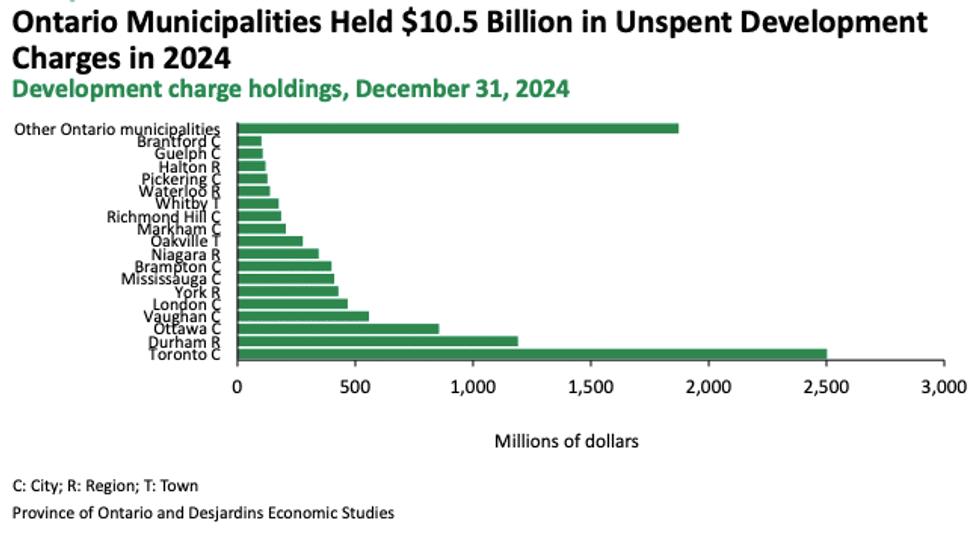
“Some level of accumulation is expected, as DCs are collected upfront while major infrastructure projects are delivered over many years and often require large, indivisible investments,” writes Desjardins Economist Kari Norman. “However, the scale of these balances means that a portion of infrastructure costs is effectively prefunded by earlier cohorts of homebuyers in order to meet future growth needs.”
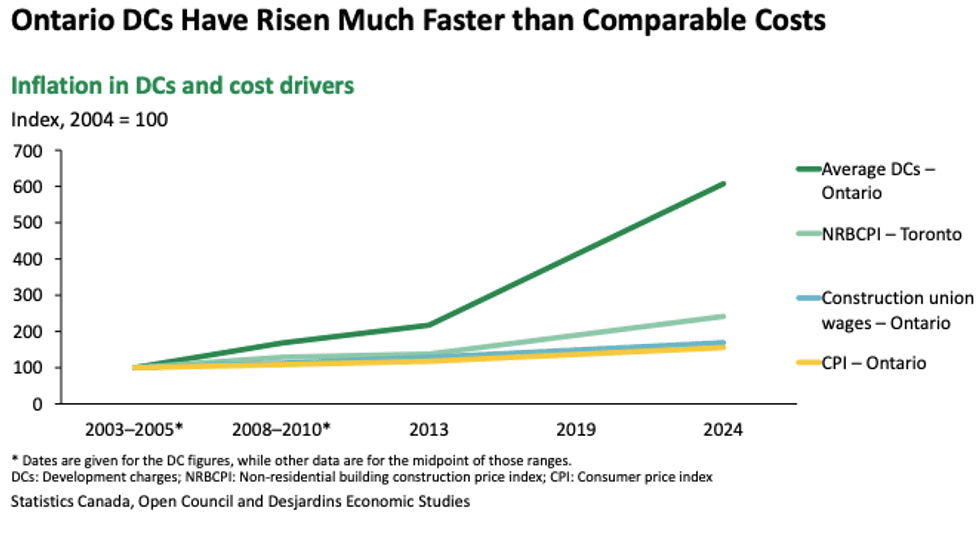
In Ontario in particular, DCs have risen rapidly over the past two decades — by around 500%. Other cost drivers have increased to a lesser degree. Construction wages, for example, have risen 70% over the same period, while general inflation has increased 55%. “Taken together, these patterns suggest DCs are driven more by policy design than by underlying costs, with outcomes that vary markedly across jurisdictions,” says Norman.
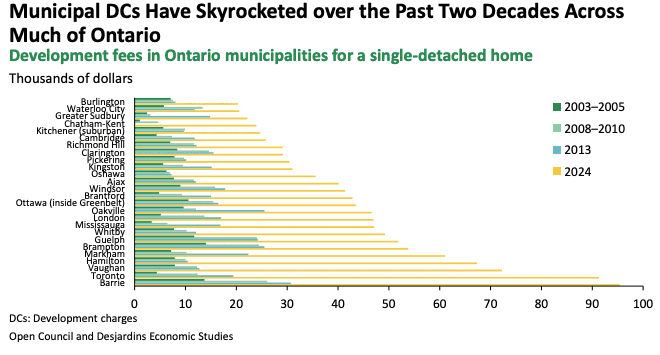
Toronto is featured prominently in the report. According to Desjardins, DCs on a single-detached home in the city now exceed $137,000, making the city among the worst offenders in the province and putting a direct damper on new construction. According to recent analysis from Canada Mortgage and Housing Corporation (CMHC), eliminating DCs in Toronto and Vancouver could increase the number of financially viable housing projects by roughly 10%.
Governments, meanwhile, appear to slowly but surely be acknowledging the trade-off between funding growth and encouraging it. On Tuesday, the City of Toronto announced a $1.5-billion investment through the Canada–Ontario Partnership to Build program to support its infrastructure needs. In turn, Toronto will reduce its DCs by 40% to 60% over the next three years. Toronto is the first municipality to secure funding through the program, which is part of the earlier-announced Development Charge Reduction Program, originally designed to reduce DCs by 30% to 50%.
In many ways, this week’s announcement reflects the very challenge explored in the Desjardins report. Municipalities rely on DCs to fund growth-related infrastructure, but governments can’t ignore that the fees themselves have become a barrier to building new homes. One of the purposes of the Canada–Ontario Partnership to Build is to shift some of the cost burden from housing developers to provincial and federal governments.
Ontario is not alone in pursuing such an approach. Last week, the federal and British Columbia governments announced a $5-billion investment in the province's local infrastructure through the Build Communities Strong Fund, inclusive of a $1.6-billion investment to reduce multi-unit housing DCs in “priority communities” by up to 50%. Those funds are set to be matched by the province for a total of up to $3.2 billion, and are expected to save builders as much as $40,000 per unit.