Replacement Cost
Learn what replacement cost means in Canadian home insurance, how it compares to cash value, and why it ensures full rebuilding or repair after a loss.

May 22, 2025
What is Replacement Cost?
Replacement cost is the amount it would take to rebuild or replace damaged property using materials of similar kind and quality, without deducting for depreciation.
Why Replacement Cost Matters in Real Estate
In Canadian real estate, replacement cost is a key concept in property insurance. It determines the payout a homeowner receives after a covered loss.
Replacement cost differs from:
- Actual Cash Value (ACV): which subtracts depreciation
- Market Value: which may include land and location premiums
Policies with replacement cost ensure full rebuilding or repair using comparable materials. It applies to both home structures and personal belongings.
Understanding replacement cost helps homeowners ensure they are adequately insured and can recover fully from a loss without out-of-pocket expenses for age or wear.
Example of Replacement Cost in Action
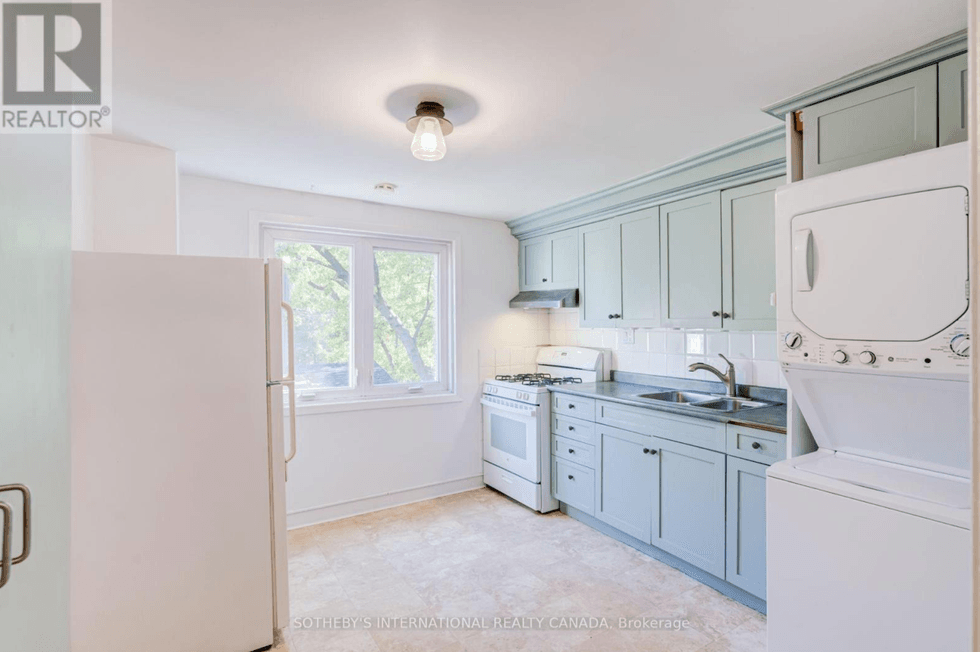
A fire destroys a homeowner’s kitchen. Their replacement cost policy covers the full cost to rebuild it with modern equivalents, regardless of the kitchen’s age.
Key Takeaways
- Pays to replace damaged property without depreciation.
- Used in most standard home insurance policies.
- Ensures full recovery after a loss.
- Applies to buildings and belongings.
- Key factor in selecting coverage.
Related Terms
- Coverage Limit
- Property Protection
- Home Insurance
- Actual Cash Value
- Insurance Appraisal










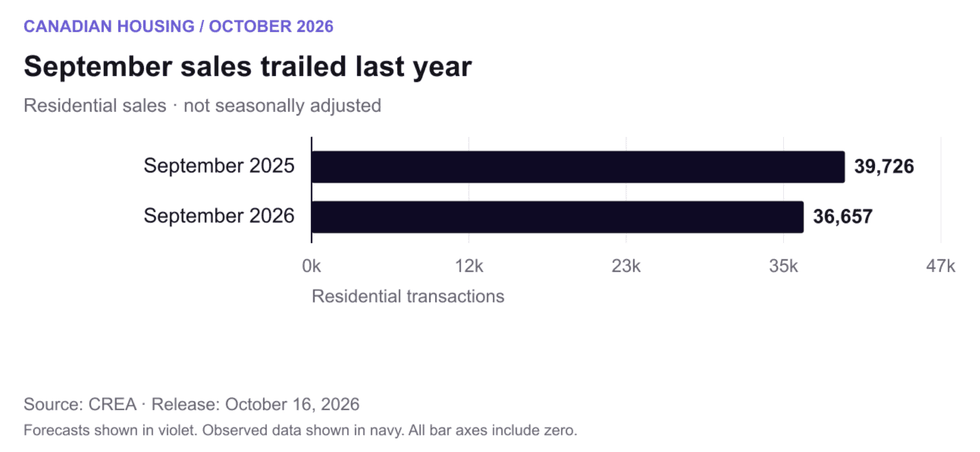 September residential sales, not seasonally adjusted; the annual comparison uses CREA’s revised figures. Chart:
 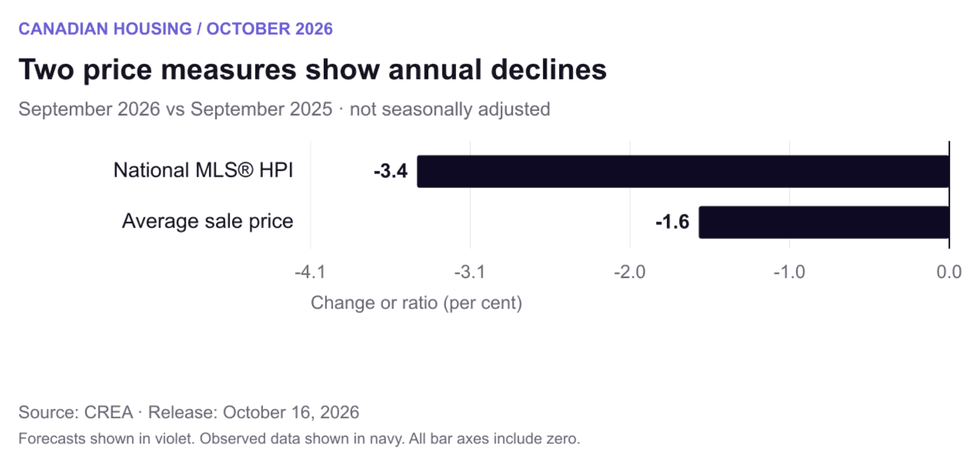 Annual changes in the unadjusted national MLS® HPI and average sale price. The average is affected by the mix of transactions. Chart:
 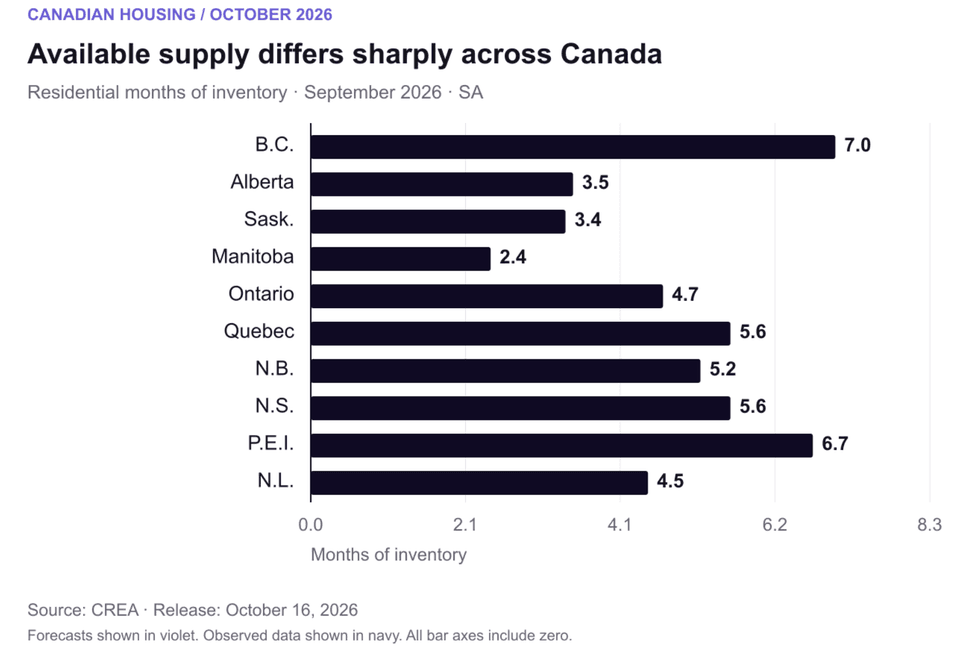 Seasonally adjusted residential months of inventory by province. Local property types can differ substantially. Chart:
 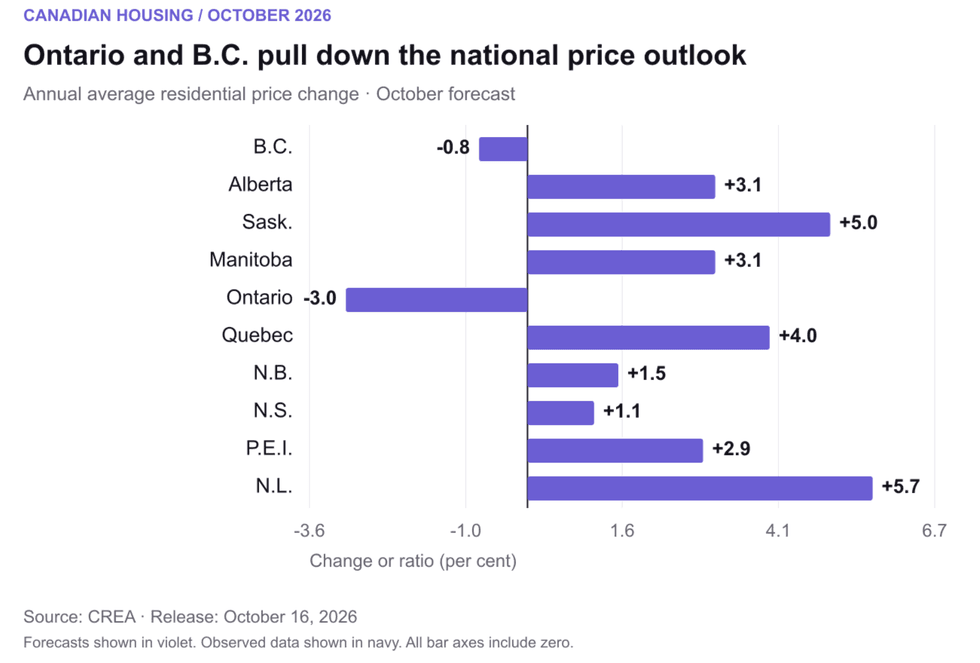 Ontario and B.C. are the two provinces with forecast annual average-price declines in 2026. Chart:
 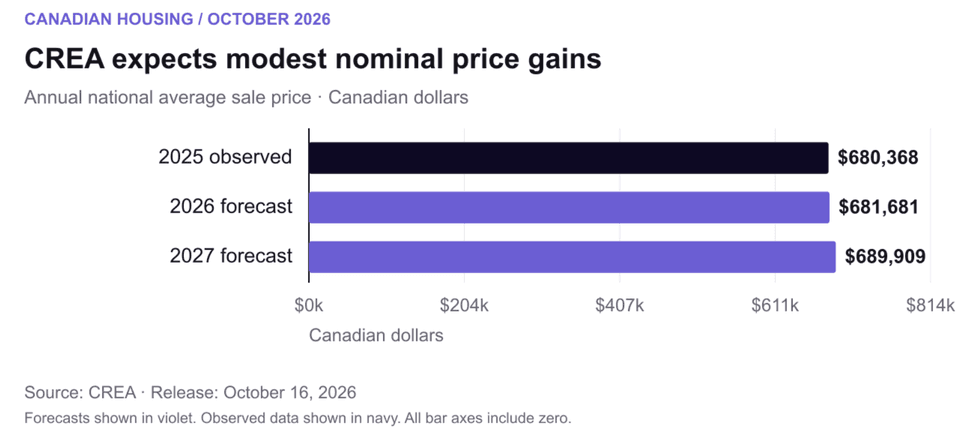 Annual average transaction prices in Canadian dollars. Forecast values are not December price targets. Chart:
 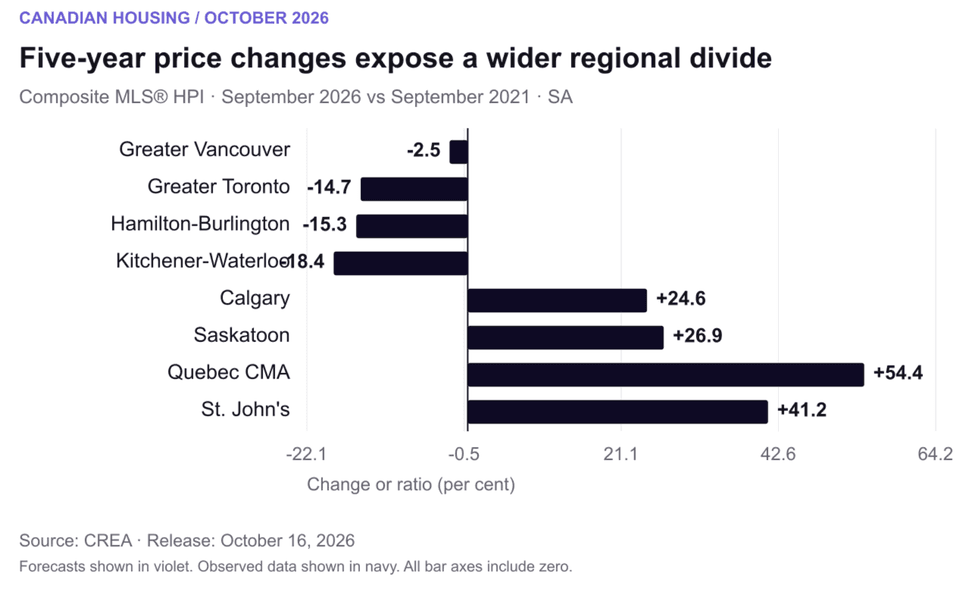 Five-year changes in seasonally adjusted composite MLS® HPI benchmarks, September 2021 to September 2026. Chart: