Green Roof
A green roof is a roof system with vegetation and drainage that supports sustainability, stormwater management, and energy efficiency.

September 30, 2025
What is a Green Roof?
A green roof is a roof system partially or fully covered with vegetation, soil, and drainage layers above a waterproof membrane. Green roofs may be intensive (deep soil, larger plants) or extensive (shallow soil, low-maintenance vegetation). They provide stormwater management, thermal insulation, and aesthetic value. Some green roofs also include amenity spaces for building occupants.
Why Green Roofs Matter in Real Estate
Green roofs matter in real estate because they contribute to sustainability, reduce the urban heat island effect, and lower cooling loads. They may qualify for tax credits, fee reductions, or development charge credits in some municipalities. Structural requirements, waterproofing, and maintenance plans must be carefully considered to ensure long-term performance.
Example of a Green Roof in Action
A commercial building installs an extensive green roof to retain rainwater and reduce runoff fees. The project also provides improved insulation and enhances the property’s marketability.
Key Takeaways
- Green roofs manage stormwater and reduce heat island effects.
- They improve building efficiency and insulation.
- May qualify for sustainability incentives.
- Require structural and waterproofing considerations.
- Offer amenity and biodiversity benefits.
Related Terms
- Stormwater Management
- Thermal Performance
- Maintenance Plan
- Building Envelope
- Development Charge Credit
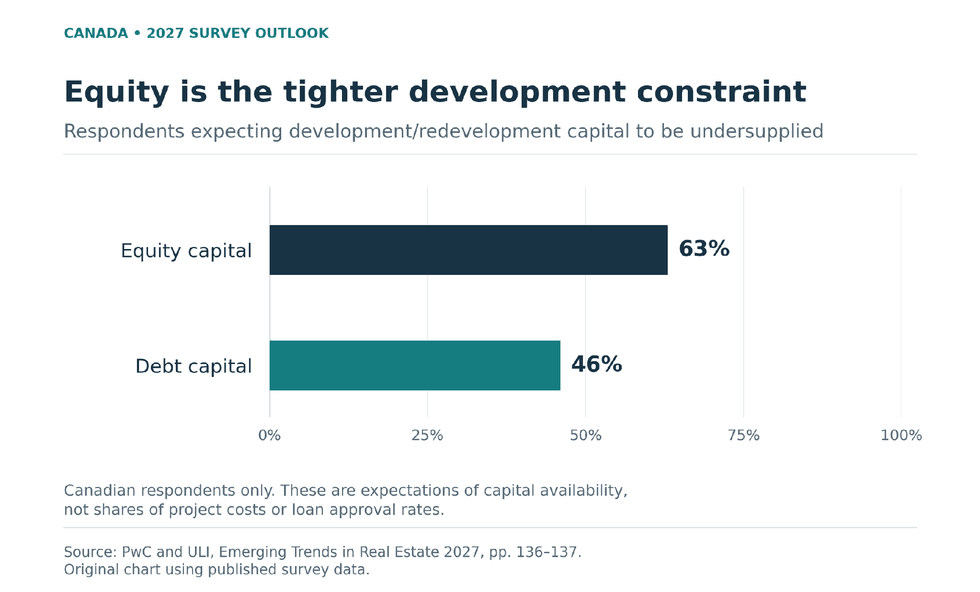 Canadian respondents were more likely to expect an undersupply of development/redevelopment equity capital (63%) than debt capital (46%) in 2027. These are survey expectations, not measured financing volumes. Source: PwC and ULI, Emerging Trends in Real Estate 2027, pp. 136–137. Original chart.
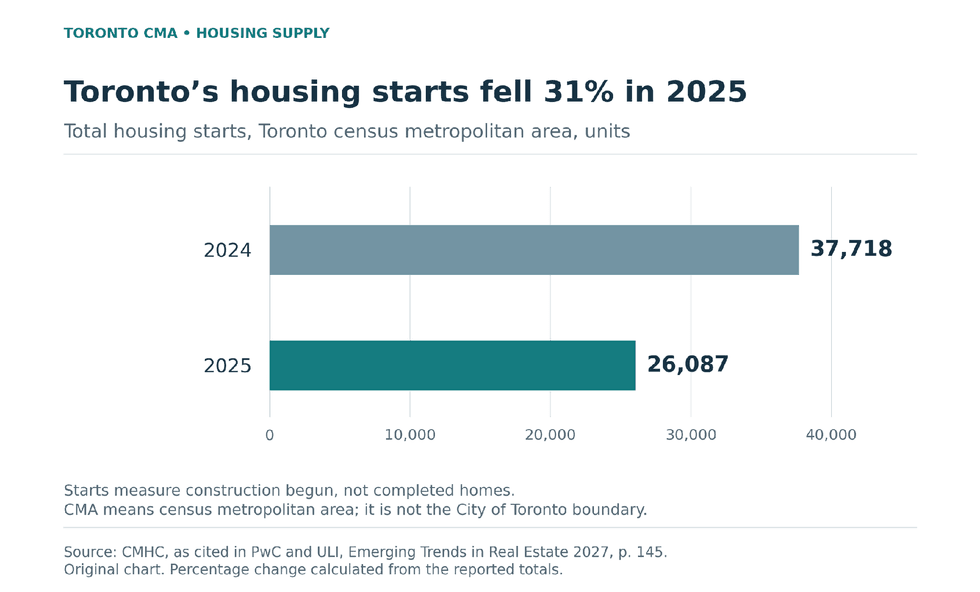 Toronto census metropolitan area housing starts fell from 37,718 units in 2024 to 26,087 in 2025, a 30.8% decline (rounded to 31%). Starts measure construction begun, not completed homes. Source: CMHC, as cited in PwC and ULI, Emerging Trends in Real Estate 2027, p. 145. Original chart.


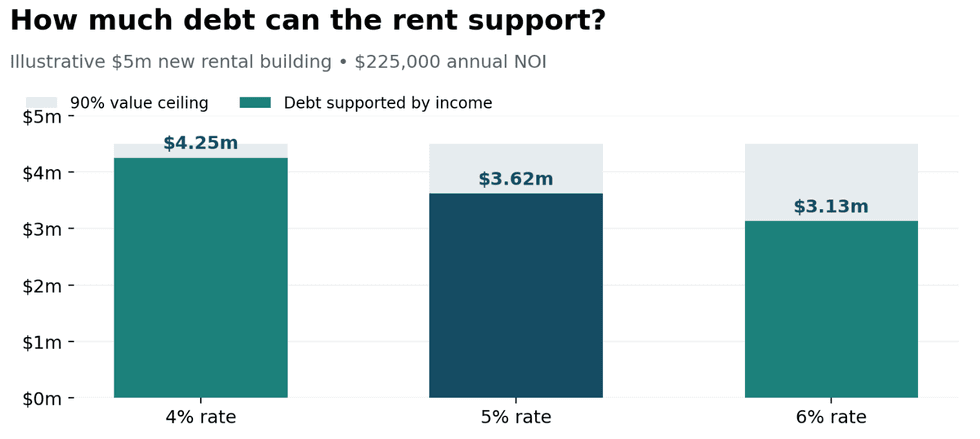 Illustrative calculation: a $4.5-million value ceiling versus income-based capacity of about $4.25 million at 4%, $3.62 million at 5% and $3.13 million at 6%. Assumes 50-year amortization and 1.15 debt coverage.
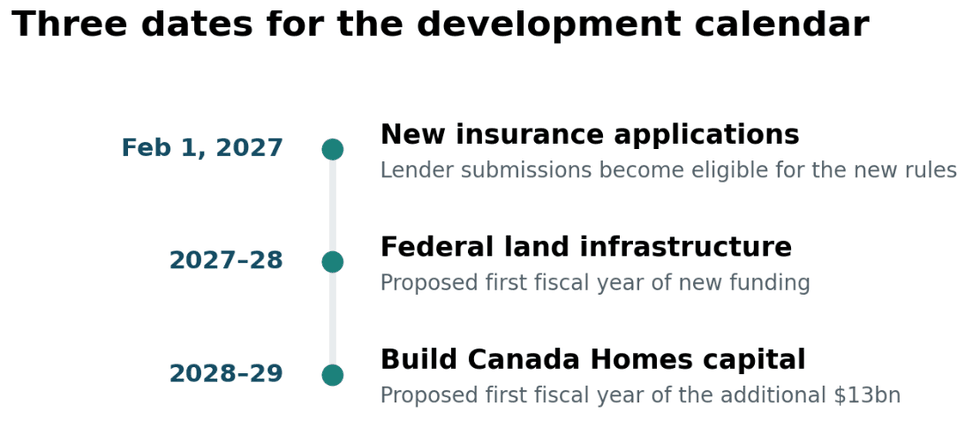 Source: Department of Finance missing-middle backgrounder and Budget 2026 Chapter 3, November 5, 2026. Fiscal-year funding starts are not home-completion dates.