Final Inspection
Understand what a final inspection is in Canadian real estate, when it's needed, and how it ensures a home is safe and ready for occupancy.

May 30, 2025
What is a Final Inspection?
A final inspection is the last official review of a newly built or renovated property by municipal authorities to ensure it meets building codes and safety standards before an occupancy permit is issued.
Why Do Final Inspections Matter in Real Estate?
In Canadian real estate, final inspections are required for new construction and major renovations. Inspectors verify that plumbing, electrical, structural, and fire safety systems are code-compliant.
Typical inspection points include:
- Electrical wiring and panel compliance
- HVAC and ventilation systems
- Building envelope and weatherproofing
Without passing the final inspection, a municipality will not issue an occupancy permit, which is required before a buyer can legally take possession.
Understanding final inspections helps builders and buyers ensure legal compliance and avoid delays during closing.
Example of a Final Inspection in Action
The city inspector completes the final inspection of a new townhouse, approving occupancy and allowing the buyers to move in.
Key Takeaways
- Conducted by city officials before occupancy.
- Required for code compliance.
- Verifies plumbing, structure, and safety.
- Needed to obtain an occupancy permit.
- Delays possession if not passed.
Related Terms
- Occupancy Permit
- Building Permit
- New Construction
- Municipal Compliance
- Walkthrough Inspection

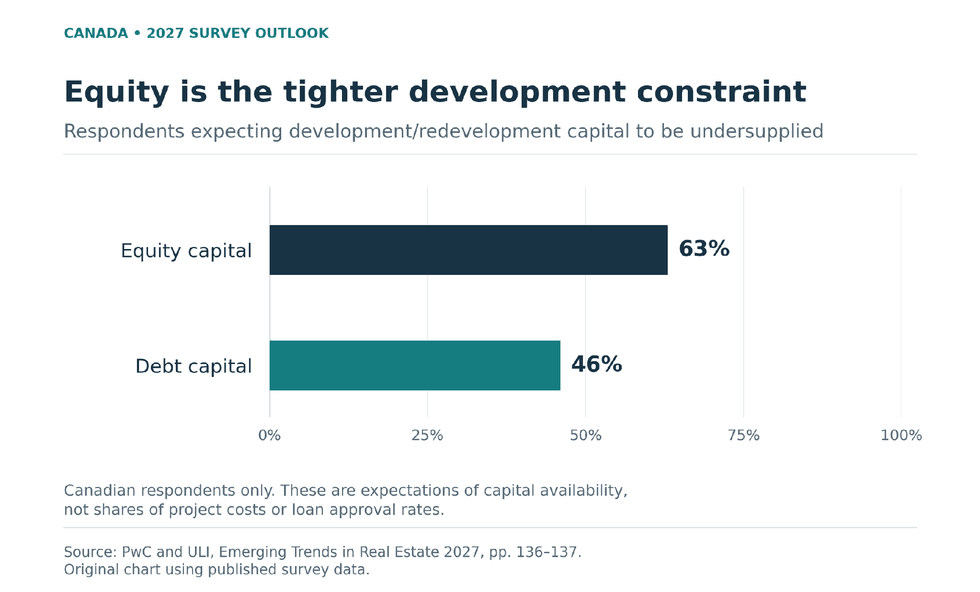 Canadian respondents were more likely to expect an undersupply of development/redevelopment equity capital (63%) than debt capital (46%) in 2027. These are survey expectations, not measured financing volumes. Source: PwC and ULI, Emerging Trends in Real Estate 2027, pp. 136–137. Original chart.
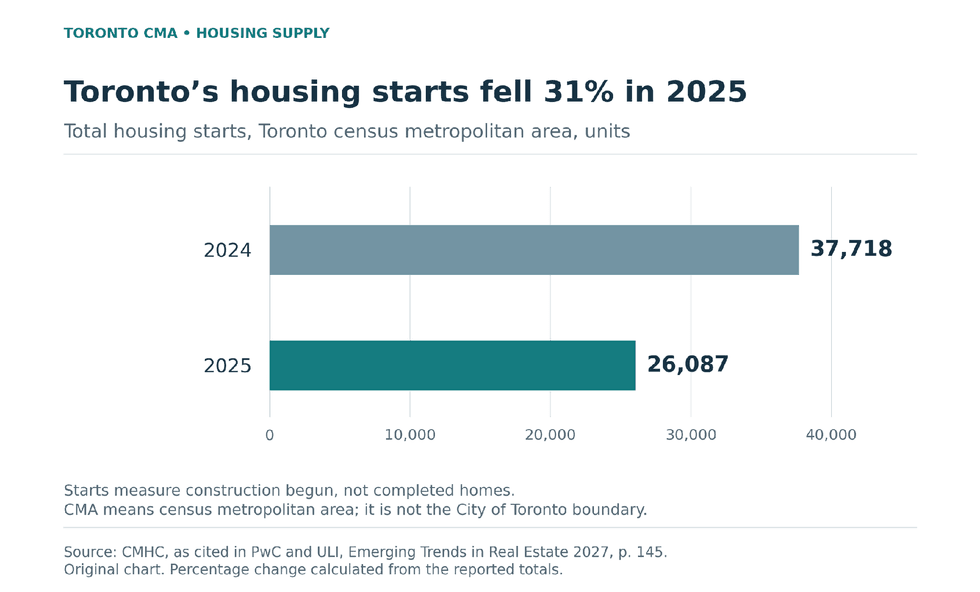 Toronto census metropolitan area housing starts fell from 37,718 units in 2024 to 26,087 in 2025, a 30.8% decline (rounded to 31%). Starts measure construction begun, not completed homes. Source: CMHC, as cited in PwC and ULI, Emerging Trends in Real Estate 2027, p. 145. Original chart.










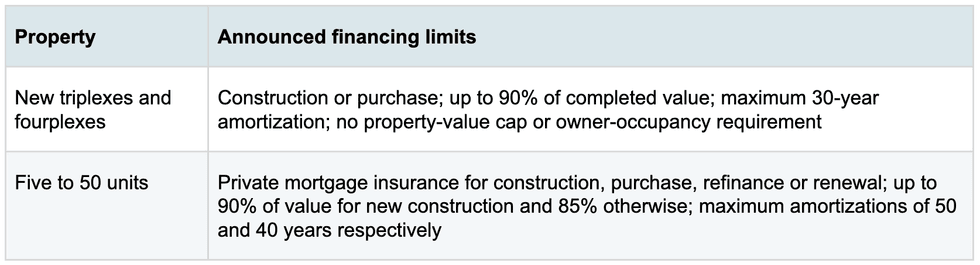
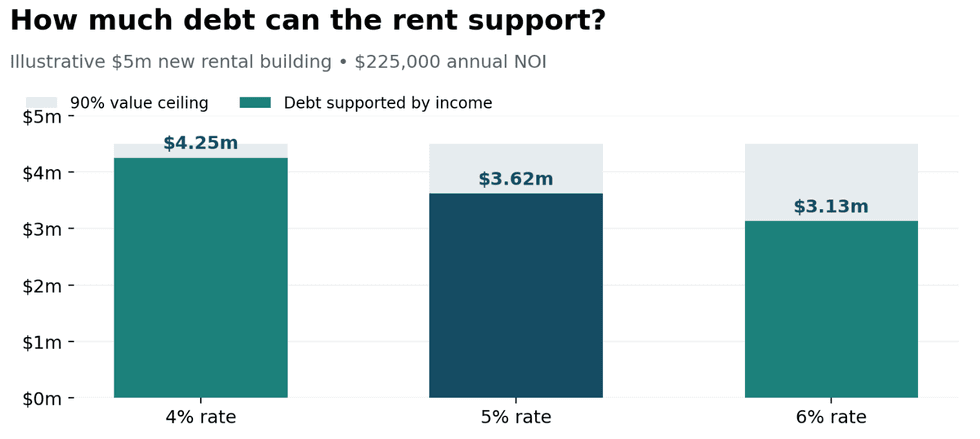 Illustrative calculation: a $4.5-million value ceiling versus income-based capacity of about $4.25 million at 4%, $3.62 million at 5% and $3.13 million at 6%. Assumes 50-year amortization and 1.15 debt coverage.
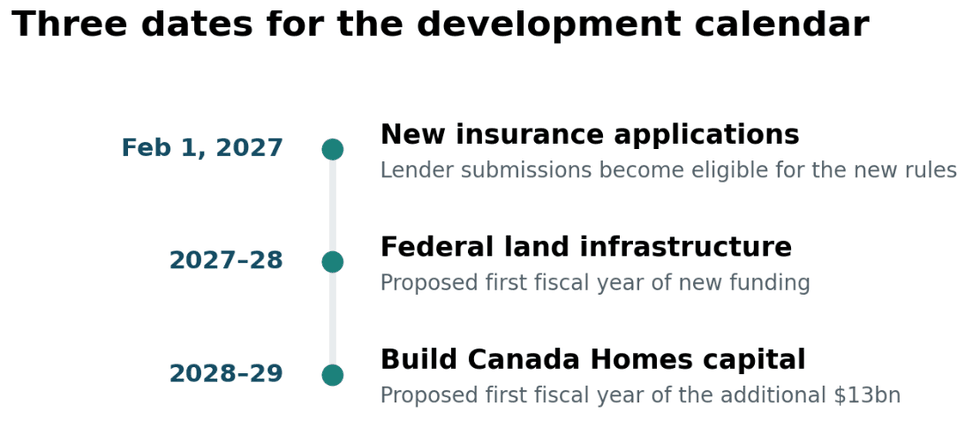 Source: Department of Finance missing-middle backgrounder and Budget 2026 Chapter 3, November 5, 2026. Fiscal-year funding starts are not home-completion dates.