Bidding War

Learn what a bidding war is in Canadian real estate, how it impacts buyers and sellers, and what strategies to use in a highly competitive market.

Bidding War

May 22, 2025


What is a Bidding War?

A bidding war occurs when multiple potential buyers compete to purchase the same property by submitting increasingly higher offers, often driving the final sale price above the initial asking price.

Why Bidding Wars Matter in Real Estate

Bidding wars are a hallmark of competitive real estate markets, particularly in high-demand areas with limited housing supply. In Canada, they are especially common in cities like Toronto and Vancouver, where housing inventory is tight and buyer interest remains strong.

A bidding war typically begins when a property receives multiple offers shortly after being listed, often after a scheduled offer presentation date. To outbid competitors, buyers may offer more than the asking price, waive common conditions (like home inspection or financing), or include incentives such as flexible closing dates.

While sellers often benefit from higher sale prices and favorable terms, buyers may face significant pressure to make quick, aggressive offers. This can lead to emotional decision-making, financial overextension, and limited due diligence.

Understanding how bidding wars work is crucial for buyers, sellers, and agents alike. Buyers should be pre-approved, know their budget limits, and work with experienced professionals to craft strategic, competitive offers. Sellers should prepare their property for maximum appeal and consider how to manage multiple offers fairly and effectively.

Example of a Bidding War

A detached home in Mississauga is listed for $950,000. After a week of showings and a set offer date, the seller receives eight offers. The final sale price reaches $1.1 million due to intense competition.

Key Takeaways

  • Occurs when multiple buyers compete for the same property.
  • Often results in offers over asking price.
  • Can involve waived conditions and buyer incentives.
  • Favors sellers but increases risk for buyers.
  • Requires preparation, strategy, and a firm understanding of budget limits.

Related Terms

Additional Terms

Public Realm Improvements

Public realm improvements are enhancements to public spaces such as sidewalks, parks, plazas, and streetscapes, often funded or contributed by. more

Mortgagee in Possession

A mortgagee in possession is a lender who takes control of a property after borrower default, but before foreclosure or power of sale. The lender. more

Lease Surrender Agreement

A lease surrender agreement is a negotiated contract between a landlord and tenant that ends a lease before its scheduled expiration. Terms may. more

Green Infrastructure

Green infrastructure refers to natural or engineered systems that manage stormwater, reduce heat, and improve sustainability in developments.. more

Escrow Holdback

An escrow holdback is a portion of funds withheld at closing and held in escrow until specific conditions are met, such as completion of repairs,. more

Underused Housing Tax

The Underused Housing Tax (UHT) is a federal annual 1% tax on the value of vacant or underused residential property owned by non-resident,. more

More For You

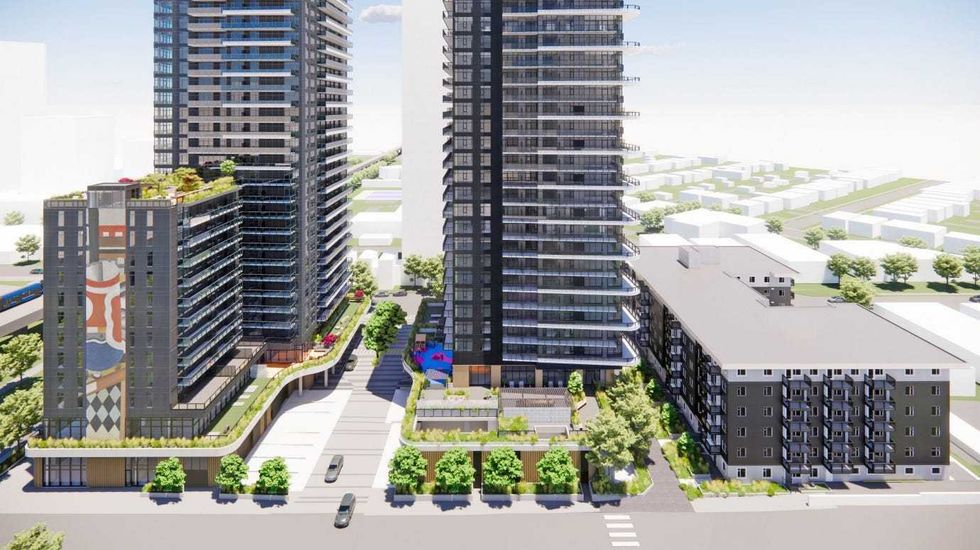
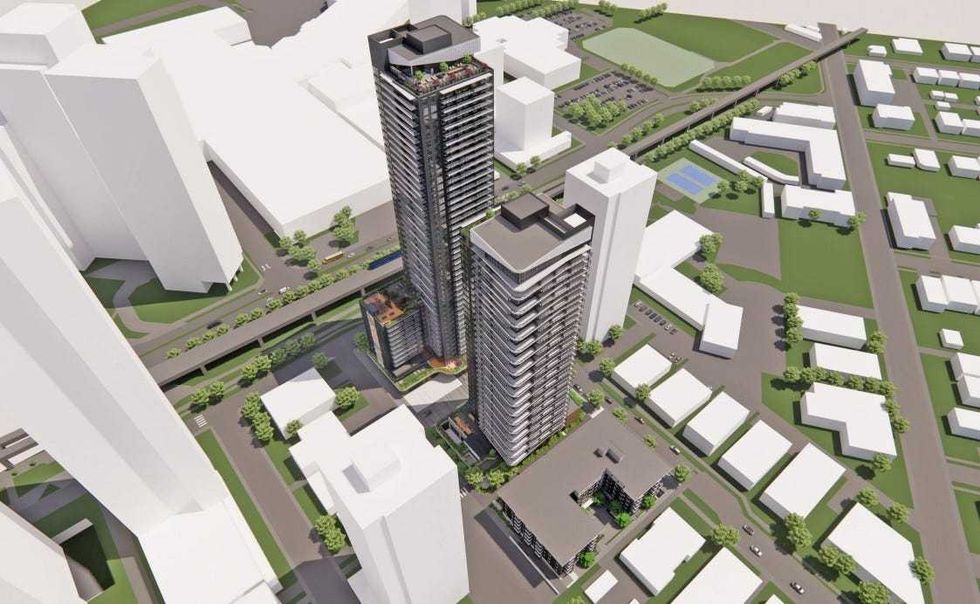
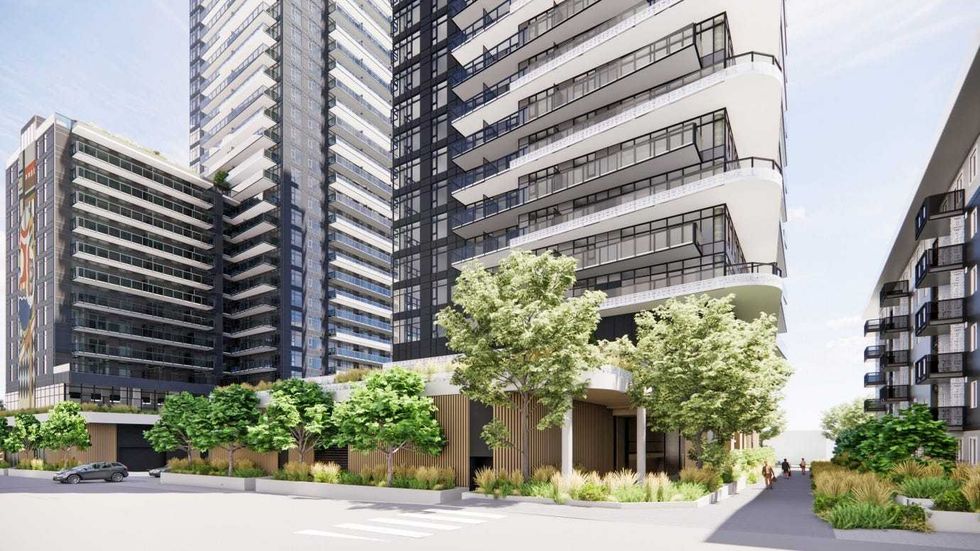
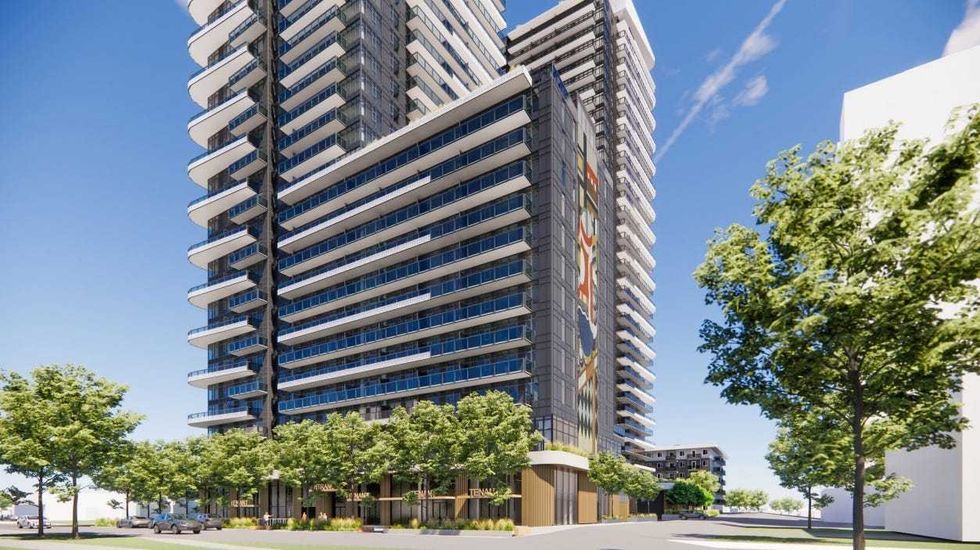
Peterson Proposes 34-, 29-Storey Rental Towers On SE Marine Drive

The two-tower project proposed for 605-695 SE Marine Drive in Vancouver. (MCMP Architects, Peterson)

Fresh off of a brand refresh, Vancouver-based Peterson is now advancing one of its largest planned projects to date, according to a new rezoning application published by the City of Vancouver last week.

The subject site is 605-695 SE Marine Drive, located at the northwest corner of the intersection with Fraser Street. The L-shaped site is currently occupied by a large apartment complex, known as Marine Terrace, which extends up Fraser Street to E 65th Avenue. The property is a single parcel that BC Assessment values at $31,874,000 in its latest assessment, and 605 SE Marine Drive is held by Peterson under Fraser Marine Drive Holdings Inc.

Keep Reading Show less
​Rendering of the first tower in the Fairview Mall master plan project.

Rendering of the first tower in the Fairview Mall master plan/Adamson Associates

All across the Greater Toronto Area, malls are being reimagined into sprawling mixed-use communities — a movement that’s bringing more housing to transit-oriented sites, while lending fresh relevance to retail. And now, Cadillac Fairview has some skin in the game.

The commercial real estate giant owns and operates Fairview Mall in North York, and the over 40-acre site at 1800 Sheppard Avenue East is set to be embellished with over a dozen new buildings and upwards of 6,000 new residential units, alongside new parkland, a multi-use trail, and new public and private streets. The mall will be retained, and the project will be rolled out in phases.

Keep Reading Show less
New Research Signals Mortgage Relief As Pandemic Renewal Wave Wanes
Shutterstock

The pandemic, and the atypical years that followed, turned Canadians on their heads in more ways than one. For those who grabbed the opportunity for a cheap mortgage with both hands, the win was short-lived. Within years, the mortgage space would be rife with warnings of a renewal wave sold as nothing short of jarring.

In November 2024, Canada Mortgage Housing Corporation (CMHC) reported that around 1.2 million fixed-rate mortgages — $300 billion’s worth — would be up for renewal in 2025, and of those, over 85% were taken out when the policy interest rate was at or below 1%. At the time CMHC put these figures out, the benchmark rate was 3.75%.

Keep Reading Show less
Manuela Preis On Loving (And Posting) Life As A Crane Operator

Manuela Preis/Instagram

There are varying statistics and things are improving, but even so, women are estimated to represent just ~15% of the construction sector workforce in Canada. Any given construction site is home to a variety of people who play different roles, with one of the most important being the crane operator overlooking the site.

Statistics suggest that as few as 1 in 25 crane operators is a woman (that's ~4%). Manuela Preis is one of those ones.

Keep Reading Show less
CALIBRATED Lands In Vancouver For Women Leading Construction, Development, Industrial Sectors

RHONDA DENT PHOTOGRAPHY/Shauna Moran Coaching

A leadership program aimed at women working in high-pressure, industrial sectors is landing in Vancouver this spring.

CALIBRATED: A Leadership Experience for Women Who Build will take over the Vancouver Club on May 13, bringing together women in senior leadership, executive, and technical roles across construction, development, infrastructure, energy, water, environment, and resources.

Keep Reading Show less
Tightening Supply Could Support GTA Home Sales Later This Year: TRREB

After a softer start to the year, tightening market conditions could set the stage for a rebound in Greater Toronto Area home sales later in 2026, according to the Toronto Regional Real Estate Board.

New data from TRREB shows that while resale transactions declined year-over-year in February, new listings fell at a much sharper pace — a dynamic that could increase competition if demand begins to reassert itself.

Keep Reading Show less
Over 250 New Affordable Homes Break Ground In Regent Park
Revitalization of Regent Part, Toronto

Toronto’s Regent Park is poised to welcome 271 new affordable homes as the next phase of its revitalization moves forward.

A new 26-storey tower, at the southeast corner of Gerrard Street East and Dreamers Way, will deliver 136 replacement rent-geared-to-income (RGI) units and 135 new affordable rental homes, with a focus on family-sized apartments. New indoor and outdoor community spaces are also part of the development.

Keep Reading Show less
If The Future Of Toronto Depends On Density, Why Do We Punish Those Who Embrace It?
Landscape view of Toronto downtown in winter.

This article is authored by Carl Laffan, who provides architectural services in Toronto, specializing in office, residential, and mixed-use projects.

The City of Toronto’s recent “gentle-density” initiative, permitting multiplexes as-of-right across the city, was proposed as an inoffensive introduction of low-rise density within the single-family neighbourhoods that cover 70% of Toronto. Although well researched and widely supported, political pressure from local opposition groups ultimately imposed bedroom caps and size limits, effectively neutering the initiative. During a period when the Canada Mortgage and Housing Corporation reported we needed 150,000 new homes, multiplex permits issued since its adoption are reported to provide only 1,288: the equivalent of two high-rise towers.

Keep Reading Show less