Financing Prequalification
Learn what financing prequalification is in Canadian real estate, how it differs from pre-approval, and how it helps buyers understand their borrowing potential.

May 22, 2025
What is a Financing Prequalification?
Financing prequalification is an informal assessment of a buyer’s financial readiness for a mortgage, based on self-reported information and a preliminary review by a lender or broker.
Why a Financing Prequalification Matters in Real Estate
In Canadian real estate, prequalification helps buyers understand what price range they can afford and what mortgage amount they might qualify for.It typically includes:
- Estimated income, debts, and assets
- Credit score range (no hard check)
- General lending criteria
Understanding financing prequalification empowers buyers to make informed decisions early and avoid overextending themselves.
Example of a Financing Prequalification in Action
A first-time buyer completes a prequalification questionnaire with a mortgage broker and learns they may be eligible for up to $550,000 in financing.
Key Takeaways
- Early, informal mortgage estimate.
- Based on unverified information.
- Helps define a realistic budget.
- Does not guarantee approval.
- Useful first step in the buying process.
Related Terms
- Pre-Approval
- Mortgage Qualification
- Debt Service Ratios
- Credit Score
- Interest Rate


























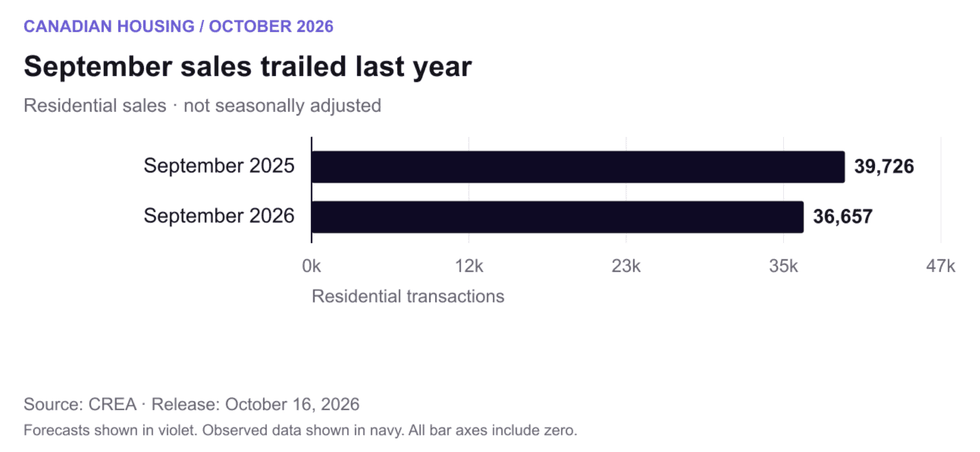 September residential sales, not seasonally adjusted; the annual comparison uses CREA’s revised figures. Chart:
 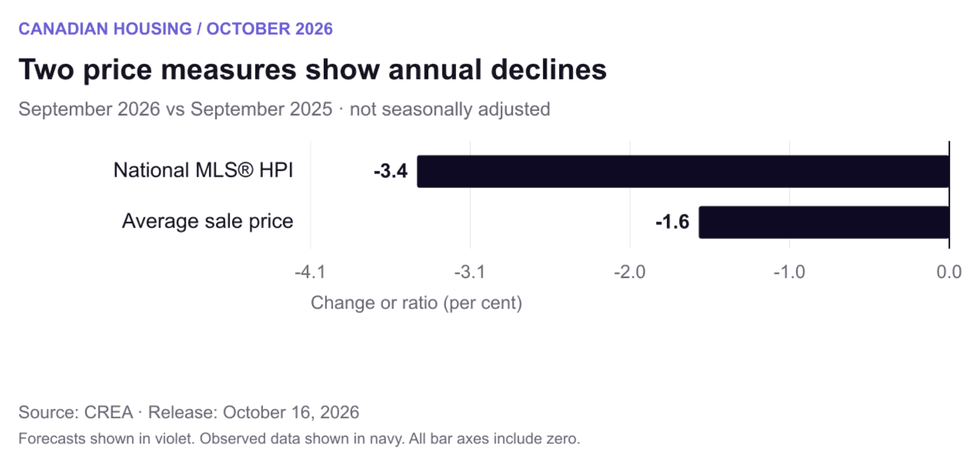 Annual changes in the unadjusted national MLS® HPI and average sale price. The average is affected by the mix of transactions. Chart:
 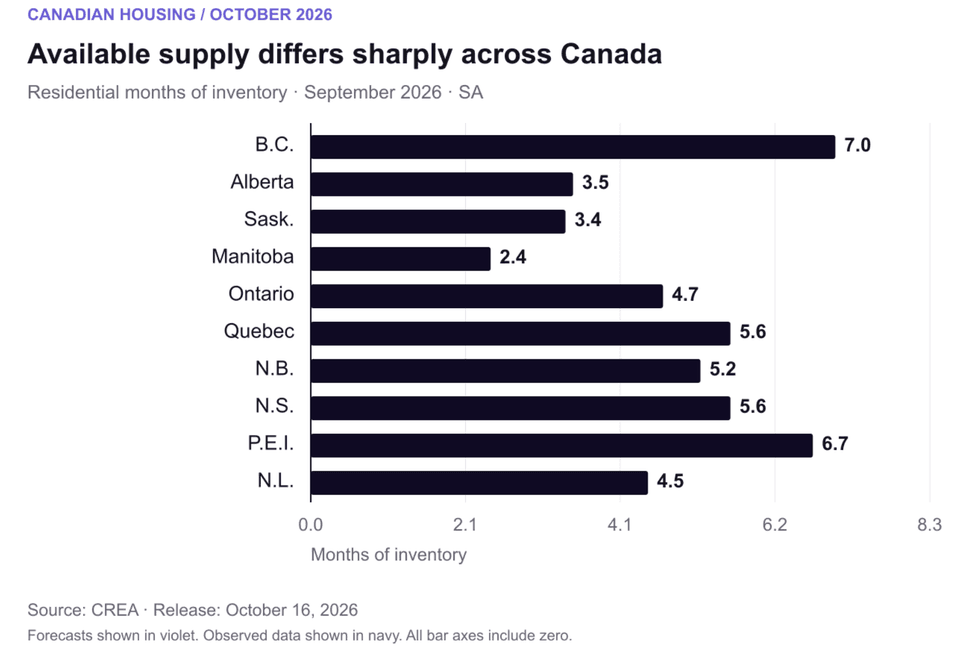 Seasonally adjusted residential months of inventory by province. Local property types can differ substantially. Chart:
 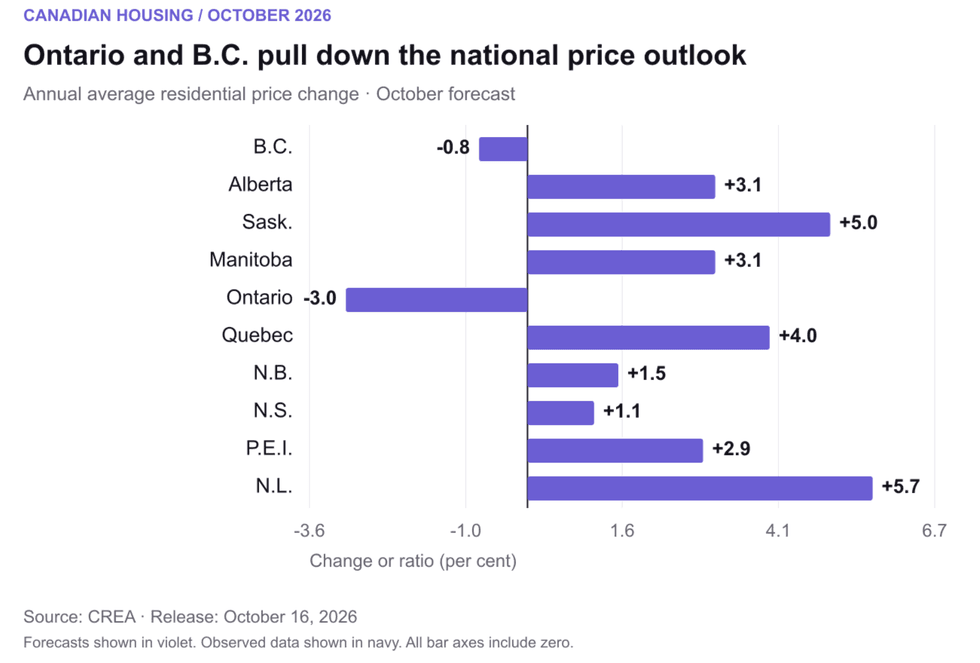 Ontario and B.C. are the two provinces with forecast annual average-price declines in 2026. Chart:
 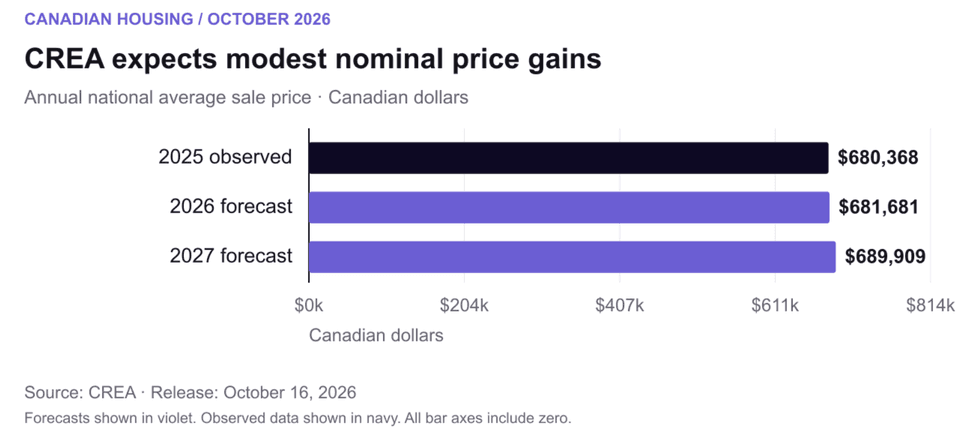 Annual average transaction prices in Canadian dollars. Forecast values are not December price targets. Chart:
 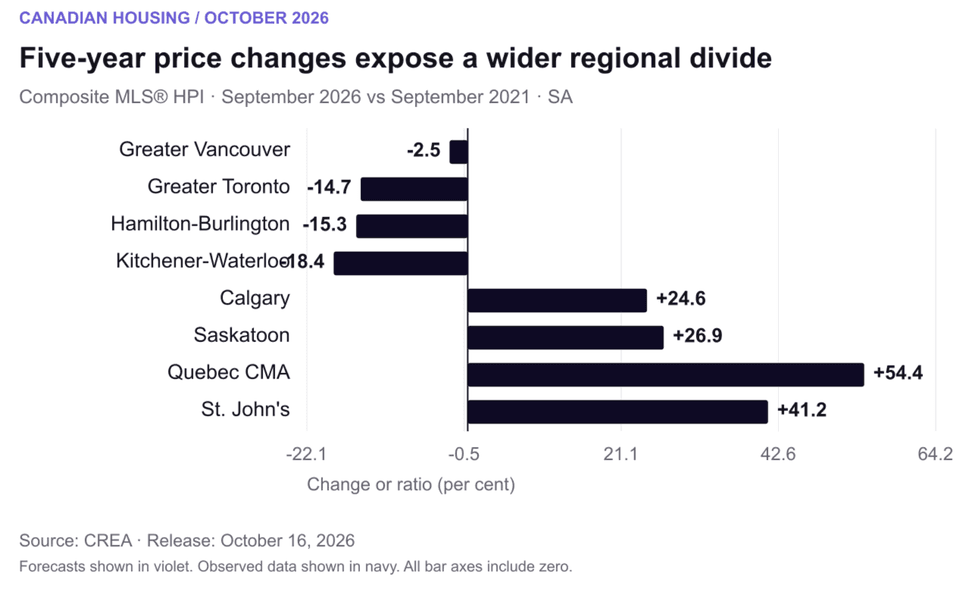 Five-year changes in seasonally adjusted composite MLS® HPI benchmarks, September 2021 to September 2026. Chart: