Builder Permit
Understand when and why a building permit is needed in Canadian real estate, and how it ensures safe, legal, and code-compliant construction or renovation.

May 22, 2025
What is a Builder Permit?
A building permit is an official approval issued by a local municipality that authorizes a property owner to construct, alter, or demolish a building or structure.
Why Builder Permits Matter in Real Estate
In Canadian real estate, building permits are crucial for ensuring that construction and renovations are carried out in accordance with safety regulations, zoning bylaws, and provincial building codes.
Permits are generally required for:- New home construction
- Additions or structural changes
- Major interior renovations (e.g., moving walls, installing new plumbing or electrical systems)
- Building garages, decks, sheds, or fences (depending on local bylaws)
Failing to obtain a permit can lead to stop-work orders, legal penalties, problems during resale, and forced removal of unapproved structures.
Understanding building permits helps property owners stay compliant, ensure safety, and preserve property value. Always check with the local municipality to determine permit requirements before starting any major work.
Example of a Builder Permit
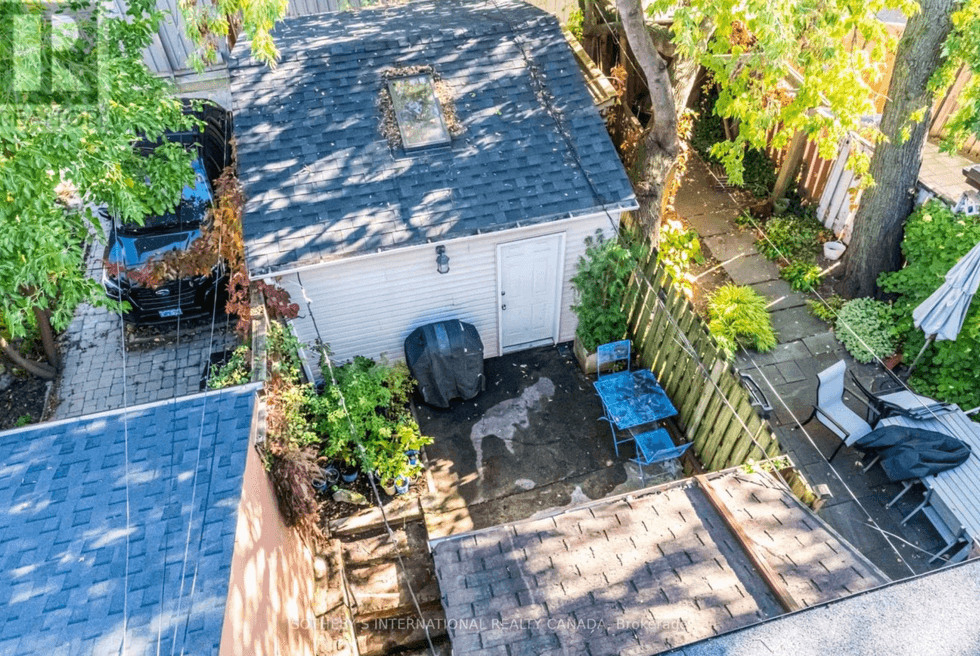
A homeowner in Calgary applies for a building permit before converting their garage into a home office, triggering plan reviews and city inspections.
Key Takeaways
- Required for most major construction or alteration.
- Ensures work complies with codes and zoning.
- Must be obtained before starting the project.
- Involves inspections at key milestones.
- Protects legal and resale value of property.
Related Terms
- Zoning
- Builder Compliance
- Municipal Bylaws
- Construction Approval
- Home Renovation










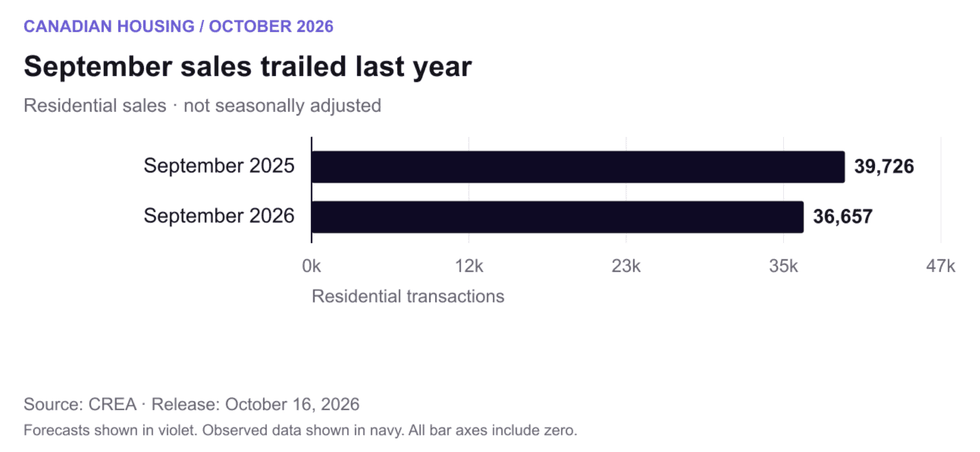 September residential sales, not seasonally adjusted; the annual comparison uses CREA’s revised figures. Chart:
 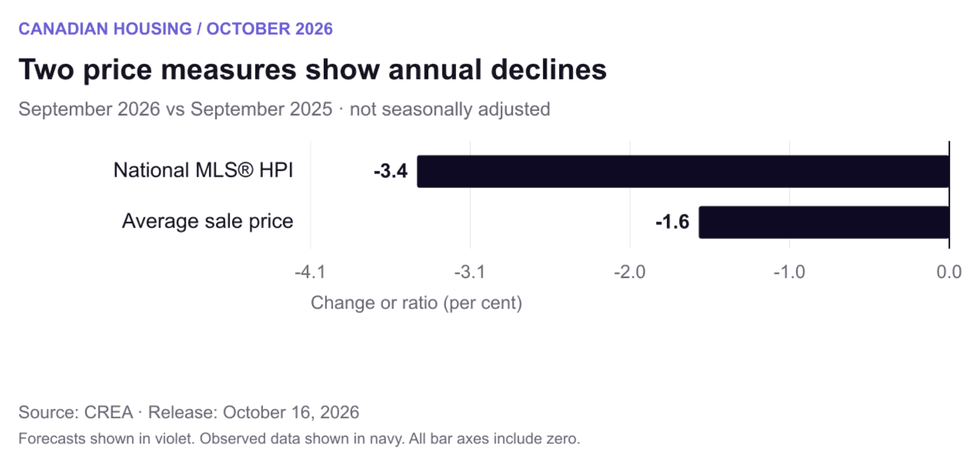 Annual changes in the unadjusted national MLS® HPI and average sale price. The average is affected by the mix of transactions. Chart:
 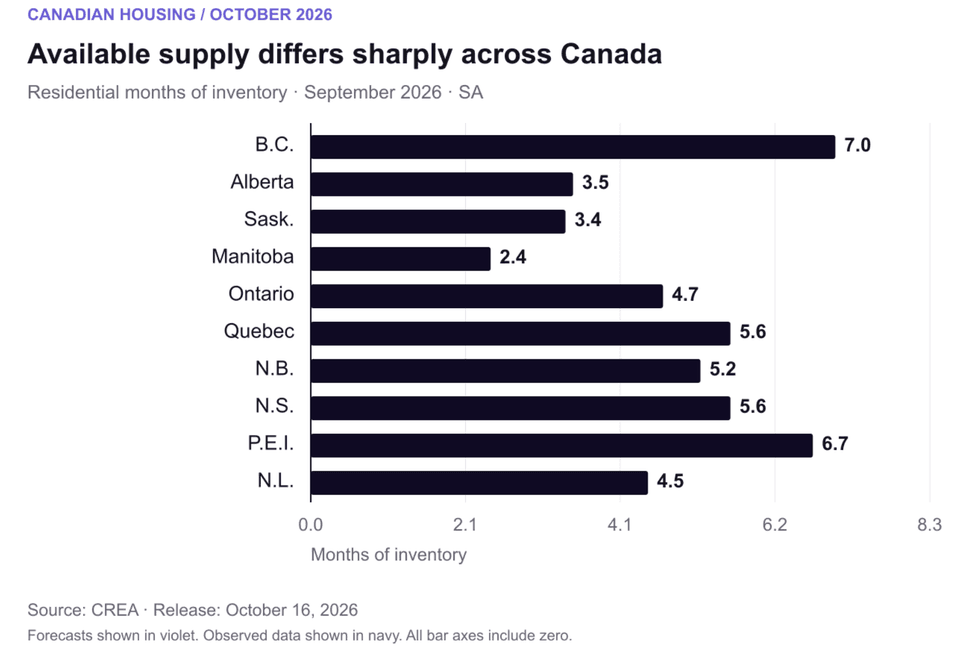 Seasonally adjusted residential months of inventory by province. Local property types can differ substantially. Chart:
 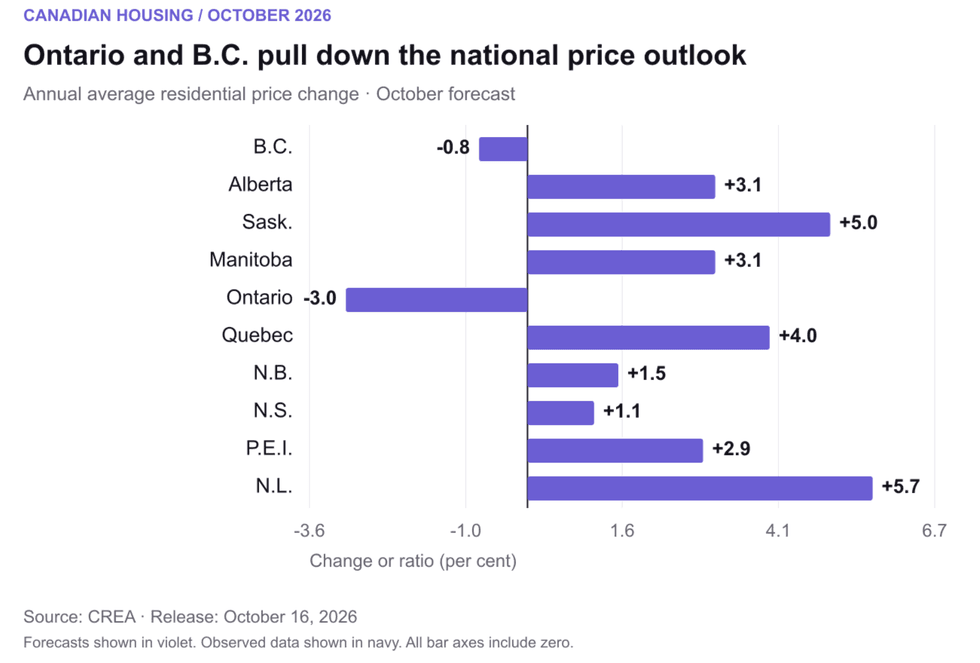 Ontario and B.C. are the two provinces with forecast annual average-price declines in 2026. Chart:
 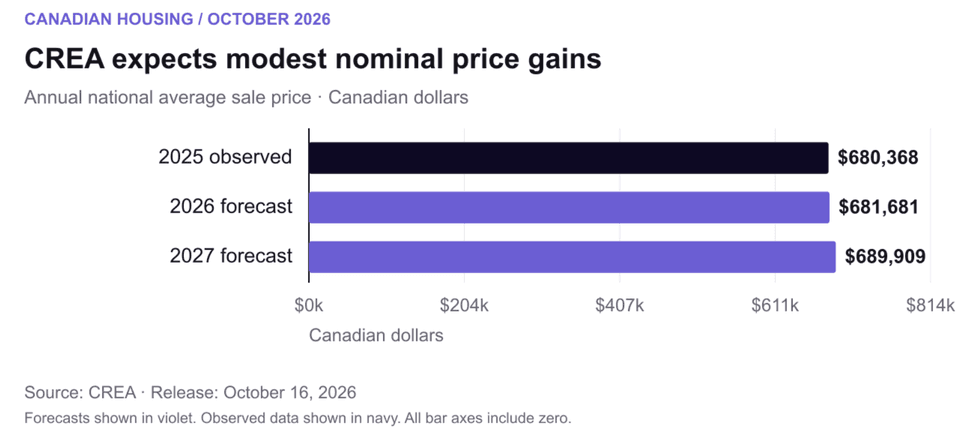 Annual average transaction prices in Canadian dollars. Forecast values are not December price targets. Chart:
 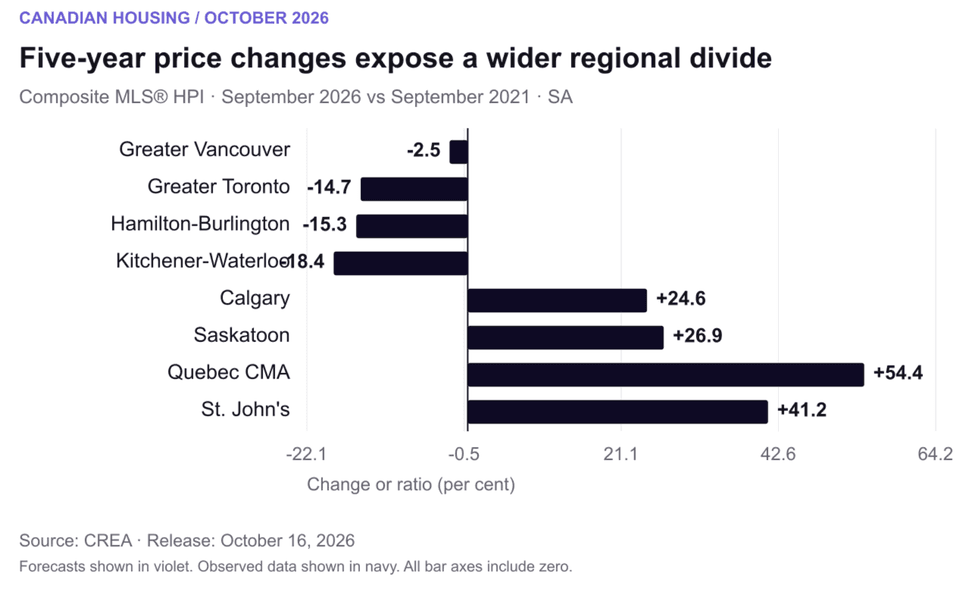 Five-year changes in seasonally adjusted composite MLS® HPI benchmarks, September 2021 to September 2026. Chart: