Publicly Traded Funds

Explore how publicly traded funds like REITs and ETFs offer accessible real estate investing in Canada without owning physical property.

Publicly Traded Funds


What is a Publicly Traded Fund?

Publicly traded funds are investment vehicles like Real Estate Investment Trusts (REITs) and Exchange-Traded Funds (ETFs) that can be bought and sold on public stock exchanges.

Why Do Publicly Traded Funds Matter in Real Estate

In Canadian real estate, publicly traded funds—particularly REITs—offer a way to invest in property markets without owning physical property. These funds pool investor money and invest in portfolios of income-generating assets.


Key benefits include:
  • Liquidity: shares can be traded daily on the stock market
  • Diversification: exposure to different property types and regions
  • Accessibility: lower entry cost compared to buying real estate
  • Regular income through dividends

Publicly traded real estate funds may invest in:
  • Apartment buildings
  • Shopping centres and retail plazas
  • Office towers or industrial parks
  • Healthcare, storage, or infrastructure assets


Investors should evaluate fund performance, management fees, and underlying assets. While these funds offer passive exposure to real estate, they are still subject to market volatility.


Understanding publicly traded funds gives investors a flexible alternative to direct property ownership with lower barriers to entry.

Example of a Publicly Traded Fund in Action

An investor buys shares in a Canadian REIT that owns commercial properties across Ontario, receiving monthly dividends based on tenant rental income.

Key Takeaways

  • Invest in real estate via the stock market.
  • Offers diversification and liquidity.
  • Includes REITs and ETFs.
  • Generates dividend income.
  • Subject to market risks like any equity.

Related Terms

Additional Terms

Public Realm Improvements

Public realm improvements are enhancements to public spaces such as sidewalks, parks, plazas, and streetscapes, often funded or contributed by. more

Mortgagee in Possession

A mortgagee in possession is a lender who takes control of a property after borrower default, but before foreclosure or power of sale. The lender. more

Lease Surrender Agreement

A lease surrender agreement is a negotiated contract between a landlord and tenant that ends a lease before its scheduled expiration. Terms may. more

Green Infrastructure

Green infrastructure refers to natural or engineered systems that manage stormwater, reduce heat, and improve sustainability in developments.. more

Escrow Holdback

An escrow holdback is a portion of funds withheld at closing and held in escrow until specific conditions are met, such as completion of repairs,. more

Underused Housing Tax

The Underused Housing Tax (UHT) is a federal annual 1% tax on the value of vacant or underused residential property owned by non-resident,. more

More For You

OREA Pushes For Development Charge Reform, Makes Several Recommendations

(OREA)

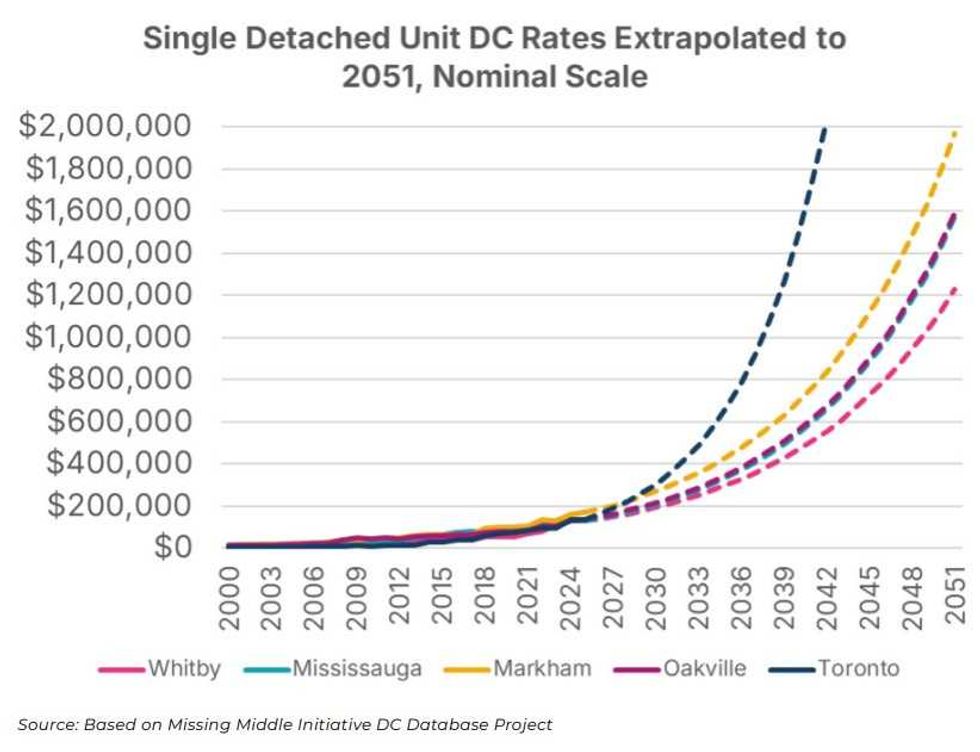
There is no easy way to control consumer sentiment, macroeconomic conditions, or the cost of construction materials (let alone tariff threats from our neighbour), which is a big reason why the real estate industry has been so focused on development charges (DCs) in recent years.

Development charges are levied by governments on new construction, and are used to fund new infrastructure, under the premise that “growth pays for growth.” When the real estate market was strong, development charges were tolerable because homes could be sold for a high enough price to cover them.

Keep ReadingShow less
Meet The Agent: Daniel Kim, Sotheby's International Realty Canada

Welcome to Meet the Agent, an ongoing series profiling real estate agents from across Canada. With more than 150,000 agents, brokers, and salespeople working in 75 different boards and associations across the country, we thought it was about time they had a place to properly introduce themselves.

If you or someone you know deserves the same chance, email agents@storeys.com to apply.

Keep ReadingShow less
The Great Canadian Dream Of Homeownership Isn’t Dead, But It Is Evolving
A residential neighbourhood in Calgary / Jeff Whyte, Shutterstock

For years, the obituary for the “Great Canadian Dream” of homeownership has been written in steep market prices and interest rate hikes. But according to RBC’s Spring 2026 Home Ownership Poll, the dream hasn’t actually died – it’s adapted.

The online survey polled 1,719 Canadians between January 7 and January 25, 2026 using Leger’s online panel.

Keep ReadingShow less
Bank Of Canada Holds Interest Rate Steady In Second 2026 Decision

The Bank of Canada left its overnight rate at 2.25% on Wednesday — as many of the nation's banks had predicted — keeping borrowing costs steady as global and domestic developments continue to shape the economic outlook.

Volatility has spiked since the outbreak of conflict in the Middle East, with oil and natural gas prices rising sharply, and financial markets tightening.

Keep ReadingShow less
Chartwell To Sell Waterloo Asset To Resolve Competition Bureau Concerns

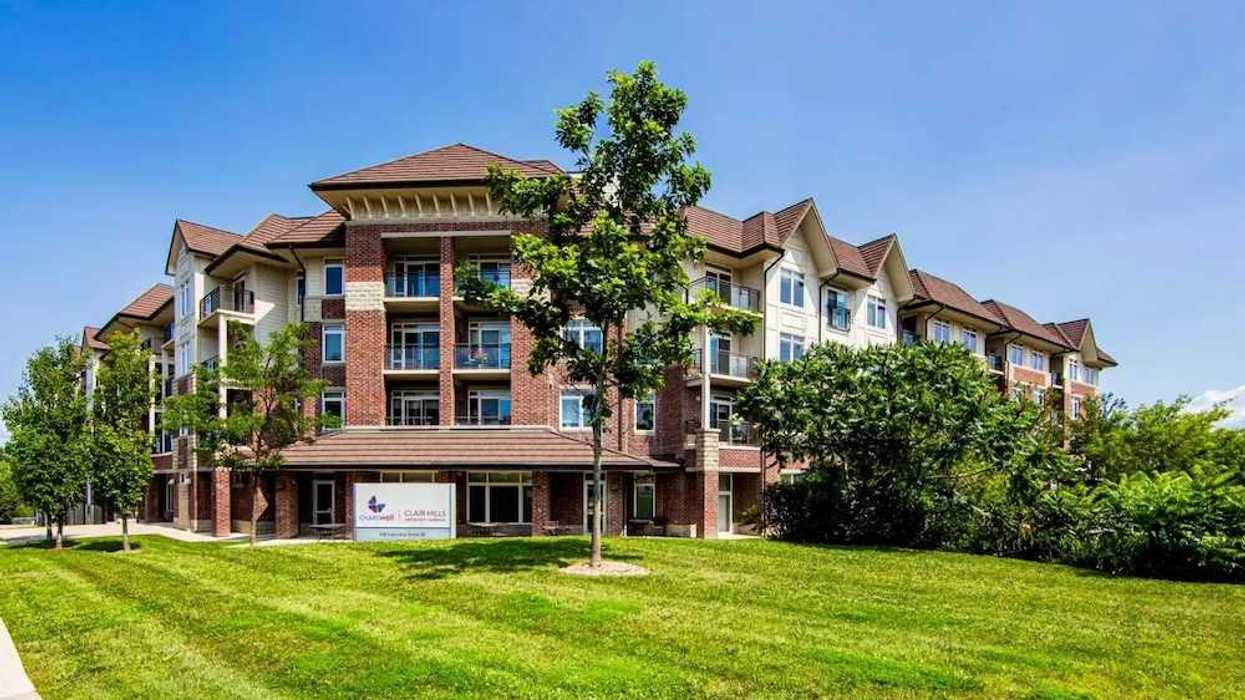
Chartwell Clair Hills at 530 Columbia Street West in Waterloo. (Chartwell)

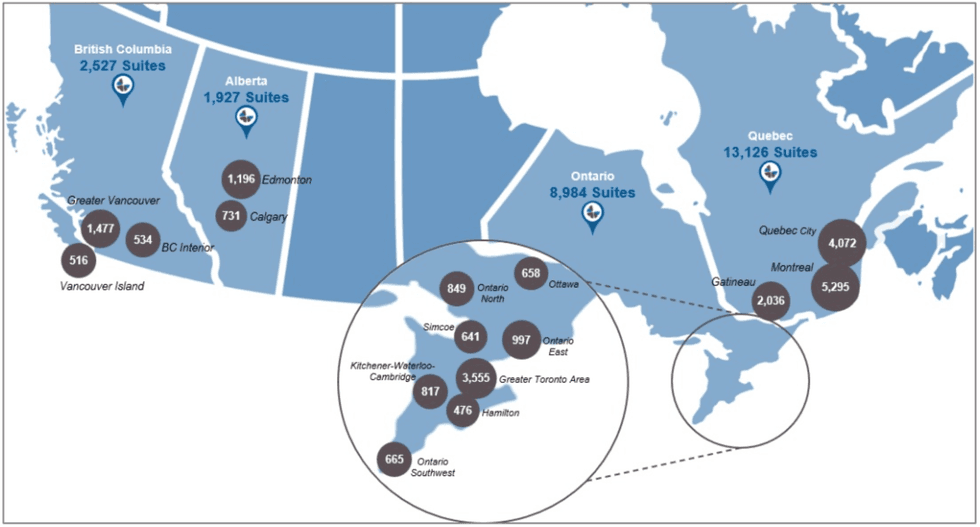
Last summer, Chartwell Retirement Residences (TSX: CSH.UN) announced that it had reached an agreement to acquire a portfolio of six seniors housing communities located in southwest Ontario for $432 million, continuing to expand its footprint in the region.

The portfolio of six properties represented the entire seniors housing portfolio of Ontario-based Sifton Properties and totalled to 1,024 suites (plus 29 additional units under construction), split between the following six properties:

Keep ReadingShow less
Canada Housing Starts Hold Steady In February: CMHC

Canada’s housing construction trend remained largely unchanged in February, even as monthly starts ticked higher, according to new data from the Canada Mortgage and Housing Corporation.

CMHC reported that the six-month trend in housing starts — measured as the six-month moving average of the seasonally adjusted annual rate (SAAR) — edged up 0.4% in February to 256,005 units.

Keep ReadingShow less
Manulife Sells Downtown Ottawa's EDC HQ To Regional Group For $143.5M

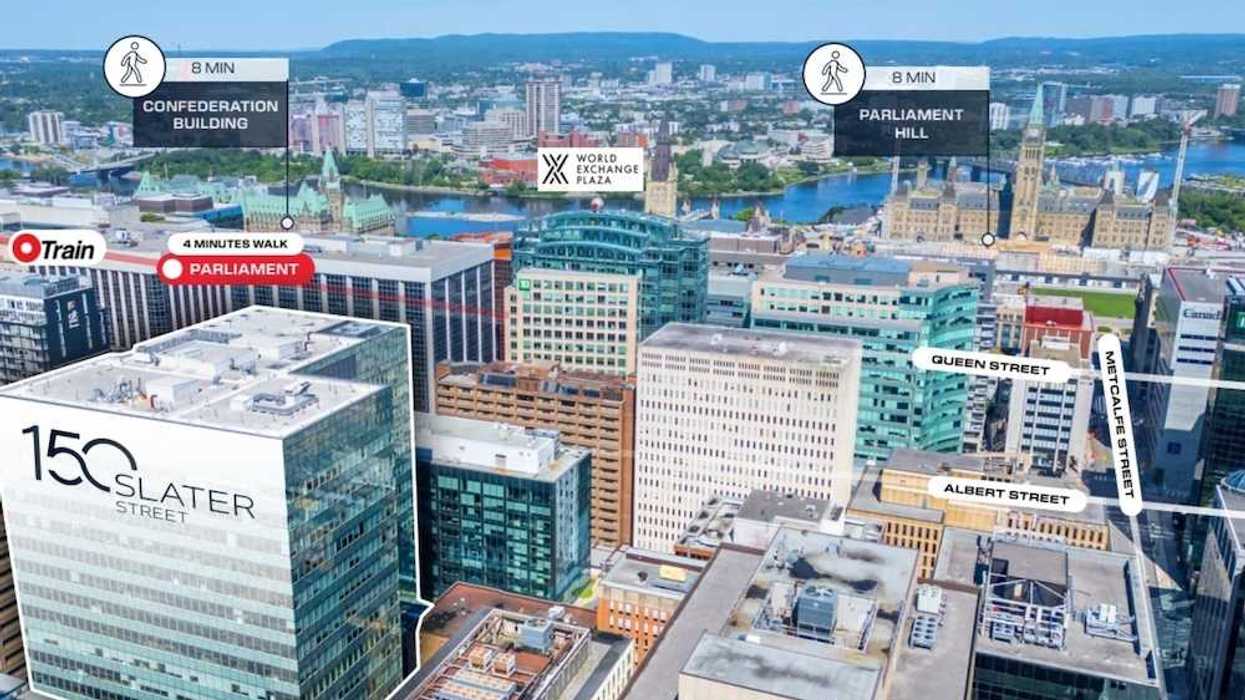
The 19-storey office tower at 150 Slater Street in Ottawa. (CBRE)

In late-February, Ottawa-based real estate firm Regional Group announced that they had acquired 150 Slater Street in downtown Ottawa, a landmark office building near Parliament Hill.

Located at the corner of Slater Street and O’Connor Street, two blocks away from Confederation Park and within 50 metres of the LRT Parliament Station, 150 Slater Street is a 19-storey Class A office tower that was purpose-built as the global headquarters for Crown corporation Export Development Canada (EDC), which was seeking to consolidate its operations from two nearby buildings.

Keep ReadingShow less
Canada Housing Starts Rise In 2025, But Condo Pipeline Weakens: CMHC

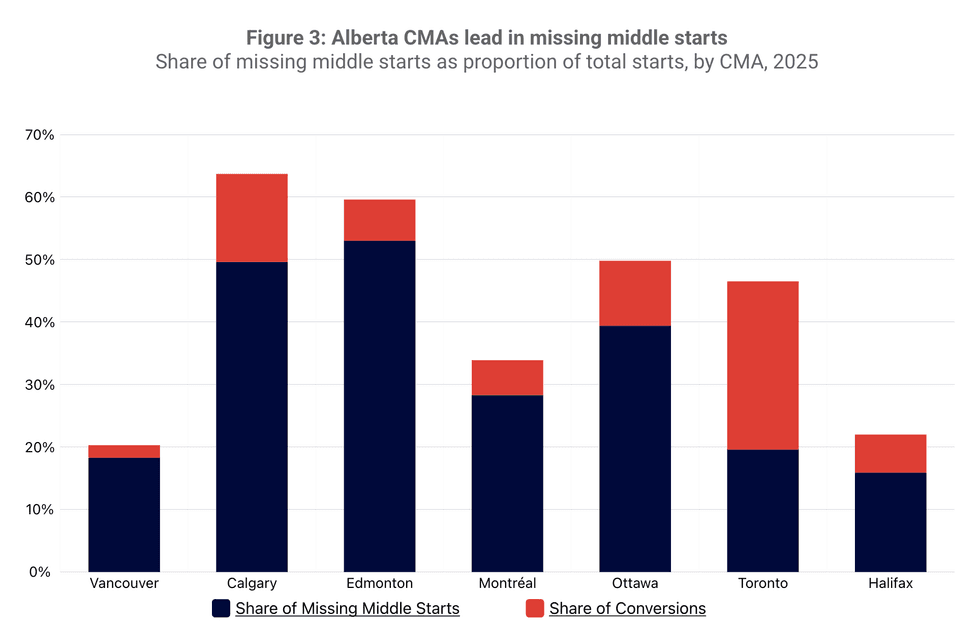
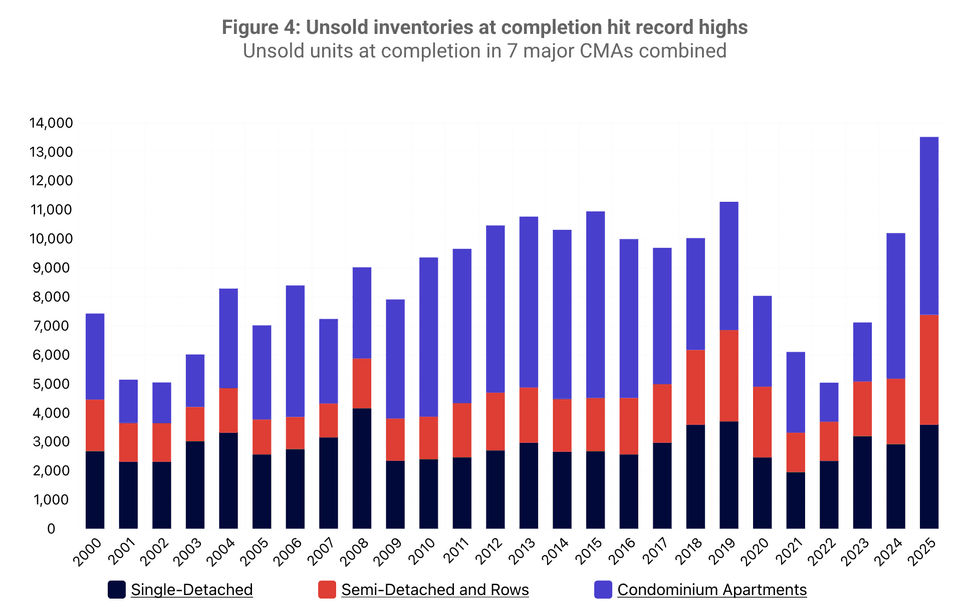
Canada added more new housing supply in 2025, driven largely by record rental construction and a growing share of missing middle housing — but new data suggests underlying vulnerabilities are building, particularly in major ownership markets like Toronto and Vancouver.

According to the Spring 2026 Housing Supply Report from the Canada Mortgage and Housing Corporation (CMHC), national housing starts rose 6% year-over-year in 2025, to 259,000 units. Activity exceeded the 10-year average in nearly every major market, with one notable exception: Toronto, where starts fell well below historical norms and reached the lowest per-capita level among Canada’s seven largest census metropolitan areas (CMAs).

Keep ReadingShow less