Demising Wall
A demising wall is a partition between tenants or common spaces, built to fire and acoustic code standards, defining premises boundaries in commercial leasing.

September 30, 2025
What is a Demising Wall?
A demising wall is a partition wall that separates one tenant’s leased premises from another or from shared common areas. These walls must meet building code requirements for fire resistance, sound attenuation, and structural integrity. They often extend from the floor slab to the structural deck above, with careful detailing to maintain ratings when penetrated by mechanical or electrical systems.
Why Demising Walls Matter in Real Estate
Demising walls matter in real estate because they define legal boundaries, impact tenant privacy and safety, and influence lease delivery conditions. Landlords and tenants negotiate responsibility for wall construction, penetrations, and restoration at lease end. Properly built demising walls are critical for compliance with fire and building codes, ensuring safety and reducing liability risks.
Example of a Demising Wall in Action
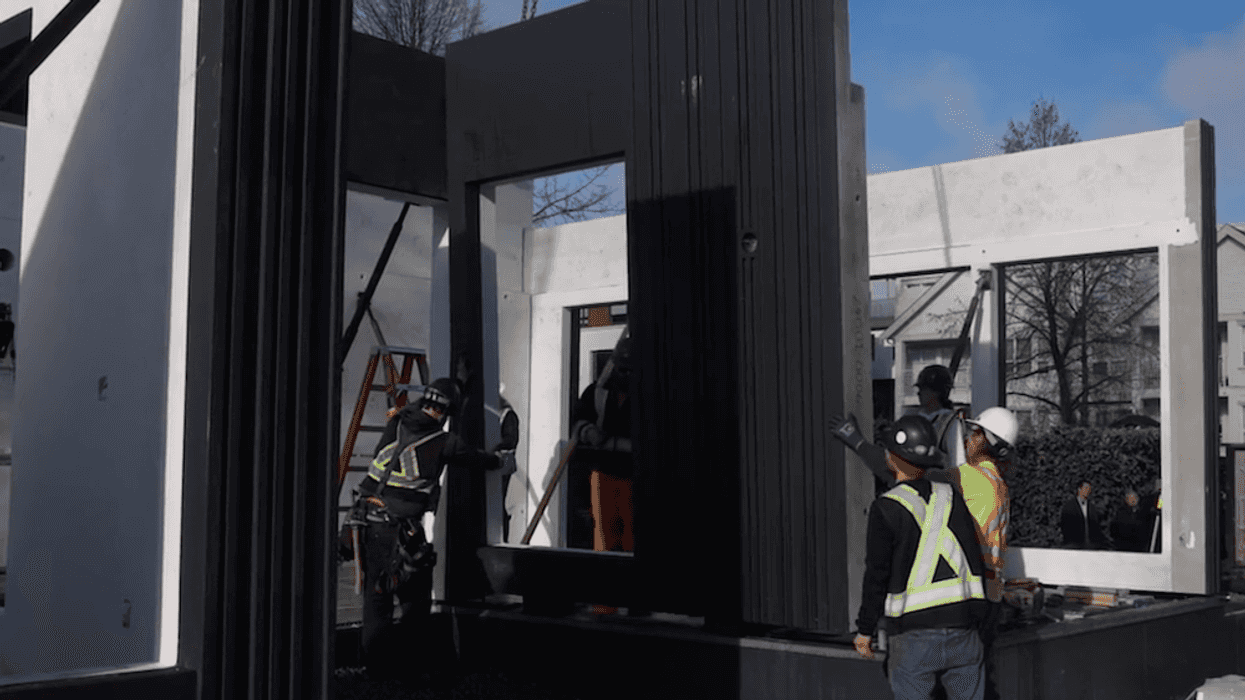
In a shopping mall, two retail bays are divided by a 2-hour rated demising wall that extends to the roof deck. The landlord oversees penetrations to ensure they are sealed with fire-rated materials. At lease expiry, the tenant restores unauthorized openings as per lease obligations.
Key Takeaways
- Demising walls separate tenants and common areas.
- They must comply with fire and building code requirements.
- Leases specify construction, use, and restoration responsibilities.
- Proper detailing preserves acoustic and fire performance.
- Landlords monitor penetrations to maintain compliance.
Related Terms
- Building Code
- Fire Rating
- Acoustic Privacy
- Leasehold Improvement
- Tenant Improvements
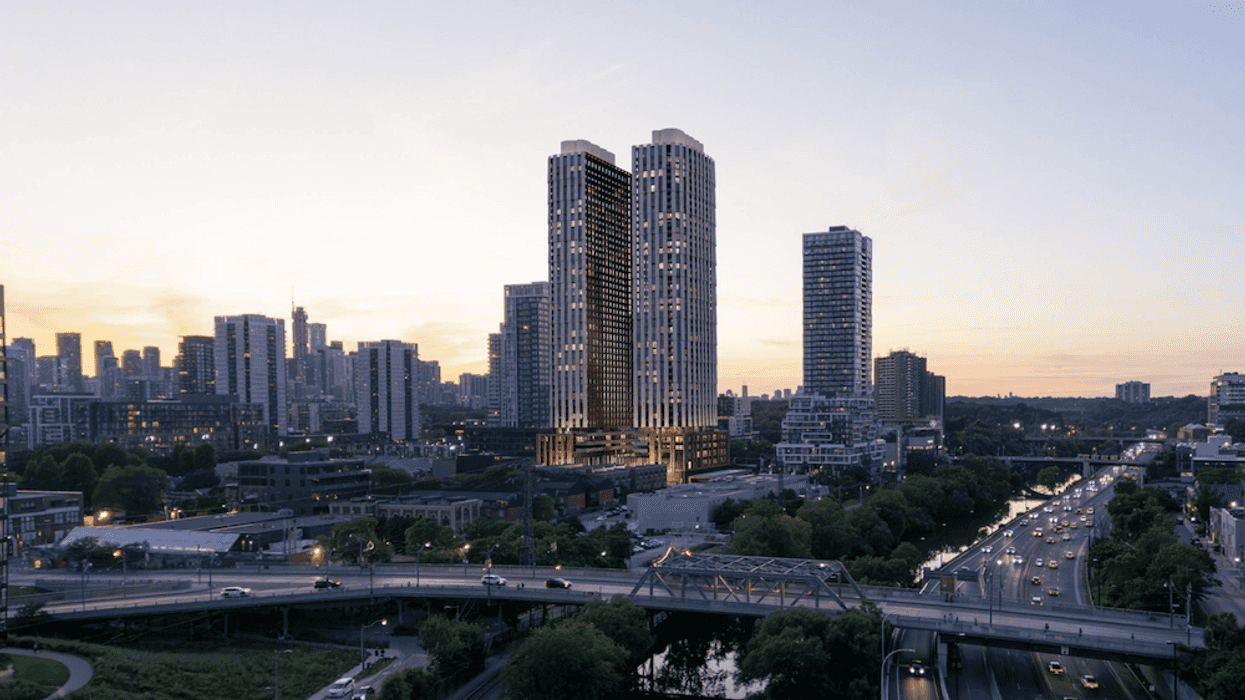
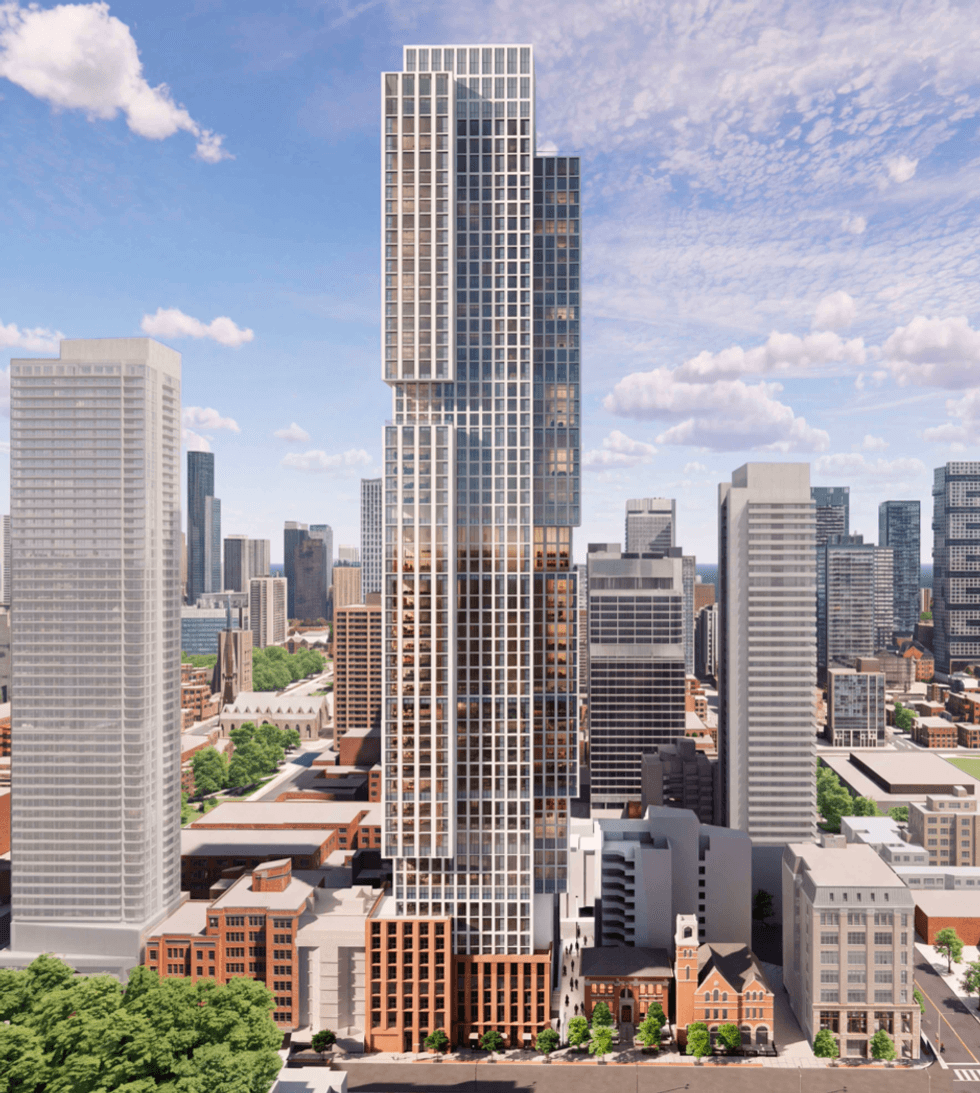 Rendering of 86 and 100-108 Lombard St and 103 Richmond St E/WZMH Architects
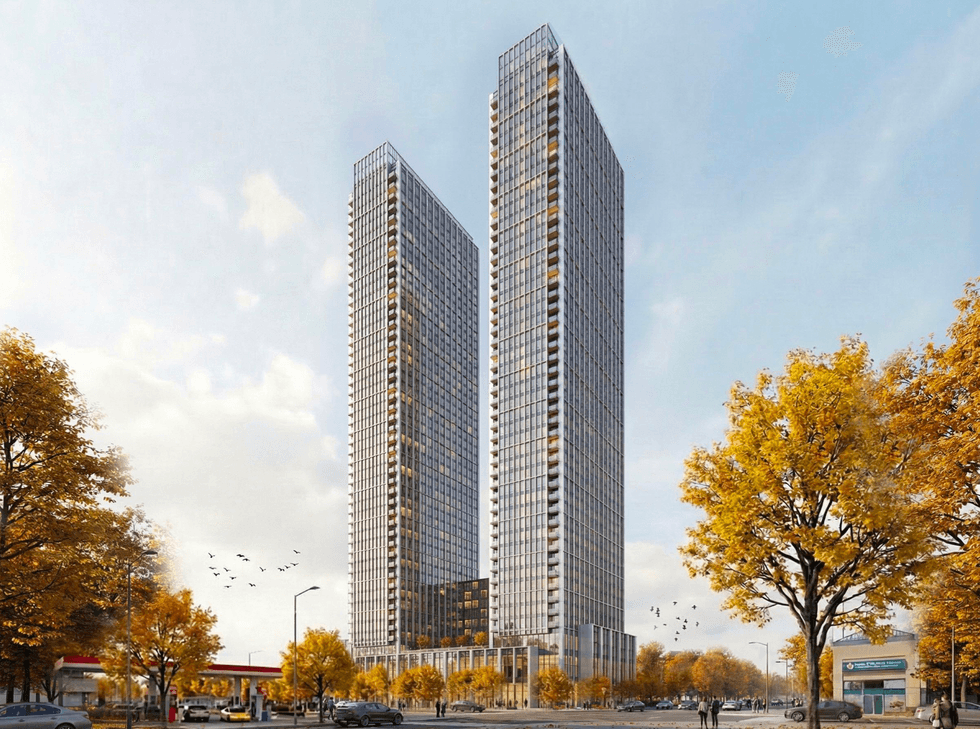 Rendering of 60 Overlea Blvd/Sweeny&Co Architects
 Rendering of 7 Labatt Ave and 77 River St/Giannone Petricone Associates
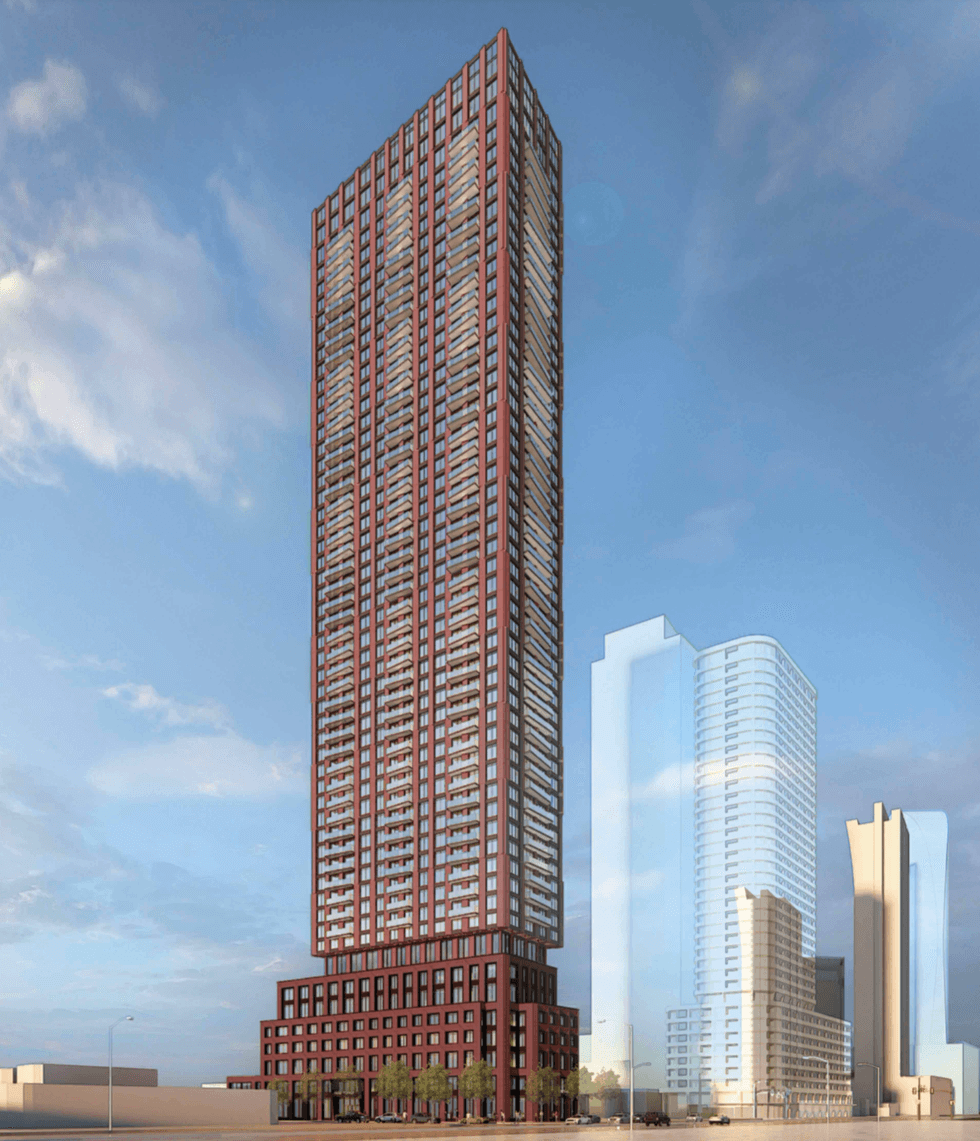 Rendering of 4632-4648 Yonge St and 16-18 Cameron Ave/Arcadis
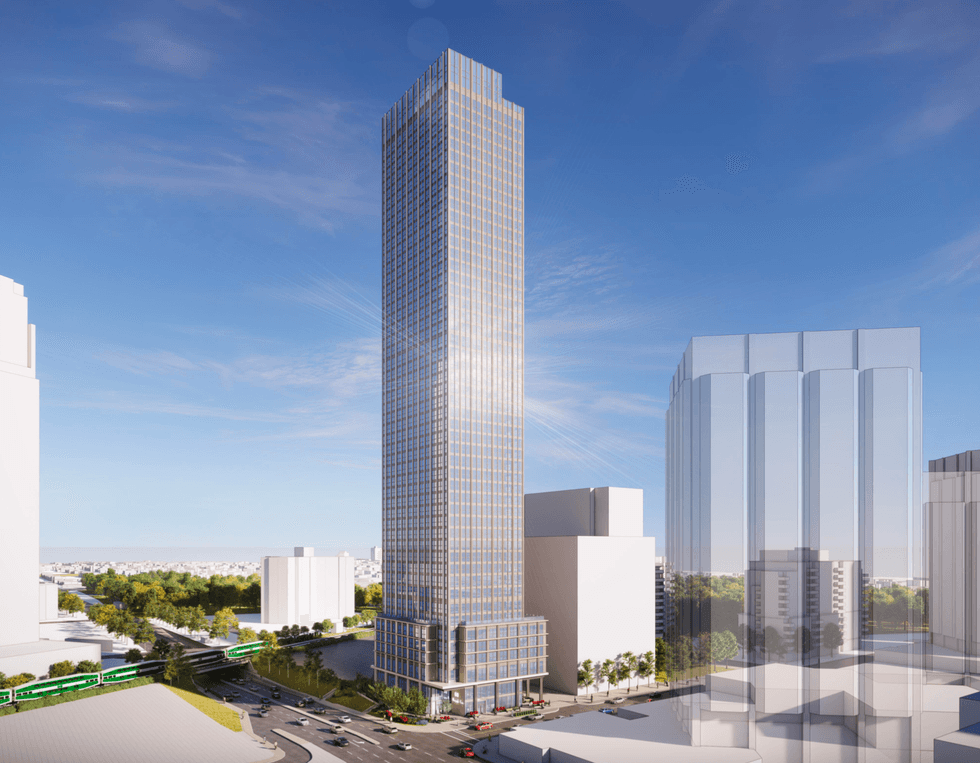 Rendering of 1234 Islington Ave/Sweeny&Co Architects
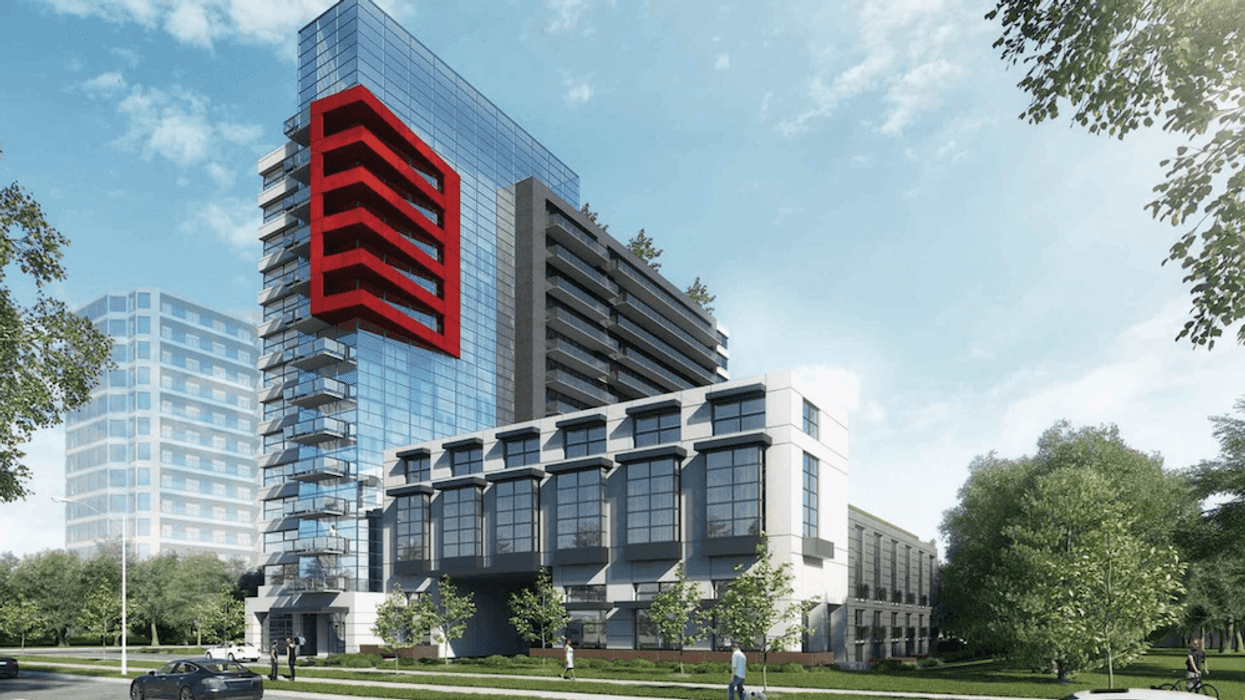



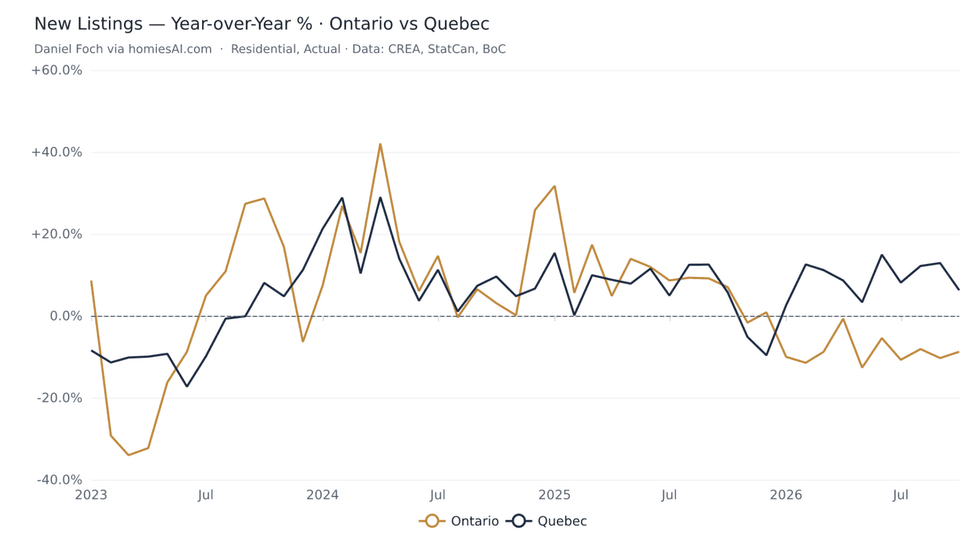 Chart: New listings, year-over-year %, Ontario vs Quebec. Daniel Foch via homiesai.com/stats. Data:
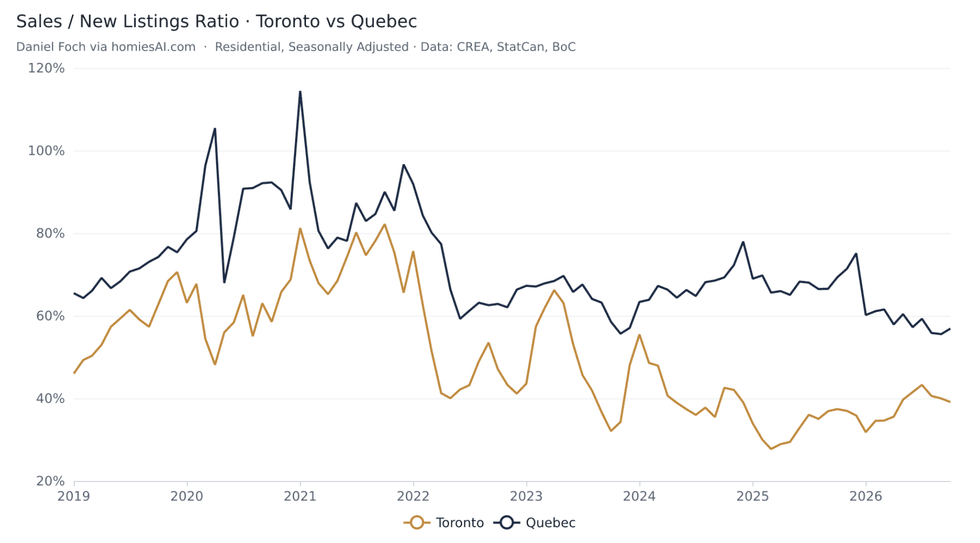 Chart: Sales-to-new-listings ratio, seasonally adjusted. Toronto vs Quebec. Daniel Foch via homiesai.com/stats. Data: CREA.
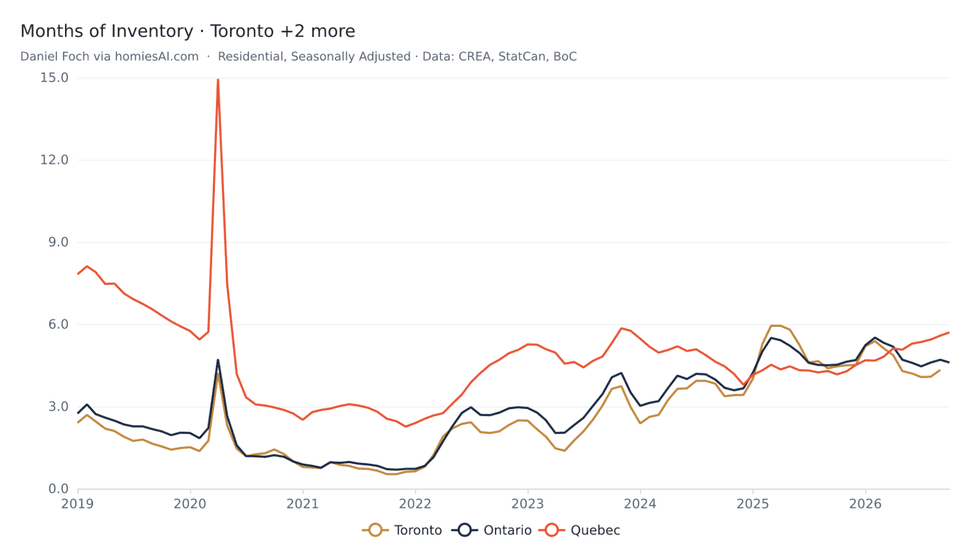 Chart: Months of inventory, seasonally adjusted. Daniel Foch via homiesai.com/stats. Data: CREA.
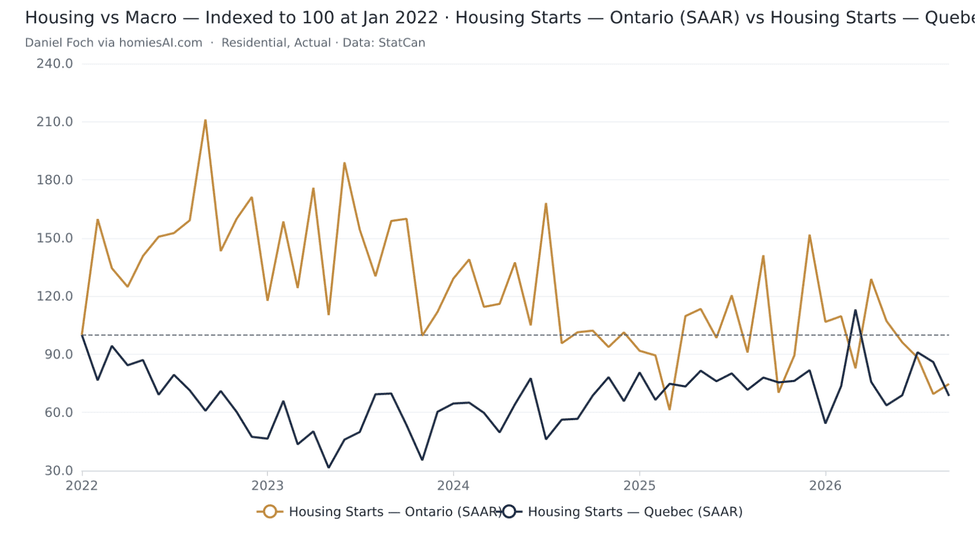 Chart: Housing starts, seasonally adjusted annual rate, Ontario vs Quebec, indexed to January 2022. Daniel Foch via homiesai.com/stats. Data: CMHC via Statistics Canada.
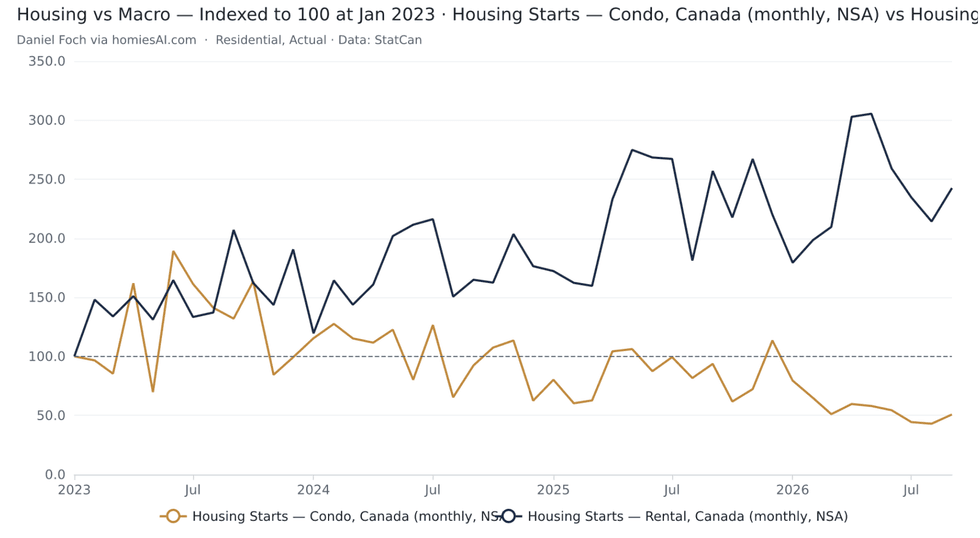 Chart: Condo vs rental housing starts, Canada, indexed to January 2023. Daniel Foch via homiesai.com/stats. Data: CMHC via Statistics Canada.
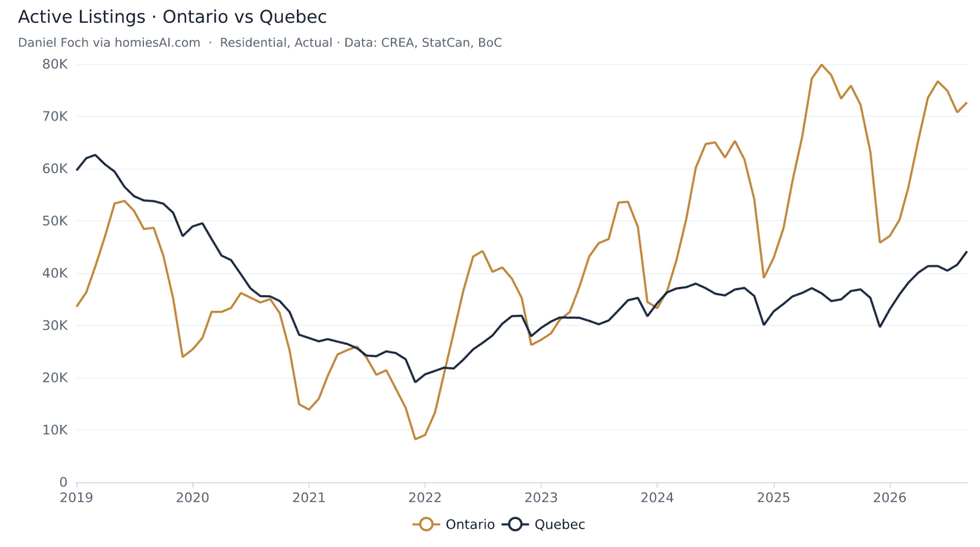 Chart: Active residential listings, Ontario vs Quebec. Daniel Foch via homiesai.com/stats. Data: CREA.
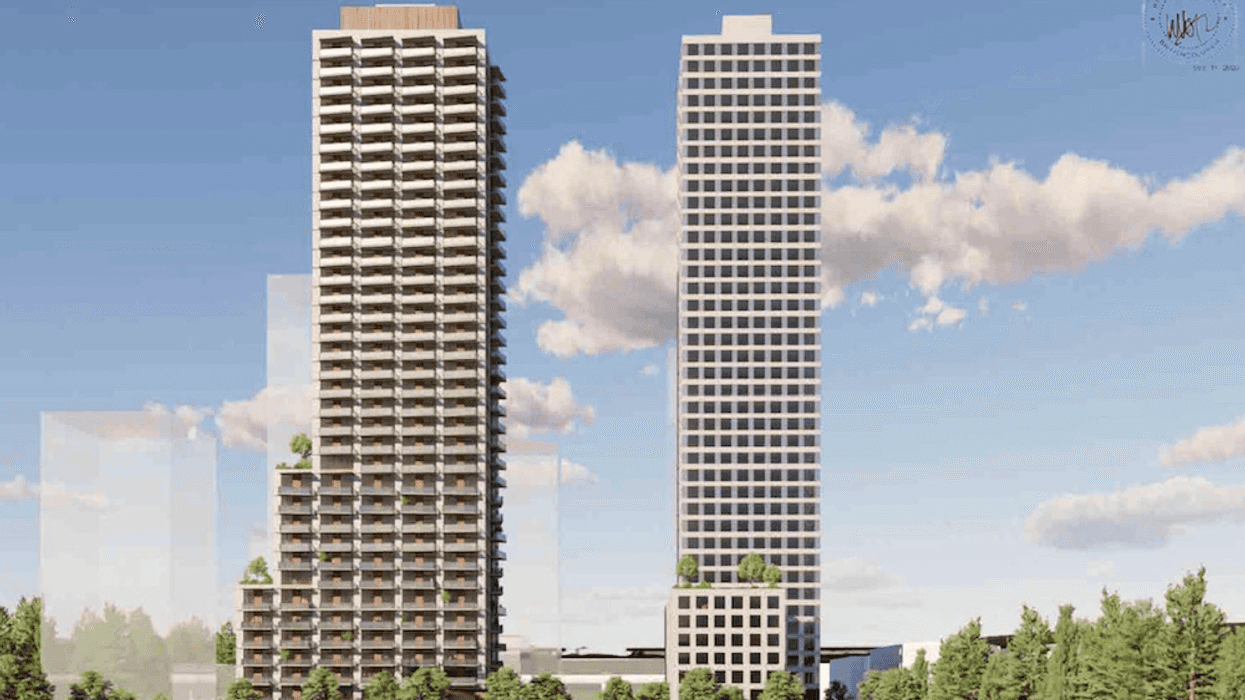
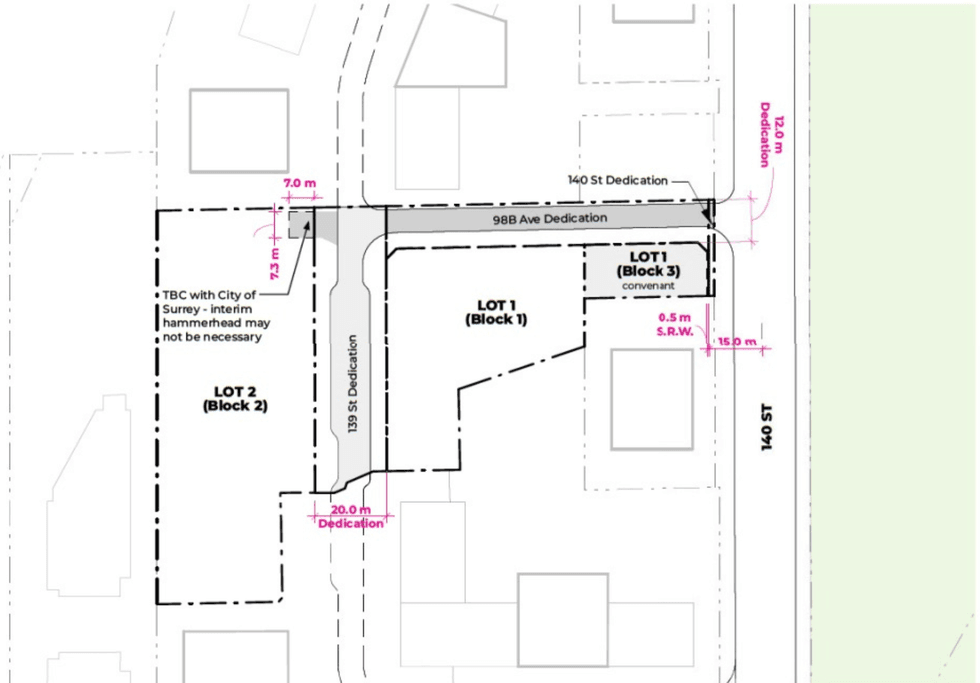 9883 140 Street and the proposed road dedications. (WW+P Architects, Entre Nous Femmes Housing Society)
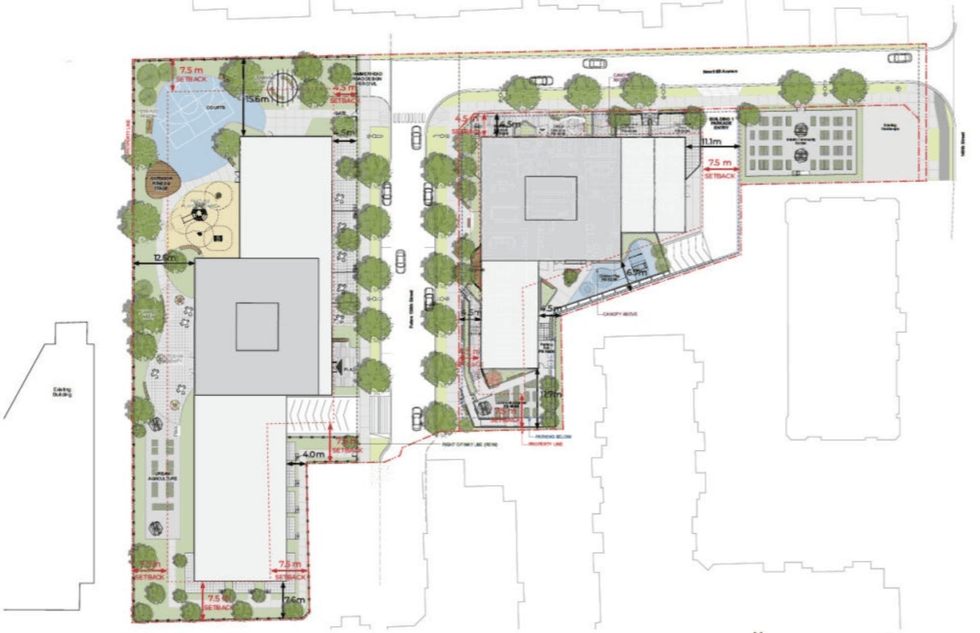 The
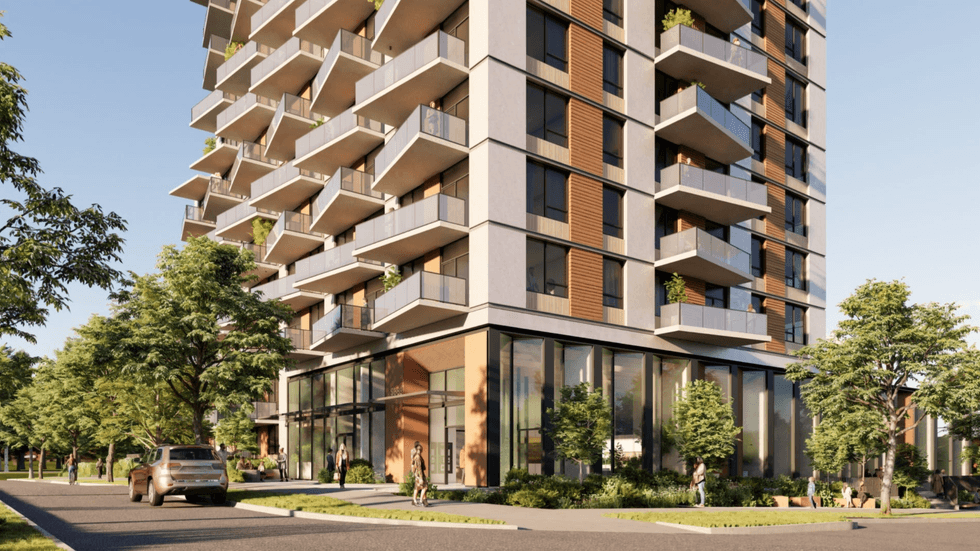 One of the towers proposed for 9883 140 Street. (Entres Nous Femmes Housing Society)

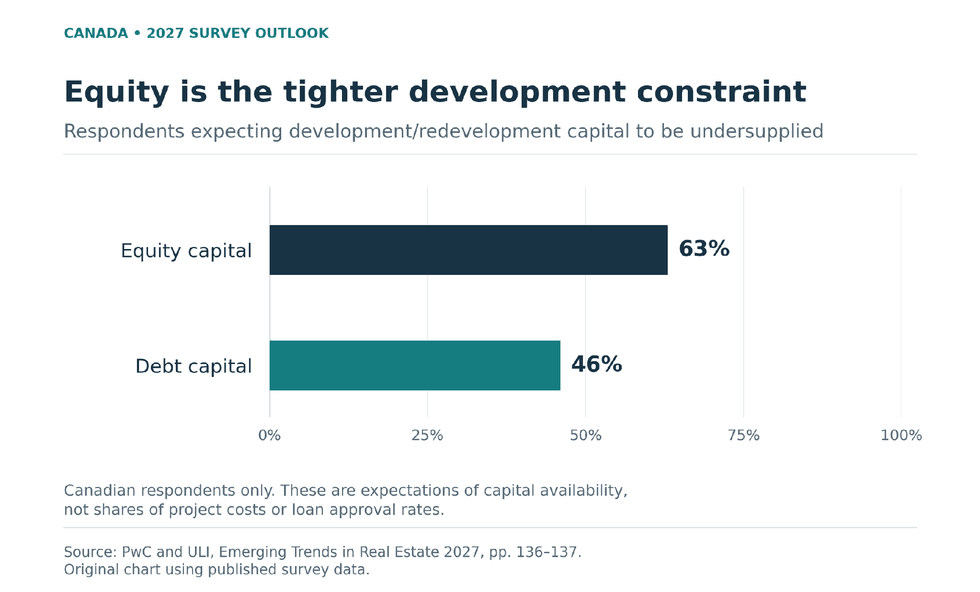 Canadian respondents were more likely to expect an undersupply of development/redevelopment equity capital (63%) than debt capital (46%) in 2027. These are survey expectations, not measured financing volumes. Source: PwC and ULI, Emerging Trends in Real Estate 2027, pp. 136–137. Original chart.
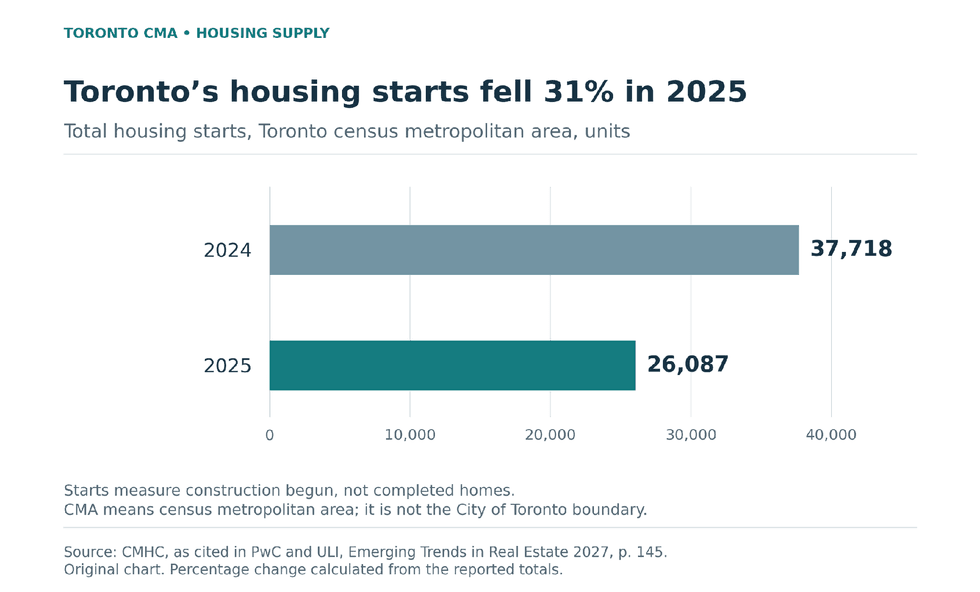 Toronto census metropolitan area housing starts fell from 37,718 units in 2024 to 26,087 in 2025, a 30.8% decline (rounded to 31%). Starts measure construction begun, not completed homes. Source: CMHC, as cited in PwC and ULI, Emerging Trends in Real Estate 2027, p. 145. Original chart.