Ontario’s housing market is no longer experiencing a temporary downturn. It is confronting the consequences of a structural policy failure decades in the making.
The evidence is now overwhelming: the market is unlikely to self-correct without significant intervention because government policy itself has become one of the principal drivers of unaffordability.
The latest numbers paint a stark picture. Ontario recorded about 12,700 housing starts in the first quarter of 2025 — the weakest quarterly performance since the aftermath of the 2008 financial crisis. In the GTA, new home sales collapsed to just 5,314 units in 2025, an all-time low. At the same time, the province remains dramatically short of its own housing targets, delivering barely a third of the 175,000 homes annually envisioned under Ontario’s housing plan.
This is not simply a cyclical downturn caused by interest rates. It is a systemic breakdown.
For years, many policymakers assumed the housing market would normalize on its own. Rising prices would attract more supply, builders would respond, and affordability would gradually improve. That logic no longer holds because the cost structure underpinning new housing has become fundamentally distorted.
The key issue is not that homes should return to 1990 prices in nominal terms. They will not. Construction standards are higher, land is scarcer, infrastructure costs are larger, and population growth is stronger than a generation ago.
The relevant measure is the ratio between housing costs and incomes. That ratio has drifted far beyond historical norms.
Ontario’s housing affordability ratio — measured as ownership costs relative to household income — peaked at roughly 63% in 2022, compared to a long-run historical average near 38%. Although conditions have modestly improved as interest rates stabilized, the ratio still sits around 42% today. Without structural reform, a full return to historical norms may not occur until well into the 2030s.
Markets can absorb temporary imbalances but cannot efficiently correct when governments continuously layer taxes, delays, fees, regulatory uncertainty, and productivity constraints onto the cost of delivering housing.
The burden now imposed by government charges is extraordinary. Analysis shows that governments collectively account for more than 35% of the purchase price of a new Ontario home through taxes, development charges, fees and levies. Municipal development charges in Toronto alone have risen more than 1,000% since 2009 — vastly outpacing inflation.
These costs are not absorbed by developers. They are passed directly onto buyers in the form of higher prices.
In some GTA municipalities, government-imposed charges add between $102,000 and $196,000 to the price of a single new home. Worse still, buyers then pay HST on top of those embedded charges, creating a compounding tax-on-tax effect that further inflates costs.
At the same time, Ontario’s approval system has become a machine for delay. Development approvals in major GTA municipalities now routinely stretch between 14 and 25 months, nearly double national averages. Every month of delay adds thousands of dollars in financing and carrying costs.
The result is paralysis. The pre-construction condo market has effectively seized up. Most projects require 70 to 80% pre-sales to secure financing. Yet collapsing consumer confidence and unaffordable carrying costs have made those thresholds nearly impossible to achieve.
This will not magically reverse itself through market forces alone. But the good news is that this crisis is substantially policy-constructed — and therefore policy-addressable.
Five reforms are essential if governments hope to restore housing affordability toward its long-run historical norms.
First, Ontario must permanently restructure development charges. Infrastructure costs should be financed over the long lifecycle of public assets rather than loaded upfront onto the price of a new home. Temporary rebates help, but they are not enough. Without permanent reform to the Development Charges Act, affordability gains will evaporate once short-term relief expires.
Second, the province must impose hard statutory approval timelines. Municipalities should be required to process applications within 12 months, with deemed approvals and automatic fee rebates for non-compliance.
Third, governments should permanently remove the provincial portion of HST from new homes under $1 million, while pressing Ottawa to eliminate the federal component as well.
Fourth, Ontario must modernize construction itself. Modular and off-site construction technologies can reduce project timelines by as much as 30 to 50% while lowering labour requirements. Governments should deploy targeted incentives to scale industrialized construction.
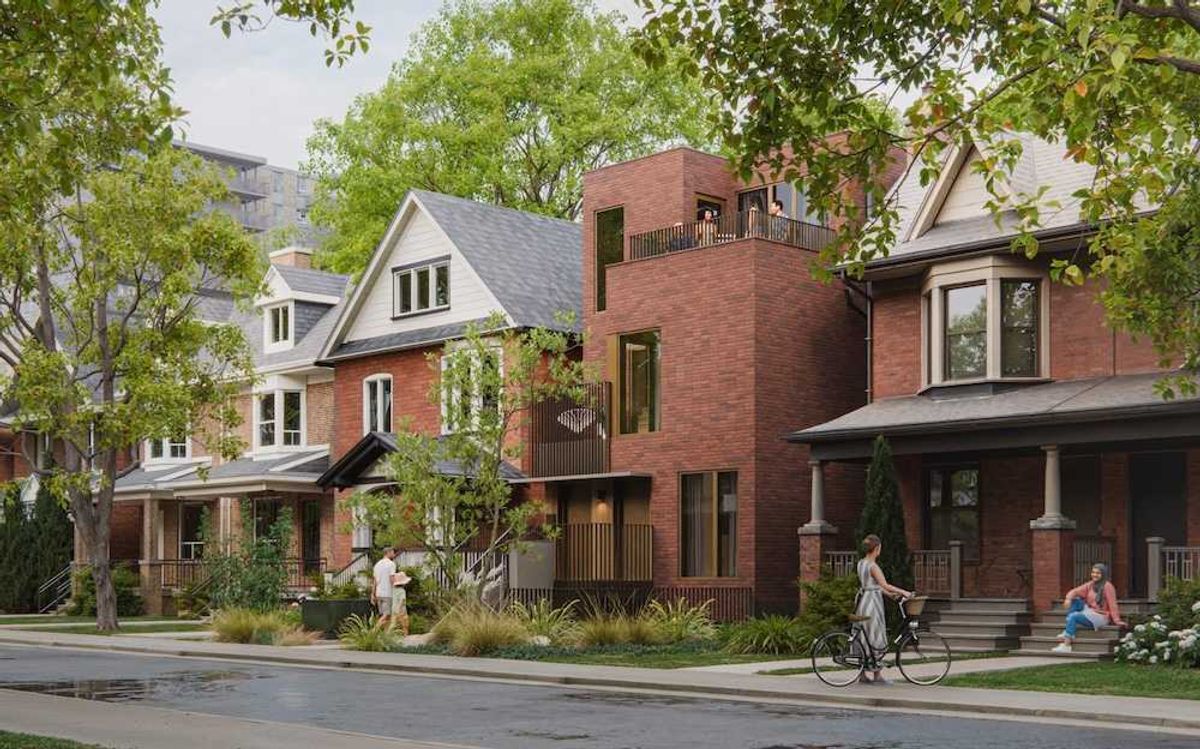
Finally, Ontario should adopt single-stair building code reform for mid-rise housing. The current double-stair requirement severely limits the viability of missing-middle housing on urban lots.
The current housing collapse should dispel any illusion that the market will heal itself. Ontario has reached the tipping point. Excessive policy costs are suppressing the supply needed to restore affordability.
The path forward exists if governments are willing to act with seriousness and consistency. What remains uncertain, though, is whether the political will exists to follow it.
Richard Lyall is president of the Residential Construction Council of Ontario (RESCON). He has represented the building industry in Ontario since 1991. Contact him at media@rescon.com.