Risk Management

Explore how risk management works in Canadian real estate — what it involves, who uses it, and why it's essential for protecting investments and safety.

Risk Management

May 22, 2025


What is Risk Management?

Risk management in real estate refers to the process of identifying, assessing, and mitigating potential financial, legal, and physical risks associated with property ownership or transactions.

Why Risk Management Matters in Real Estate

In Canadian real estate, risk management protects homeowners, landlords, investors, and professionals from liabilities, lawsuits, and unexpected costs.


Key risk management strategies include:
  • Purchasing comprehensive home and liability insurance
  • Conducting home inspections before buying
  • Ensuring properties meet safety and building codes
  • Including protective clauses in purchase agreements
  • Maintaining accurate documentation and legal compliance


Real estate professionals also use risk management practices to avoid client disputes and legal claims. Investors use it to reduce exposure when financing, renovating, or renting properties.


Understanding risk management allows all parties to minimize exposure to financial harm and operate more confidently.

Example of Risk Management in Action

A landlord installs handrails and smoke detectors and obtains landlord insurance as part of a broader risk management plan for their rental property.

Key Takeaways

  • Identifies and addresses real estate risks.
  • Reduces chances of liability and loss.
  • Used by buyers, owners, landlords, and agents.
  • Includes safety, insurance, and legal strategies.
  • Promotes responsible and secure ownership.

Related Terms

  • Liability Coverage
  • Property Protection
  • Home Inspection
  • Legal Liability
  • Insurance
Additional Terms

Public Realm Improvements

Public realm improvements are enhancements to public spaces such as sidewalks, parks, plazas, and streetscapes, often funded or contributed by. more

Mortgagee in Possession

A mortgagee in possession is a lender who takes control of a property after borrower default, but before foreclosure or power of sale. The lender. more

Lease Surrender Agreement

A lease surrender agreement is a negotiated contract between a landlord and tenant that ends a lease before its scheduled expiration. Terms may. more

Green Infrastructure

Green infrastructure refers to natural or engineered systems that manage stormwater, reduce heat, and improve sustainability in developments.. more

Escrow Holdback

An escrow holdback is a portion of funds withheld at closing and held in escrow until specific conditions are met, such as completion of repairs,. more

Underused Housing Tax

The Underused Housing Tax (UHT) is a federal annual 1% tax on the value of vacant or underused residential property owned by non-resident,. more

More For You

Bank Of Canada Holds Rate At 2.25% As Housing Activity Stays Muted
Bank of Canada

The Bank of Canada held its overnight rate at 2.25% on April 29, keeping borrowing costs steady as the country navigates a turbulent global backdrop shaped by the conflict in the Middle East and ongoing US trade policy uncertainty.

For Canadian real estate, the decision offers little relief in the near term. The Bank's April outlook paints a cautious picture for housing: activity declined in the fourth quarter of 2025 and remains constrained by slow population growth, economic uncertainty, and affordability challenges that have yet to meaningfully ease. GDP growth is projected at a modest 1.2% for 2026, rising gradually to 1.6% in 2027 and 1.7% in 2028 — a trajectory that suggests any meaningful recovery in housing demand is still some distance away.

Keep Reading Show less
Moving Day: April 2026 Industry Hires And Promotions

Haider Hayat, Skilled Trades Ontario; Cassidy Putnam, Taylor Co. Ltd.; Andrew Graham, Brookfield Properties; Sally Chiu, CBRE; Justin Lewis, Ontario Aboriginal Housing Services; Sara Ambrosi, CBRE

We know you like to know what's up.

For your information, reference, and networking needs, here are the moves, hires, and promotions the real estate and development sector saw in April 2026:

Keep Reading Show less

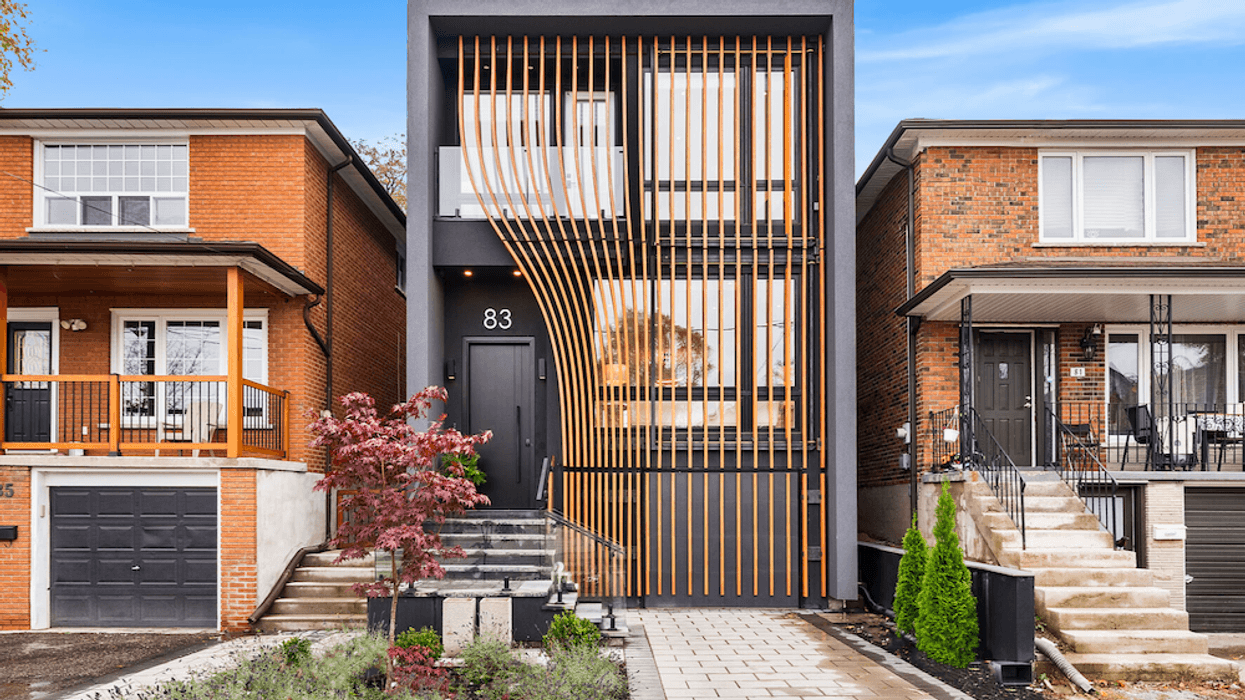
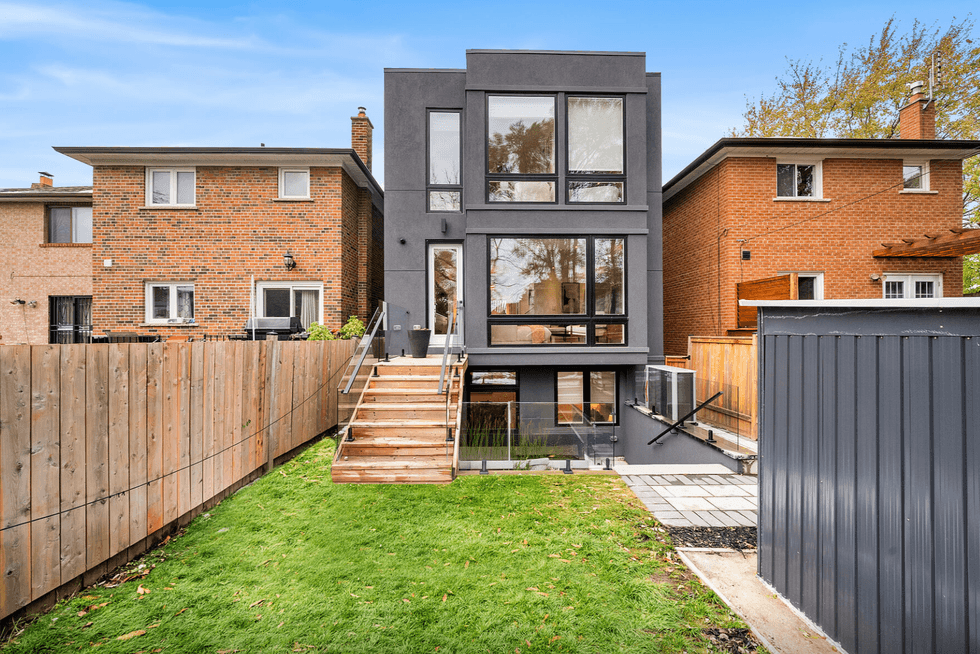
Virginia Avenue is a quiet residential street in Danforth Village — the kind of block where many homes have been standing for decades.

Coming up in 2022, 83 Virginia Avenue made no attempt to blend in.

Keep Reading Show less
GTA New Home Sales Climbed In March (From A Record-Low Bar)​
Toronto skyline before a storm

March new home sales in the Greater Toronto Area improved year-over-year, but the word "improved" is doing a lot of heavy lifting. There were 948 new homes sold in the GTA last month — up significantly from March 2025's historic low of 439 units, but still 64% below the 10-year average of 2,659.

In other words: second-worst March on record.

Keep Reading Show less
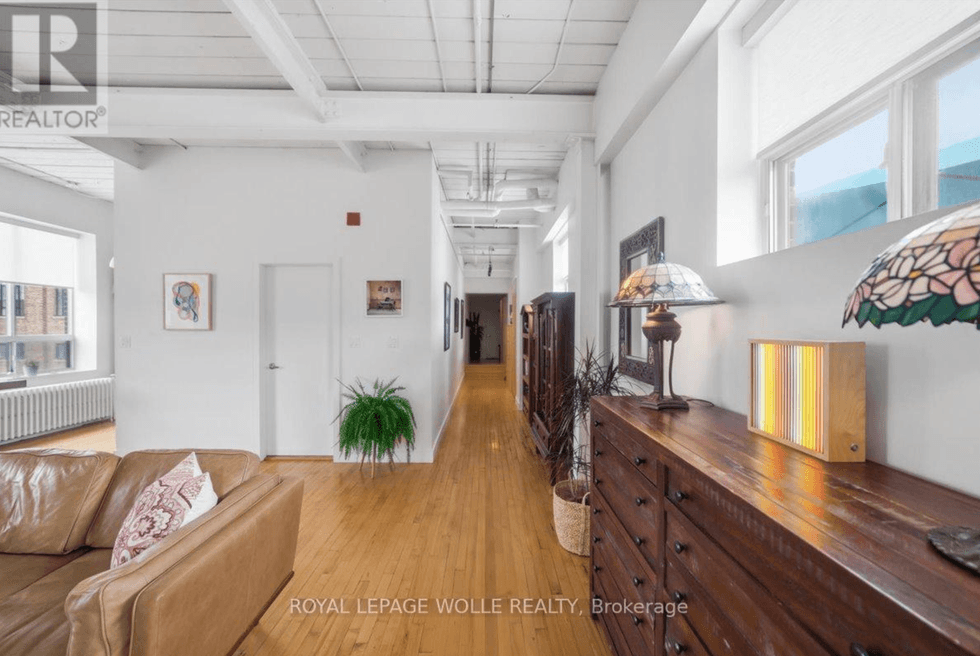
This Leslieville Suite Makes A Solid Case For Loft Living

The i-Zone is one of those Leslieville addresses that people know without needing to look up.

The work/live building that predates the neighbourhood's glow-up by decades, and has never needed to catch up.

Keep Reading Show less
Canadian Housing Starts Lost Steam In March, CMHC Data Shows
Toronto homes/Shutterstock

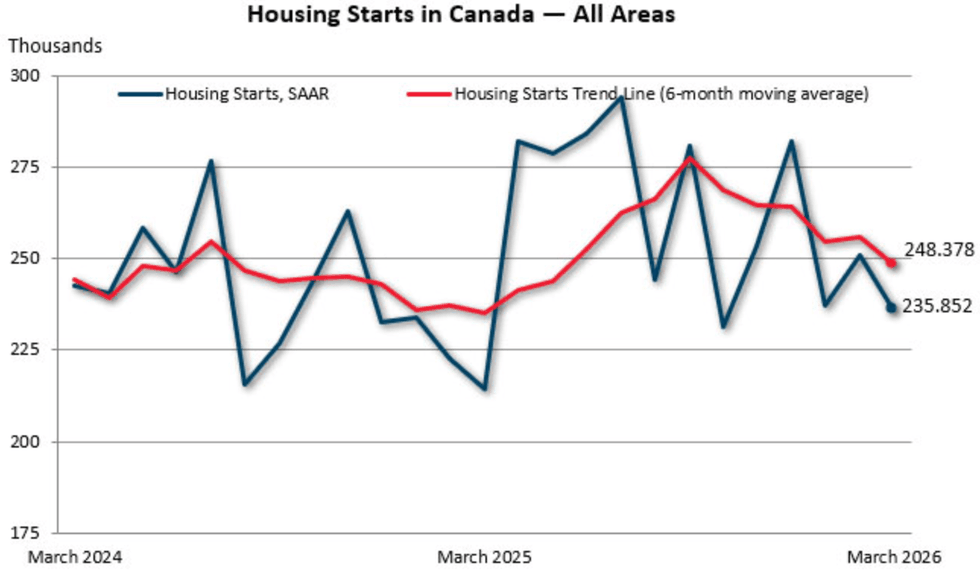
New data from Canada Mortgage and Housing Corporation shows housing construction continued to lose momentum in March 2026, even as year-over-year comparisons painted a rosier picture.

The six-month trend in housing starts fell 2.9% to 248,378 units, while the total monthly seasonally adjusted annual rate dropped 6% to 235,852 units — down from 250,961 in February. Actual housing starts in centres with a population of 10,000 or greater were up 10% year-over-year, with 16,398 units recorded compared to 14,935 in March 2025. Year-to-date starts sit at 49,206 units, up 9% from the same period last year, led by British Columbia, Ontario, and Quebec.

Keep Reading Show less
Mortgage Rates, Uncertainty Kept Canadian Buyers Sidelined In March
Paul Hanaoka/Unsplash

New data from the Canadian Real Estate Association shows national home sales were essentially unchanged in March 2026, ticking down just 0.1% month-over-month — but the stability masks a more complicated picture.

Actual (not seasonally adjusted) sales came in 2.3% below March 2025, while the national average home price landed at $673,084, down 0.8% year-over-year. The MLS® Home Price Index Composite fell 0.4% month-over-month and was down 4.7% compared to March 2025 — though the month-over-month decline was smaller than in February, and roughly half the drop recorded in January.

Keep Reading Show less
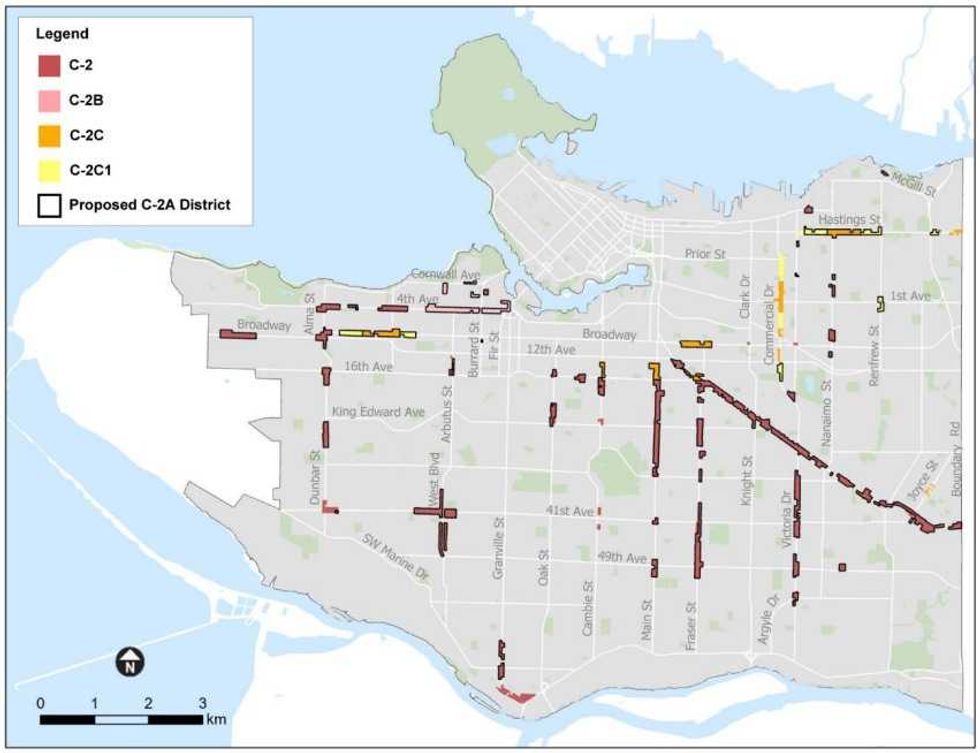
Vancouver Seeks To Fast-Track Low-Rise Rentals And Hotels With New Zoning District

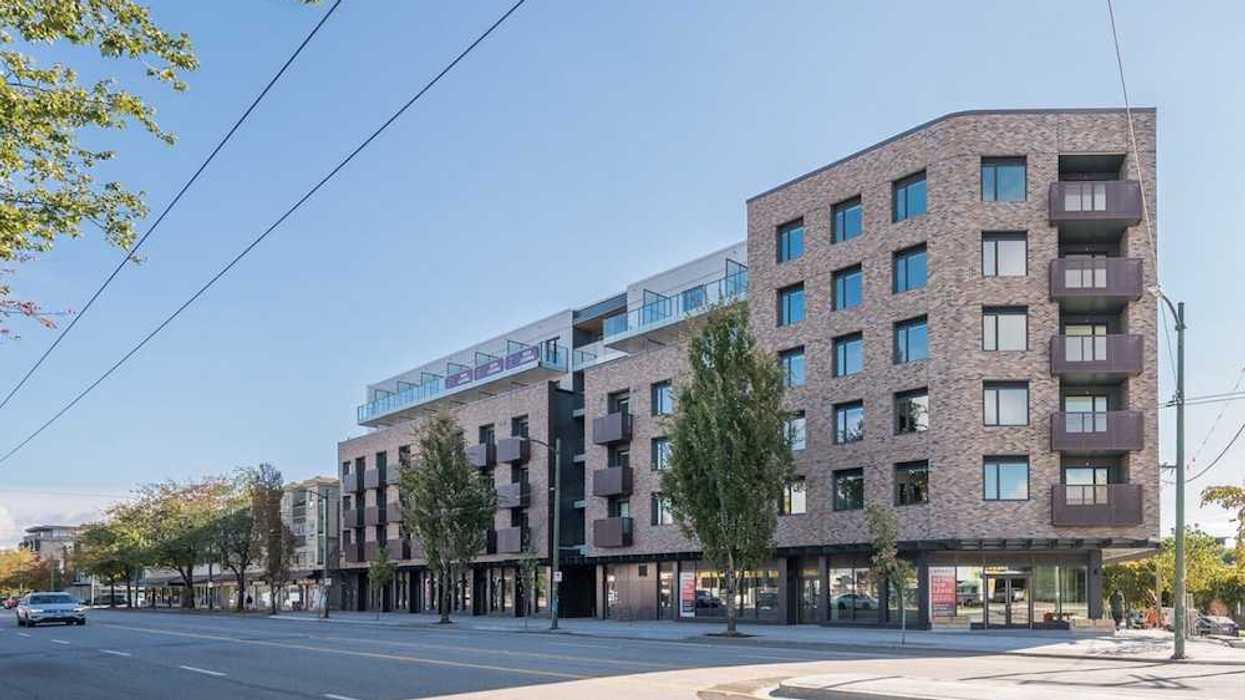
The Hyland by Rize Alliance at 810 Kingsway in Vancouver. (Sitings Realty)

In December, Vancouver City Council approved a suite of actions focused on “supporting development viability and unlocking new housing supply” during a time when it has been challenging for developers to move forward with projects due to market conditions.

The first item listed in the staff report outlining the suite of actions was the creation of a new Rental Development Relief Program, but staff said they would also “continue advancing targeted policy, process, and regulatory initiatives to improve project feasibility, sustain housing supply, and support affordability” with initiatives outside of that suite of actions.

Keep Reading Show less