Highest Offer Clause
Understand highest offer clauses in Canadian real estate — what they are, how they work, and their impact on negotiations.

August 08, 2025
What is a Highest Offer Clause?
A highest offer clause is a provision in a purchase agreement allowing a seller to match or exceed the highest competing offer received during negotiations.
Why a Highest Offer Clause Matters in Real Estate
In Canadian real estate, highest offer clauses can increase competitive bidding and help sellers secure the best price.
Key points:
- Typically used in multiple-offer situations
- May allow the seller to request proof of competing offers
- Must be clearly defined to be enforceable
Understanding highest offer clauses helps buyers and sellers strategize during competitive negotiations.
Example of a Highest Offer Clause in Action
The seller added a highest offer clause to the agreement, giving them the right to match any higher competing bid.
Key Takeaways
- Allows seller to match or exceed highest competing offer
- Often used in competitive bidding scenarios
- Encourages buyers to make stronger offers
- Must be clearly worded to avoid disputes
- Can affect buyer confidence and strategy

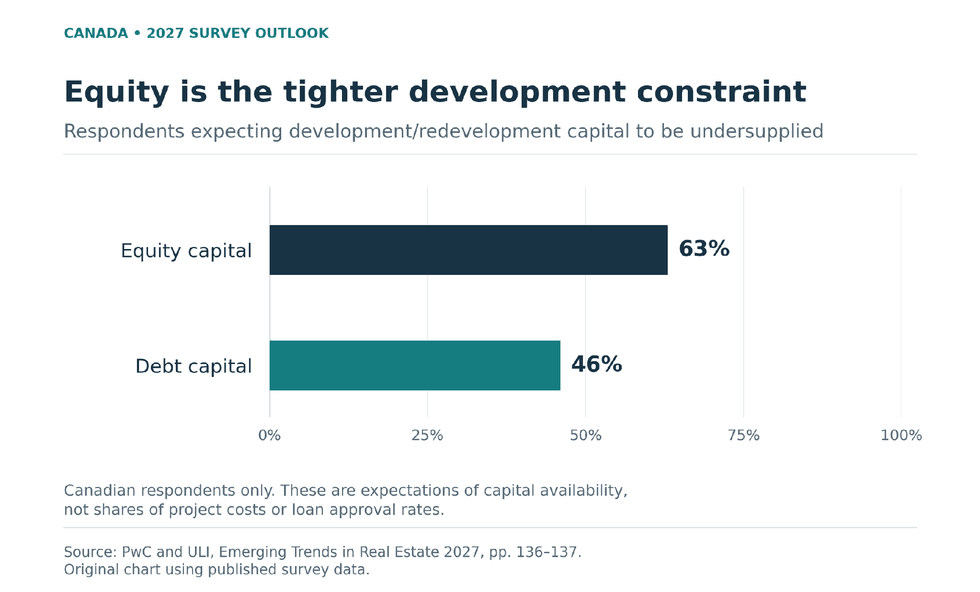 Canadian respondents were more likely to expect an undersupply of development/redevelopment equity capital (63%) than debt capital (46%) in 2027. These are survey expectations, not measured financing volumes. Source: PwC and ULI, Emerging Trends in Real Estate 2027, pp. 136–137. Original chart.
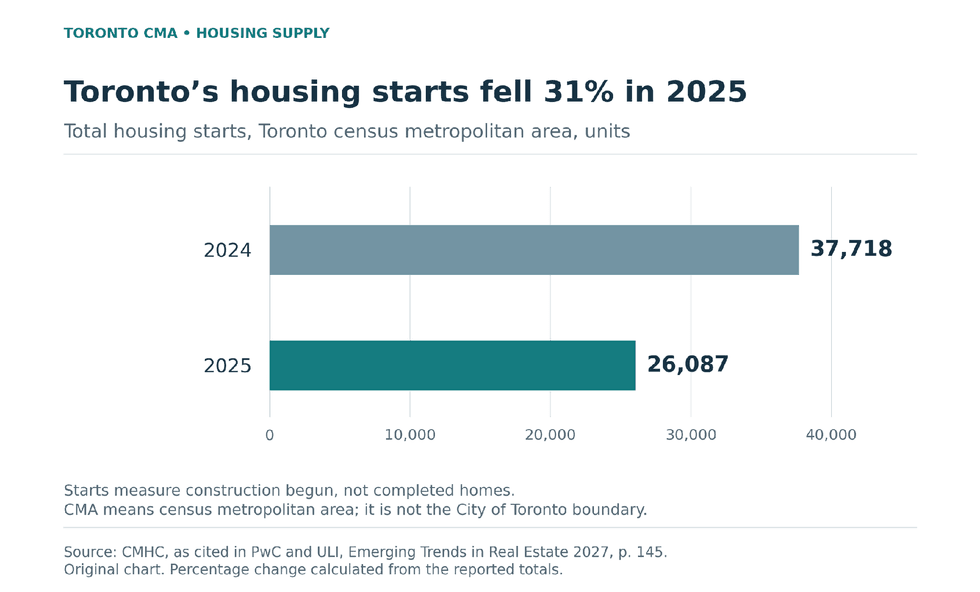 Toronto census metropolitan area housing starts fell from 37,718 units in 2024 to 26,087 in 2025, a 30.8% decline (rounded to 31%). Starts measure construction begun, not completed homes. Source: CMHC, as cited in PwC and ULI, Emerging Trends in Real Estate 2027, p. 145. Original chart.





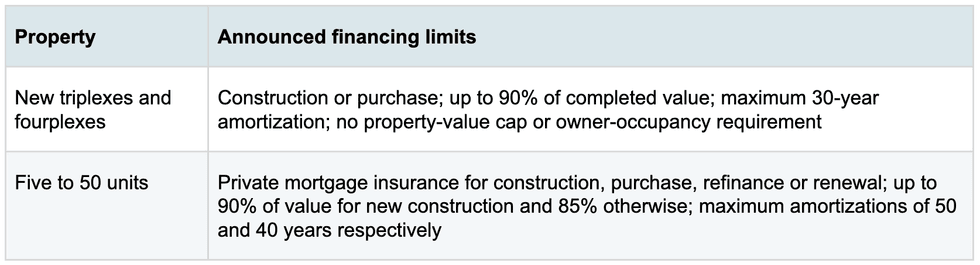
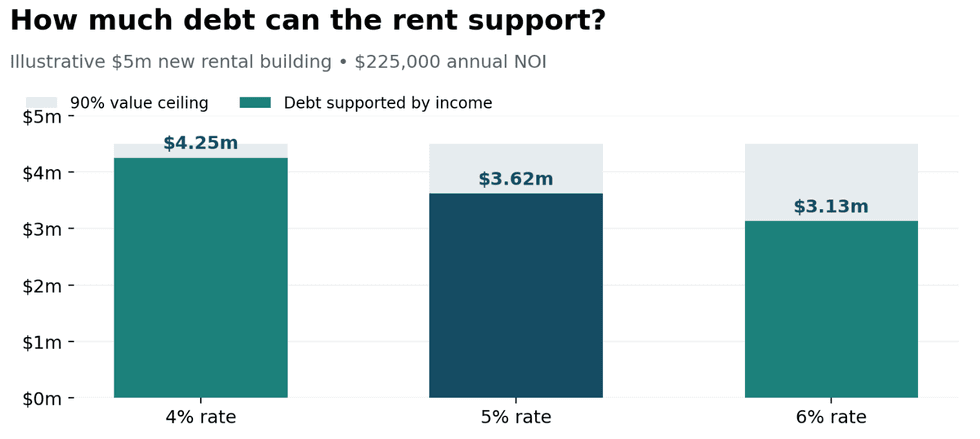 Illustrative calculation: a $4.5-million value ceiling versus income-based capacity of about $4.25 million at 4%, $3.62 million at 5% and $3.13 million at 6%. Assumes 50-year amortization and 1.15 debt coverage.
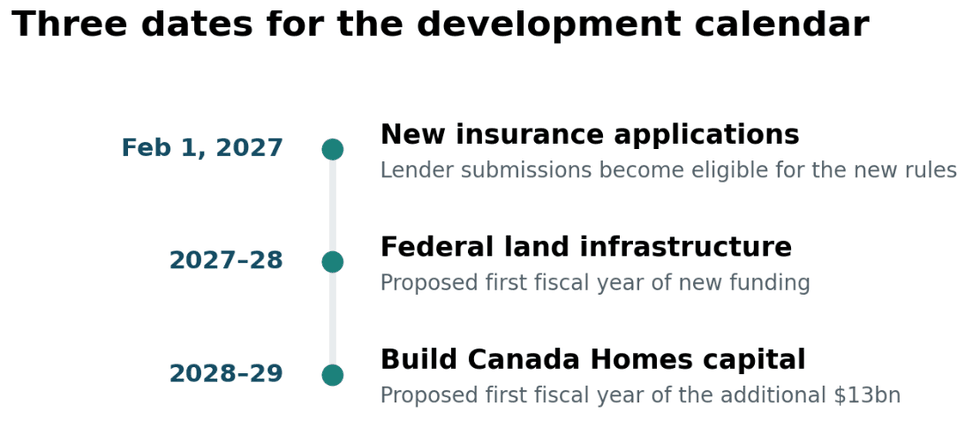 Source: Department of Finance missing-middle backgrounder and Budget 2026 Chapter 3, November 5, 2026. Fiscal-year funding starts are not home-completion dates.