Alternative Financing

Explore what alternative financing means in Canadian real estate, who it's for, and how non-traditional lenders help buyers access the market.

Alternative Financing


What is Alternative Financing?

Alternative financing refers to non-traditional methods of obtaining funding for a real estate purchase, typically used when a borrower does not qualify for a mortgage through a major bank or institutional lender.

Why Alternative Financing Matters in Real Estate

In Canadian real estate, alternative financing plays an important role for buyers with limited credit, unconventional income, or other factors that make them ineligible for traditional mortgages.

Alternative financing sources include:
  • Private mortgage lenders
  • Mortgage investment corporations (MICs)
  • Credit unions
  • Vendor take-back (VTB) arrangements
  • Rent-to-own contracts
These options may offer more flexible approval criteria but often come with higher interest rates, shorter terms, or increased risk. For example, a private mortgage might be interest-only and have a one-year term with renewal fees.

Buyers turn to alternative financing when:
  • They are self-employed or lack a regular income stream
  • Their credit score falls below traditional thresholds
  • They are purchasing unconventional or rural properties
Alternative lenders typically focus on the value and equity of the property rather than the borrower’s financial history. As such, they are often used as a short-term bridge until a borrower can qualify for a traditional mortgage. Understanding alternative financing gives buyers more tools to access the housing market and should be considered with financial advice to manage potential risks.

Example of Alternative Financing

A self-employed buyer with limited credit history obtains a one-year mortgage from a private lender at 8.5% interest, planning to refinance with a bank after improving their credit score.

Key Takeaways

  • Used when traditional mortgage approval is not possible.
  • Includes private lenders, MICs, and VTB agreements.
  • Offers flexible terms but often higher interest rates.
  • Can help bridge financing gaps.
  • Requires careful risk and legal review.

Related Terms

Additional Terms

Public Realm Improvements

Public realm improvements are enhancements to public spaces such as sidewalks, parks, plazas, and streetscapes, often funded or contributed by. more

Mortgagee in Possession

A mortgagee in possession is a lender who takes control of a property after borrower default, but before foreclosure or power of sale. The lender. more

Lease Surrender Agreement

A lease surrender agreement is a negotiated contract between a landlord and tenant that ends a lease before its scheduled expiration. Terms may. more

Green Infrastructure

Green infrastructure refers to natural or engineered systems that manage stormwater, reduce heat, and improve sustainability in developments.. more

Escrow Holdback

An escrow holdback is a portion of funds withheld at closing and held in escrow until specific conditions are met, such as completion of repairs,. more

Underused Housing Tax

The Underused Housing Tax (UHT) is a federal annual 1% tax on the value of vacant or underused residential property owned by non-resident,. more

More For You

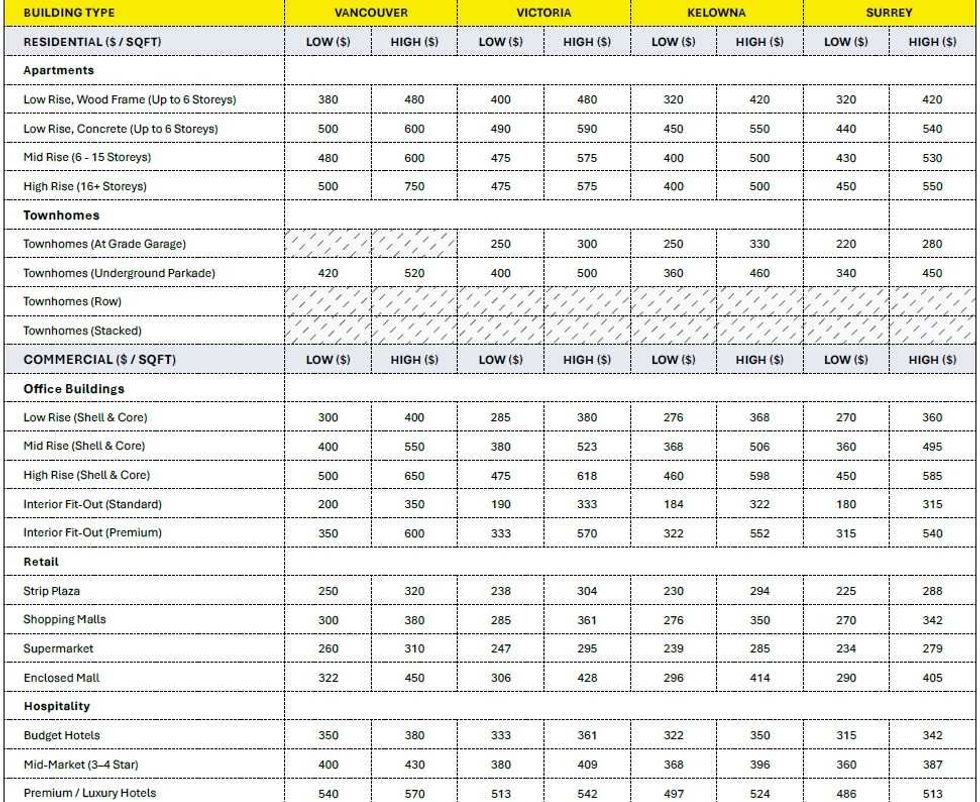
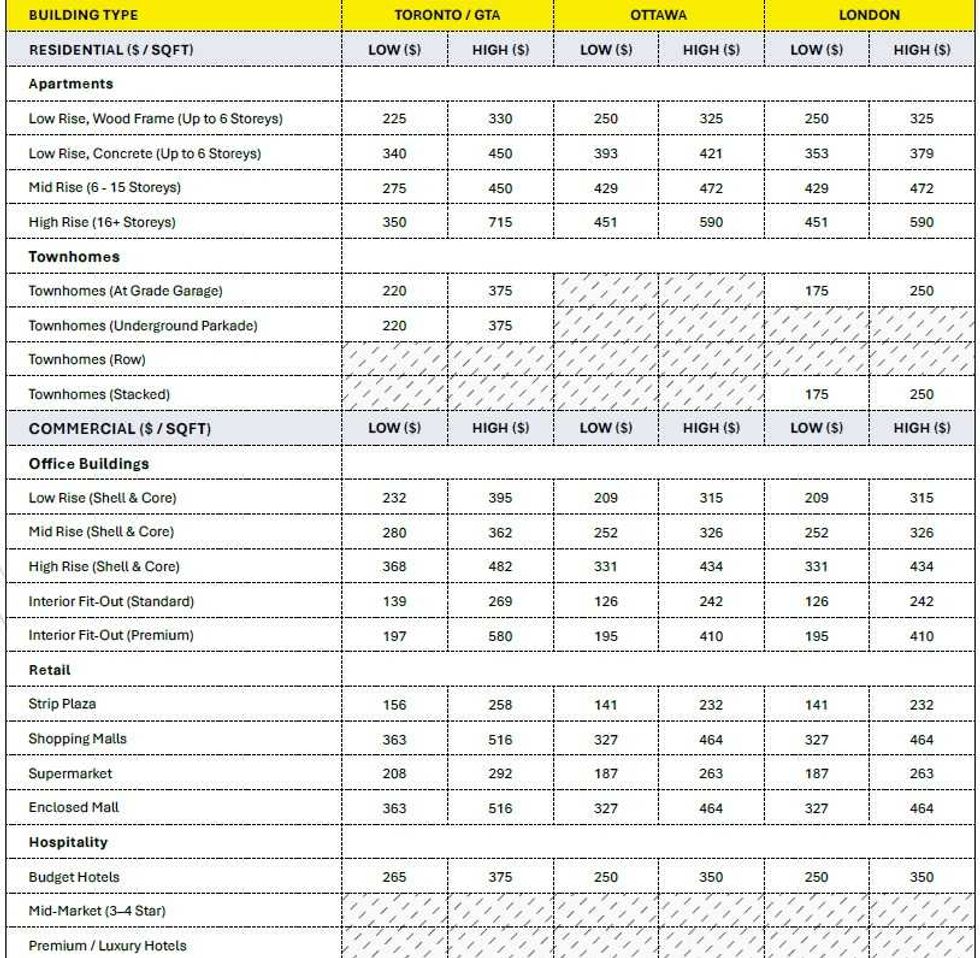
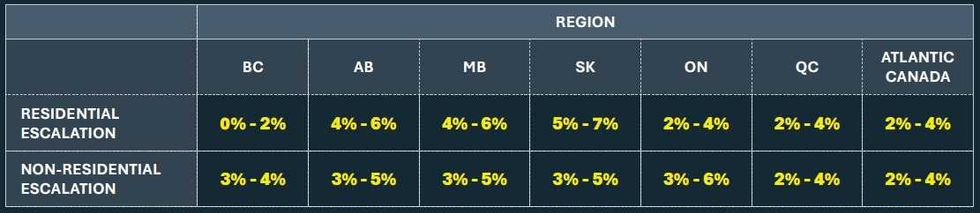
Construction Costs Stabilized In 2025, Expected To Align With Inflation In 2026

Between ongoing demand shifts, immigration policy tweaks, and threats of tariffs, 2025 was a temperamental year for the Canadian construction sector to say the least. But 2026 may bring some stability, according to an annual report published earlier this month by construction consultancy firm BTY Group.

“Construction activity at the beginning of the year maintained the momentum seen at the tail end of 2024, but metrics shifted after tariffs were announced and implemented early in the year,” said BTY Group. “Population growth also slowed dramatically which widened existing demand gaps for residential construction, most notably in British Columbia and Ontario. Activity picked up from Q2 to Q3 however, as tariff impacts were better understood and cost escalation was mostly in line with general inflation.”

Keep ReadingShow less

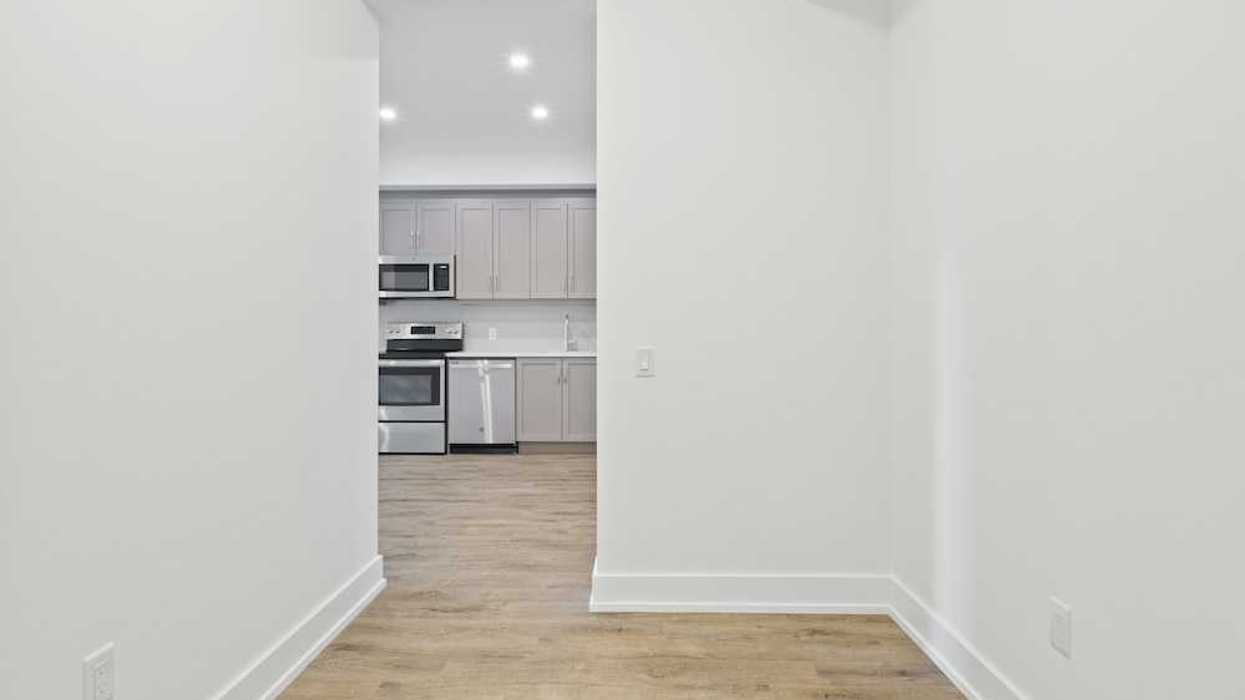
Toronto’s countless windowless dens – often marketed as “+1s” – are used for everything from home offices and nurseries to yoga spaces and closets. While some may call these spaces essential entry-level inventory, and a selling point when it comes time to move, industry experts say many of today’s condo dens are dysfunctional.

Criticisms range from wasted space to lack of light and temperature control. With the development world's newfound focus on end user livability over investor spreadsheets, could today’s tiny windowless condo den become a thing of the past?

Keep ReadingShow less
Bank Of Canada Holds Interest Rate Steady In Second 2026 Decision

The Bank of Canada left its overnight rate at 2.25% on Wednesday — as many of the nation's banks had predicted — keeping borrowing costs steady as global and domestic developments continue to shape the economic outlook.

Volatility has spiked since the outbreak of conflict in the Middle East, with oil and natural gas prices rising sharply, and financial markets tightening.

Keep ReadingShow less
Chartwell To Sell Waterloo Asset To Resolve Competition Bureau Concerns

Chartwell Clair Hills at 530 Columbia Street West in Waterloo. (Chartwell)

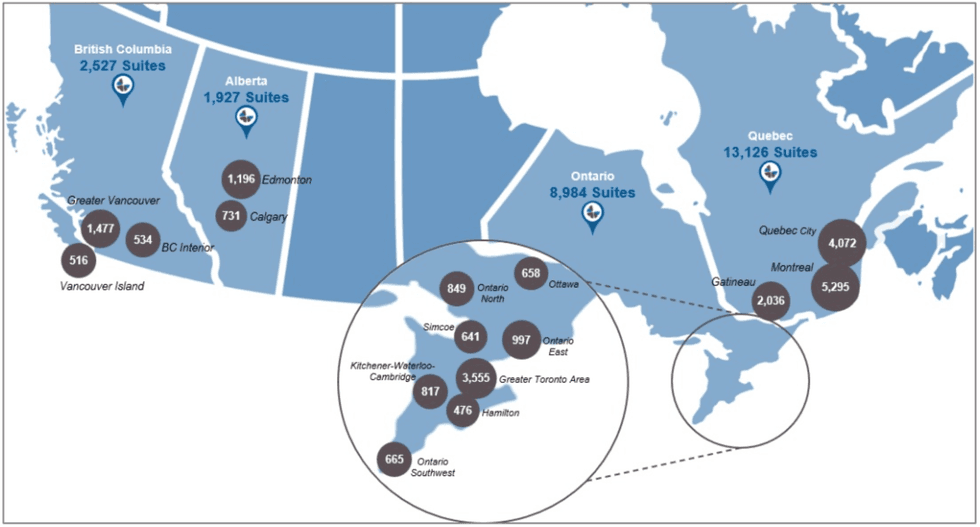
Last summer, Chartwell Retirement Residences (TSX: CSH.UN) announced that it had reached an agreement to acquire a portfolio of six seniors housing communities located in southwest Ontario for $432 million, continuing to expand its footprint in the region.

The portfolio of six properties represented the entire seniors housing portfolio of Ontario-based Sifton Properties and totalled to 1,024 suites (plus 29 additional units under construction), split between the following six properties:

Keep ReadingShow less
Canada Housing Starts Hold Steady In February: CMHC

Canada’s housing construction trend remained largely unchanged in February, even as monthly starts ticked higher, according to new data from the Canada Mortgage and Housing Corporation.

CMHC reported that the six-month trend in housing starts — measured as the six-month moving average of the seasonally adjusted annual rate (SAAR) — edged up 0.4% in February to 256,005 units.

Keep ReadingShow less
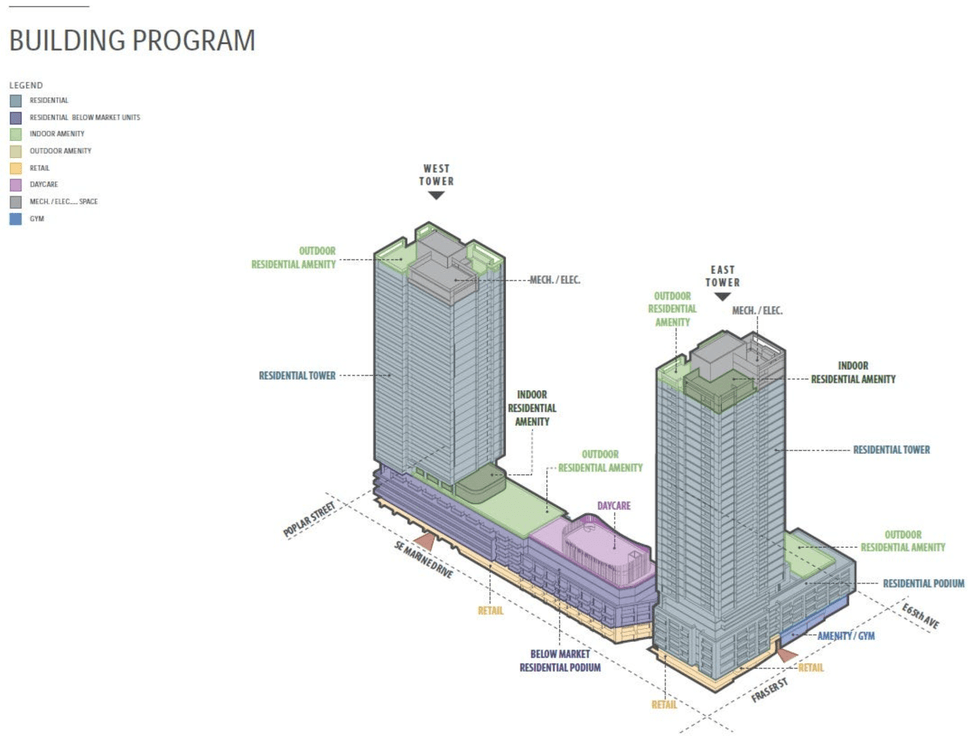
Peterson Proposes 34-, 29-Storey Rental Towers On SE Marine Drive

The two-tower project proposed for 605-695 SE Marine Drive in Vancouver. (MCMP Architects, Peterson)


Fresh off of a brand refresh, Vancouver-based Peterson is now advancing one of its largest planned projects to date, according to a new rezoning application published by the City of Vancouver last week.

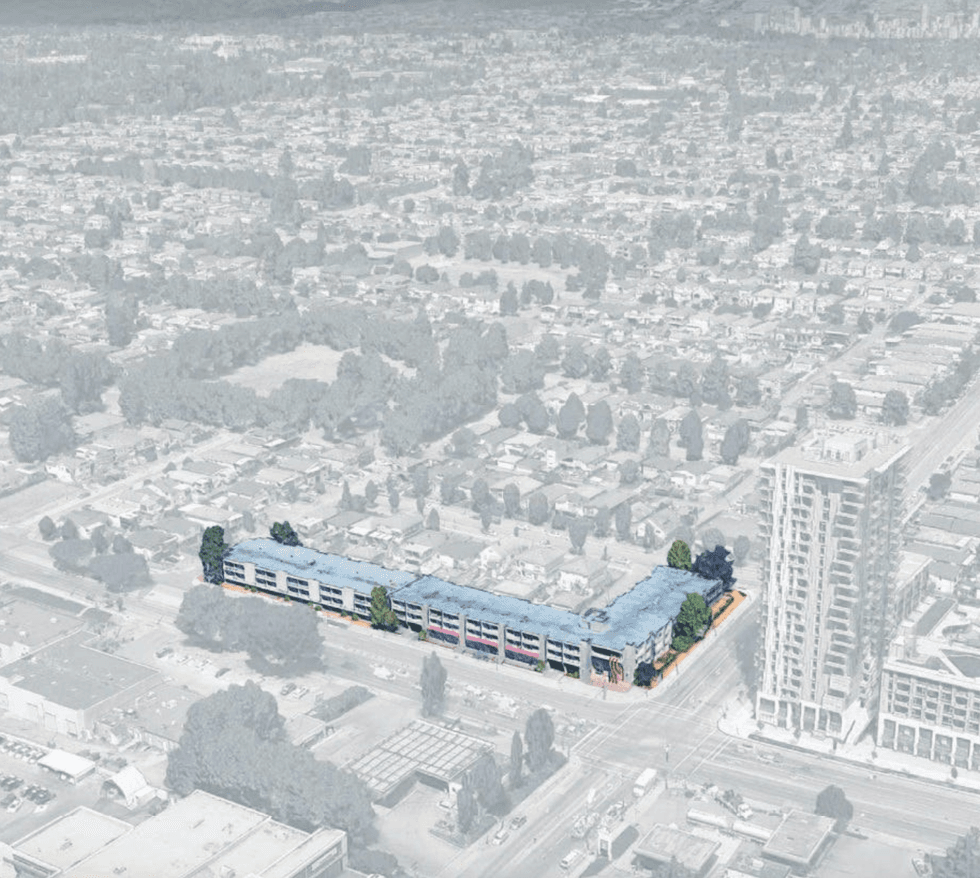
The subject site is 605-695 SE Marine Drive, located at the northwest corner of the intersection with Fraser Street. The L-shaped site is currently occupied by a large apartment complex, known as Marine Terrace, which extends up Fraser Street to E 65th Avenue. The property is a single parcel that BC Assessment values at $31,874,000 in its latest assessment, and 605 SE Marine Drive is held by Peterson under Fraser Marine Drive Holdings Inc.

Keep ReadingShow less
​Rendering of the first tower in the Fairview Mall master plan project.

Rendering of the first tower in the Fairview Mall master plan/Adamson Associates

All across the Greater Toronto Area, malls are being reimagined into sprawling mixed-use communities — a movement that’s bringing more housing to transit-oriented sites, while lending fresh relevance to retail. And now, Cadillac Fairview has some skin in the game.

The commercial real estate giant owns and operates Fairview Mall in North York, and the over 40-acre site at 1800 Sheppard Avenue East is set to be embellished with over a dozen new buildings and upwards of 6,000 new residential units, alongside new parkland, a multi-use trail, and new public and private streets. The mall will be retained, and the project will be rolled out in phases.

Keep ReadingShow less
Manuela Preis On Loving (And Posting) Life As A Crane Operator

Manuela Preis/Instagram

There are varying statistics and things are improving, but even so, women are estimated to represent just ~15% of the construction sector workforce in Canada. Any given construction site is home to a variety of people who play different roles, with one of the most important being the crane operator overlooking the site.

Statistics suggest that as few as 1 in 25 crane operators is a woman (that's ~4%). Manuela Preis is one of those ones.

Keep ReadingShow less
MUST READ: Manuela Preis On Loving (And Posting) Life As A Crane Operator