Transit-Oriented Development
Explore transit-oriented development in Canadian real estate — how walkable, transit-linked projects shape urban growth and boost property value.

June 09, 2025
What is Transit-Oriented Development?
Transit-oriented development (TOD) is a planning strategy that concentrates residential, commercial, and recreational buildings near public transit hubs to encourage sustainable, walkable communities.
Why Transit-Oriented Development Matters in Real Estate
In Canadian real estate, TOD is a growing trend in urban planning that boosts accessibility, reduces car dependency, and increases land value.
Key elements of TOD include:
- Mixed-use zoning near transit stations
- Pedestrian-friendly design and density
- Reduced parking requirements
- Proximity to rail, bus, or LRT lines
Properties near transit hubs often see faster appreciation and strong rental demand. Municipal governments may offer incentives or upzone TOD areas.
Understanding TOD helps developers and buyers identify high-growth areas with long-term sustainability benefits.
Example of Transit-Oriented Development in Action
A condo developer secures land near a new light rail station, capitalizing on TOD policies that allow higher density and reduced parking mandates.
Key Takeaways
- Focuses development near transit hubs
- Encourages walkable, mixed-use areas
- Increases land value and rental demand
- Supported by city policies and incentives
- Appeals to sustainability-focused buyers
Related Terms
- Zoning
- Urban Planning
- Walkability
- Land Value
- Housing Supply
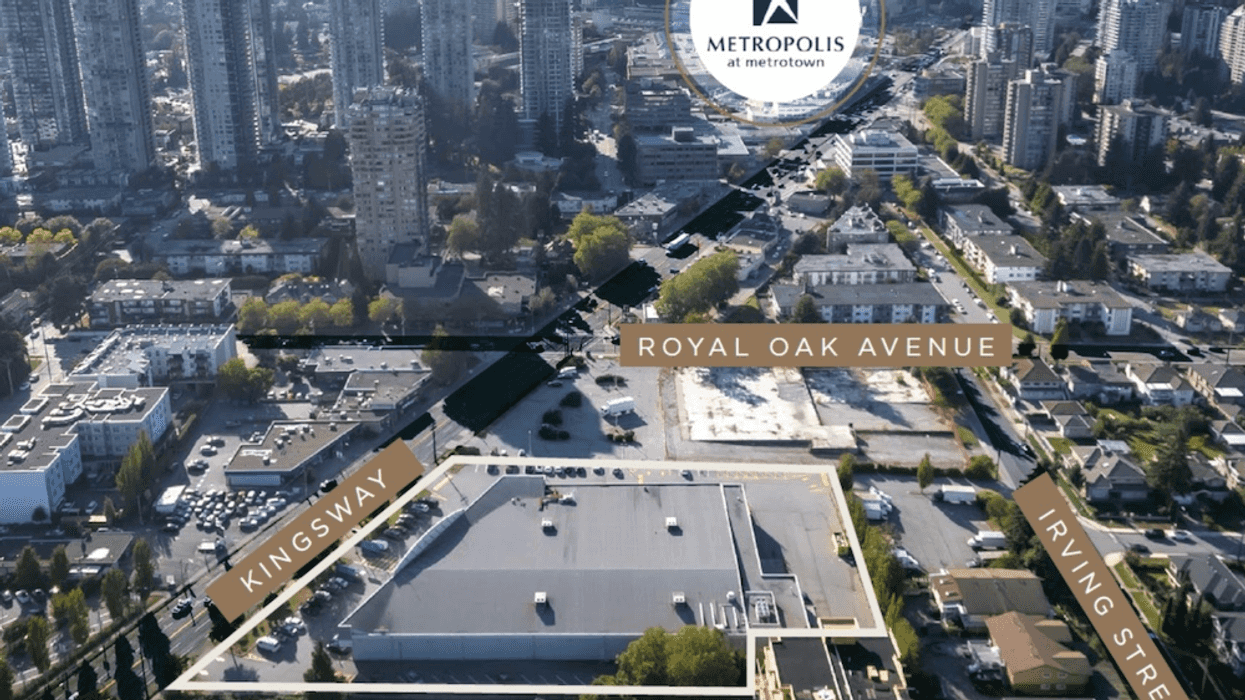
 A preliminary conceptual development for 5335 Kingsway in Burnaby. (Arcadis, JLL)







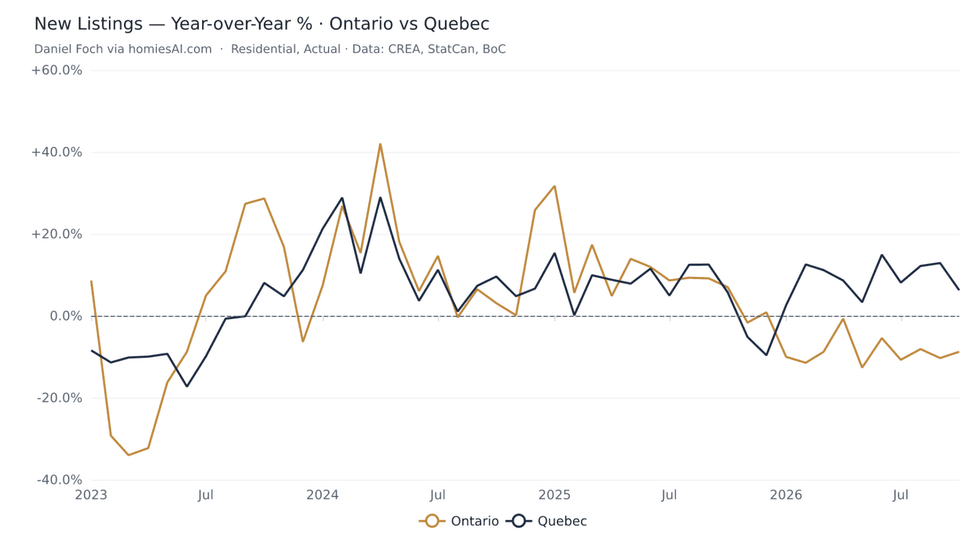 Chart: New listings, year-over-year %, Ontario vs Quebec. Daniel Foch via homiesai.com/stats. Data:
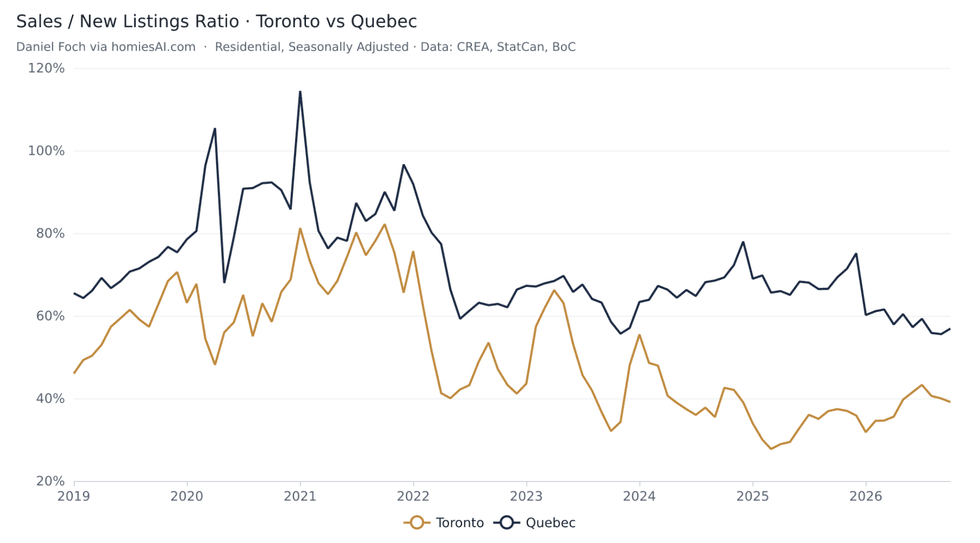 Chart: Sales-to-new-listings ratio, seasonally adjusted. Toronto vs Quebec. Daniel Foch via homiesai.com/stats. Data: CREA.
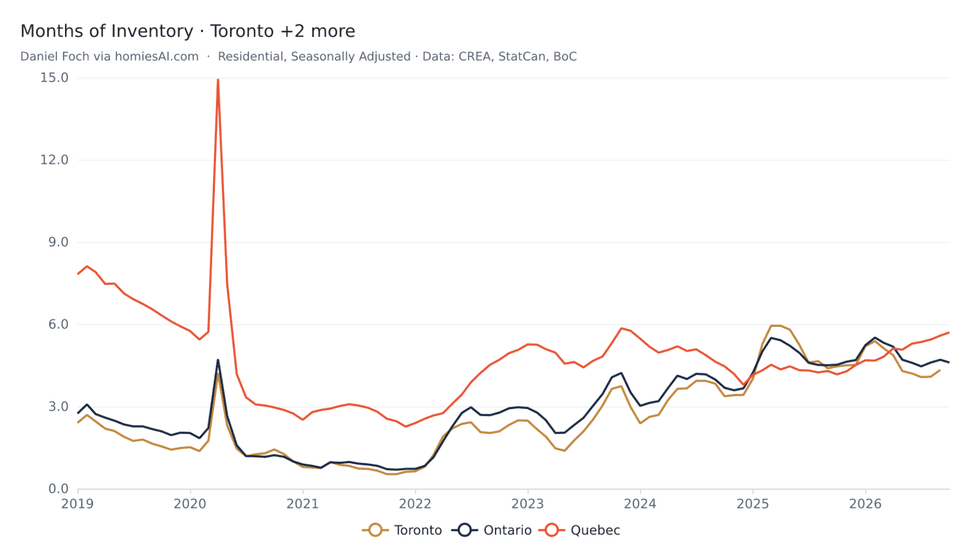 Chart: Months of inventory, seasonally adjusted. Daniel Foch via homiesai.com/stats. Data: CREA.
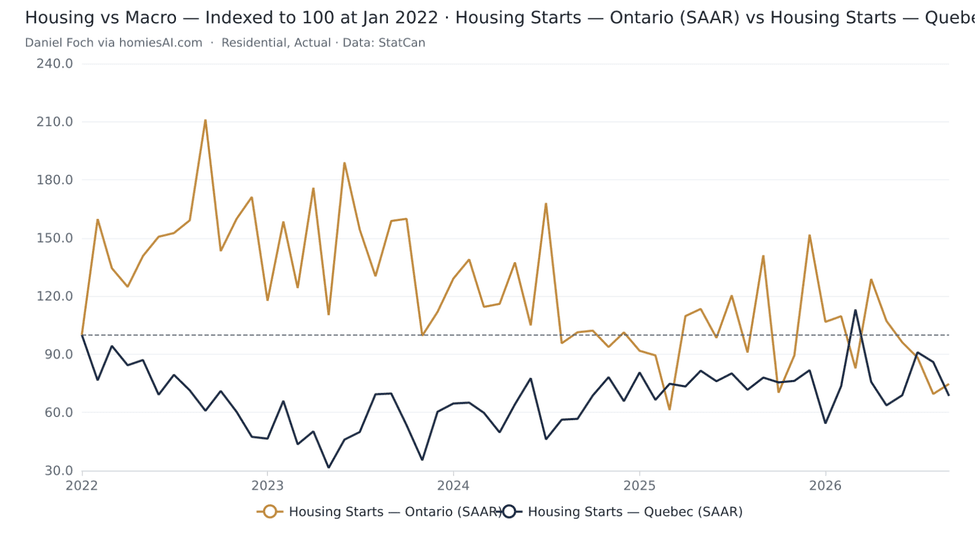 Chart: Housing starts, seasonally adjusted annual rate, Ontario vs Quebec, indexed to January 2022. Daniel Foch via homiesai.com/stats. Data: CMHC via Statistics Canada.
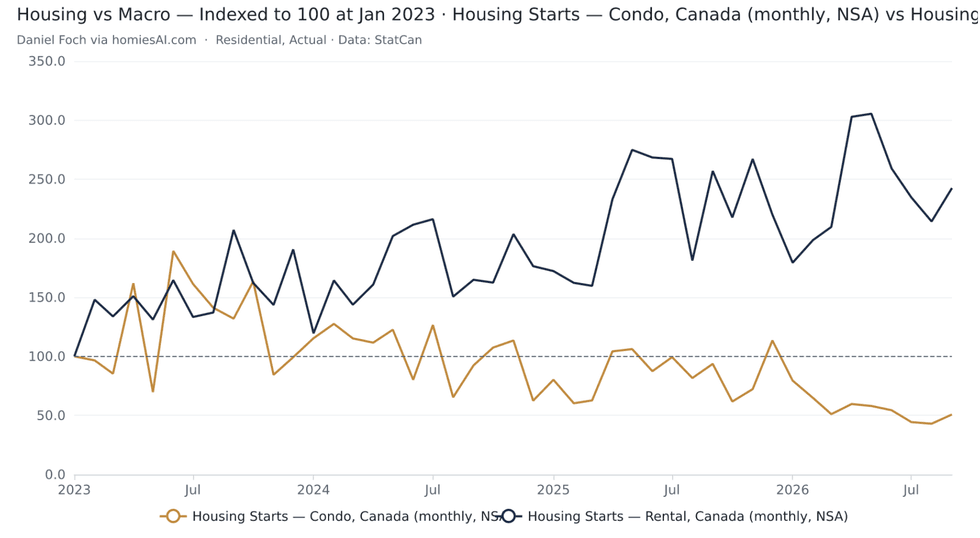 Chart: Condo vs rental housing starts, Canada, indexed to January 2023. Daniel Foch via homiesai.com/stats. Data: CMHC via Statistics Canada.
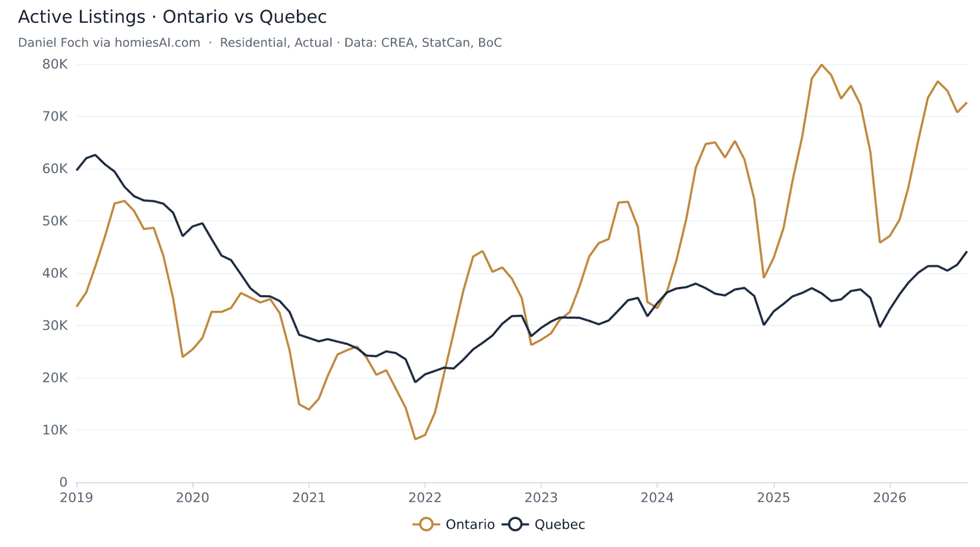 Chart: Active residential listings, Ontario vs Quebec. Daniel Foch via homiesai.com/stats. Data: CREA.

 The Highlight of Mississauga as of March 2026. (Grant Thornton)

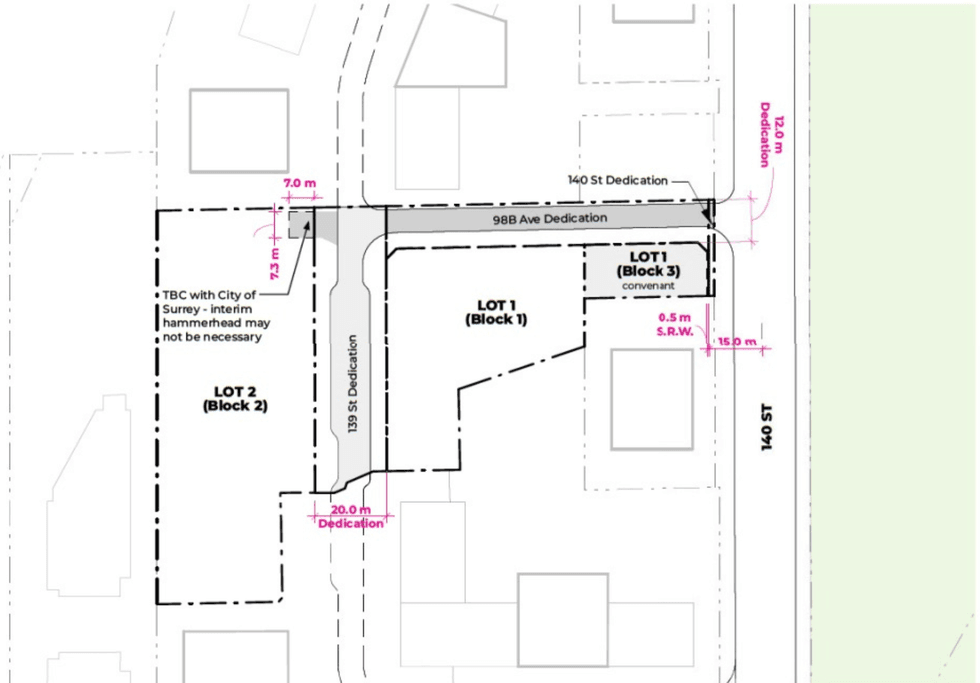 9883 140 Street and the proposed road dedications. (WW+P Architects, Entre Nous Femmes Housing Society)
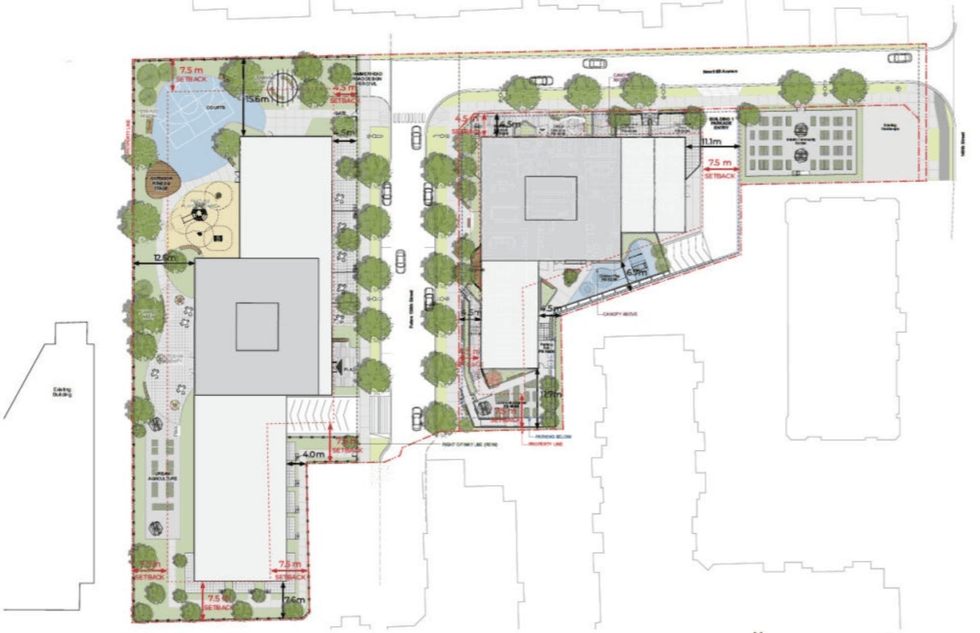 The
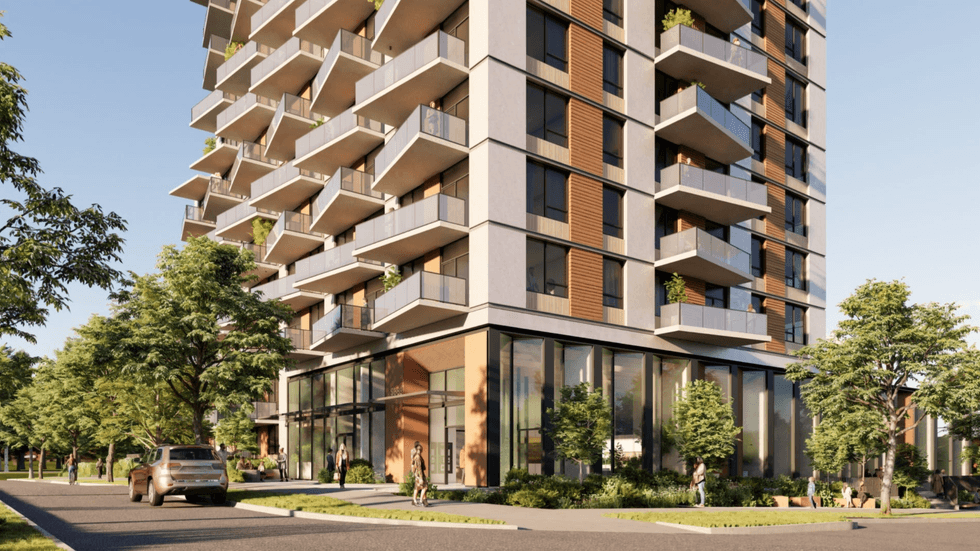 One of the towers proposed for 9883 140 Street. (Entres Nous Femmes Housing Society)

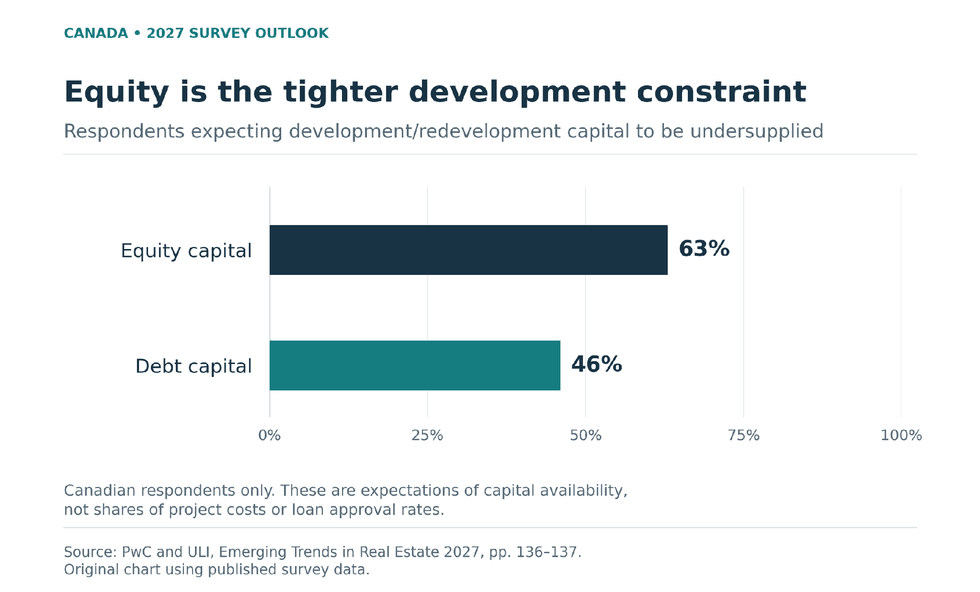 Canadian respondents were more likely to expect an undersupply of development/redevelopment equity capital (63%) than debt capital (46%) in 2027. These are survey expectations, not measured financing volumes. Source: PwC and ULI, Emerging Trends in Real Estate 2027, pp. 136–137. Original chart.
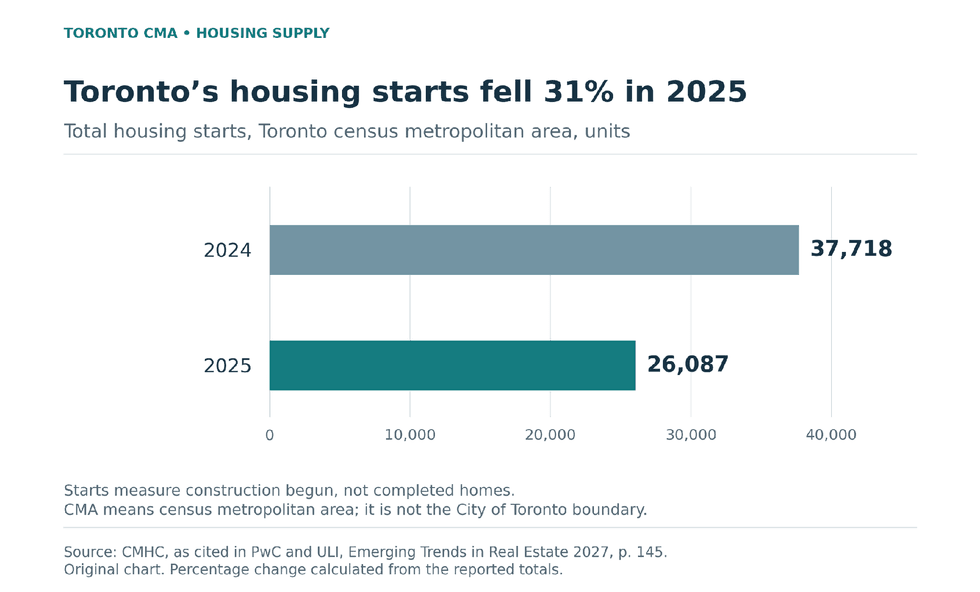 Toronto census metropolitan area housing starts fell from 37,718 units in 2024 to 26,087 in 2025, a 30.8% decline (rounded to 31%). Starts measure construction begun, not completed homes. Source: CMHC, as cited in PwC and ULI, Emerging Trends in Real Estate 2027, p. 145. Original chart.



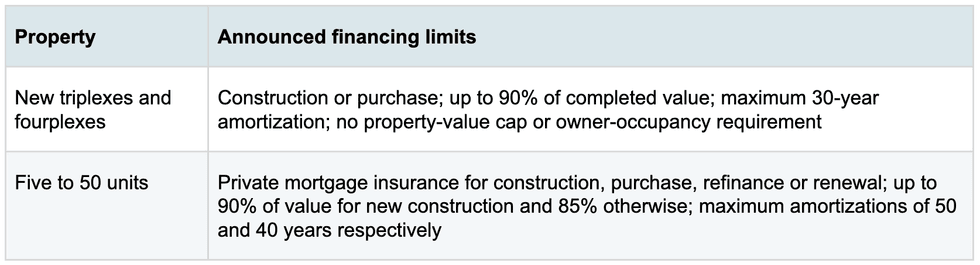
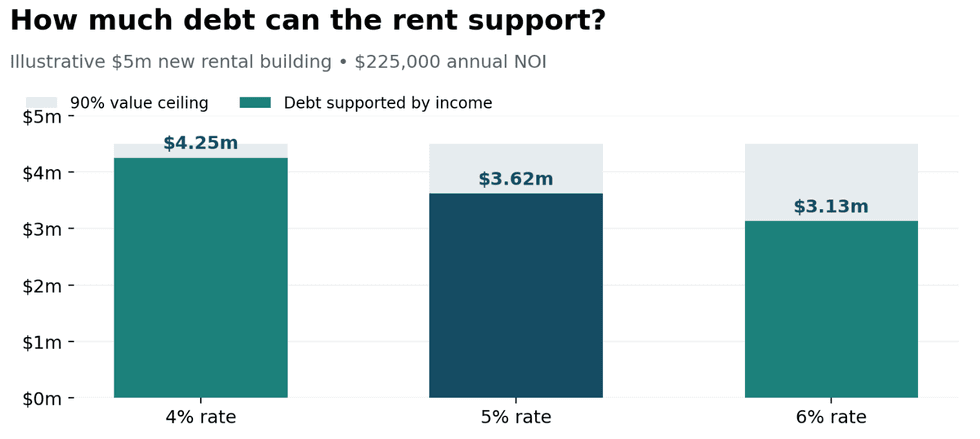 Illustrative calculation: a $4.5-million value ceiling versus income-based capacity of about $4.25 million at 4%, $3.62 million at 5% and $3.13 million at 6%. Assumes 50-year amortization and 1.15 debt coverage.
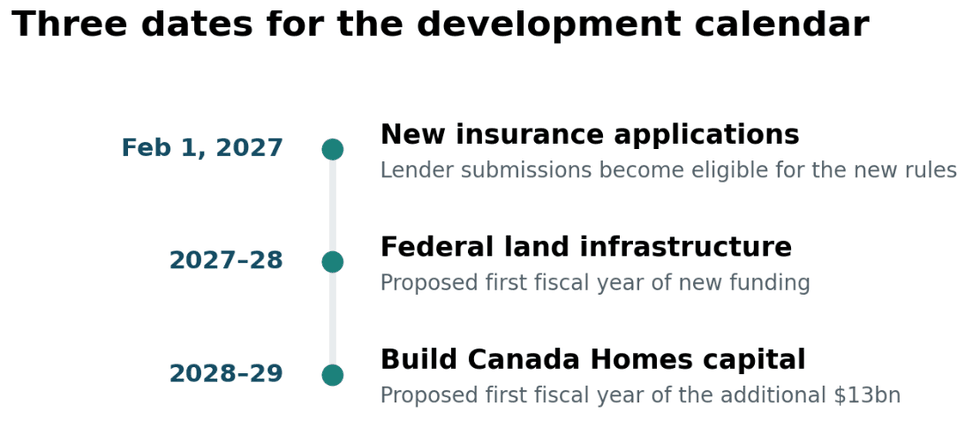 Source: Department of Finance missing-middle backgrounder and Budget 2026 Chapter 3, November 5, 2026. Fiscal-year funding starts are not home-completion dates.