This week, a series of announcements were made that will go a long way towards shaping what the near future of government investment in housing looks like in British Columbia.
On Tuesday, right after the long weekend, the Province unveiled Budget 2026, confirming what was widely expected to be a record-setting deficit. In 2022, the Province had a $1.3 billion budget surplus. A few years later, the Province is now projecting a deficit of $13.3 billion for 2026-2027.
While still fresh, the Province has received near-universal criticism for its fiscal management. An analysis published by RBC concluded that “there is no path to balance” and that it “achieves only minimal headway, with structural pressures remaining that will leave stabilizing BC’s fiscal situation a task to another day.” (It’s worth noting that budget deficits are growing across the country, not just in BC.)
As a result of that deficit, the Province is increasing an assortment of taxes.
Most notable is that BC is increasing the income tax rate for the first income tax bracket from 5.06% to 5.60%, which the Province estimates to be a $76 increase for the average taxpayer. It is also increasing the Speculation and Vacancy Tax rate for the 2027 tax year from 3% to 4%.
There are also two new tax changes that will impact the development sector.
For residential properties or properties with a residential component, the Additional School Tax portion of property taxes still will not apply to the first $3 million in value, but the tax rate on the value between $3 million and $4 million is being increased from 0.2% to 0.3% and the value above $4 million is being increased from 0.4% to 0.6%. This applies to vacant residential land like development sites, but does not apply to non-stratified rental buildings with four or more units.
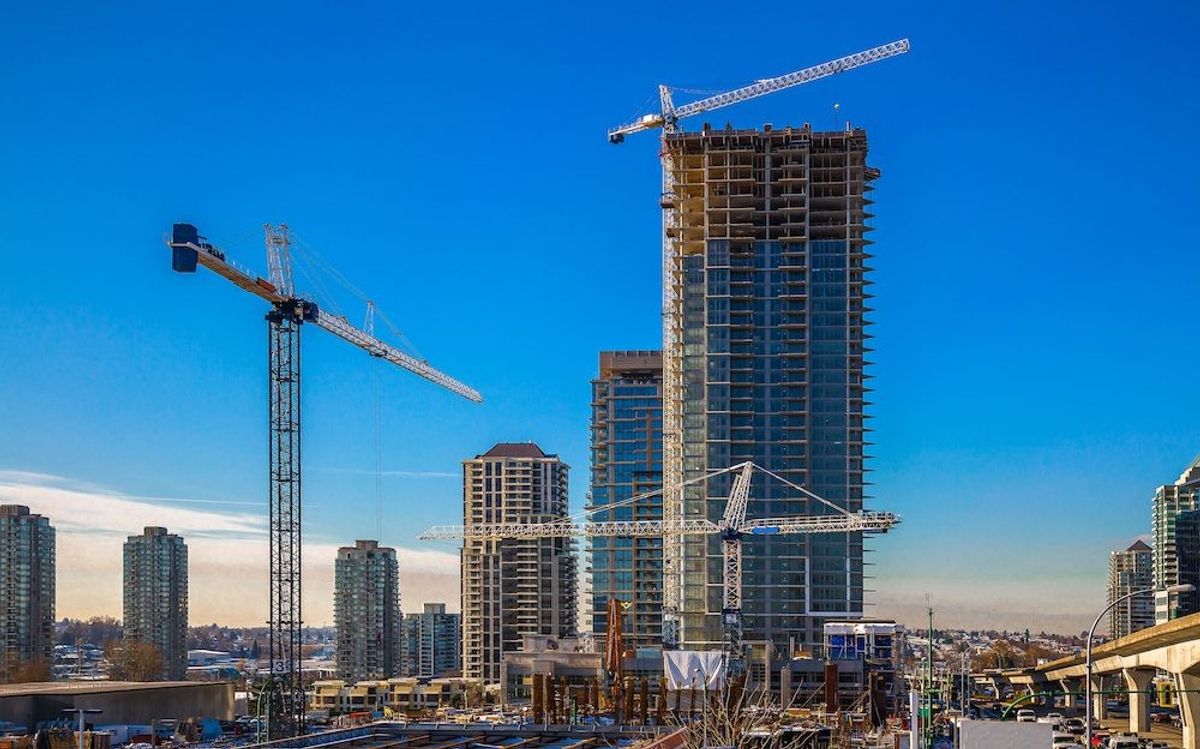
The Province is also expanding the PST tax base to include professional services such as accounting, engineering, architectural, and commercial real estate fees. Although perhaps not substantial amounts on their own, the increases will add to development costs at a time when developers are looking for relief.
“Every one of those measures raises costs,” said Urban Development Institute Executive Vice President Michael Drummond in a LinkedIn post. “Not one improves feasibility. […] But the deeper problem isn't just the taxes. It's what the budget didn't deliver: any credible path to economic growth.”
In addition to the tax changes, the Province is also adjusting the timelines of its capital spending and capital projects.
“Right now, there are added fiscal pressures on government finances,” the Province said. “To mitigate construction cost escalation and maintain a competitive debt-to-GDP, the Province is adjusting the pace of the capital plan to continue building the schools, hospitals, and transit people need in a sustainable way.”
Impacted projects include several long-term care projects across British Columbia, the University of Victoria student housing expansion, and Phase 2 of the Burnaby Hospital and Cancer Care project, among others. Budget 2026 also includes an extensive list of capital projects over $50 million, with many seeing cost increases or having their expected completion dates pushed back.
British Columbia x Build Canada Homes
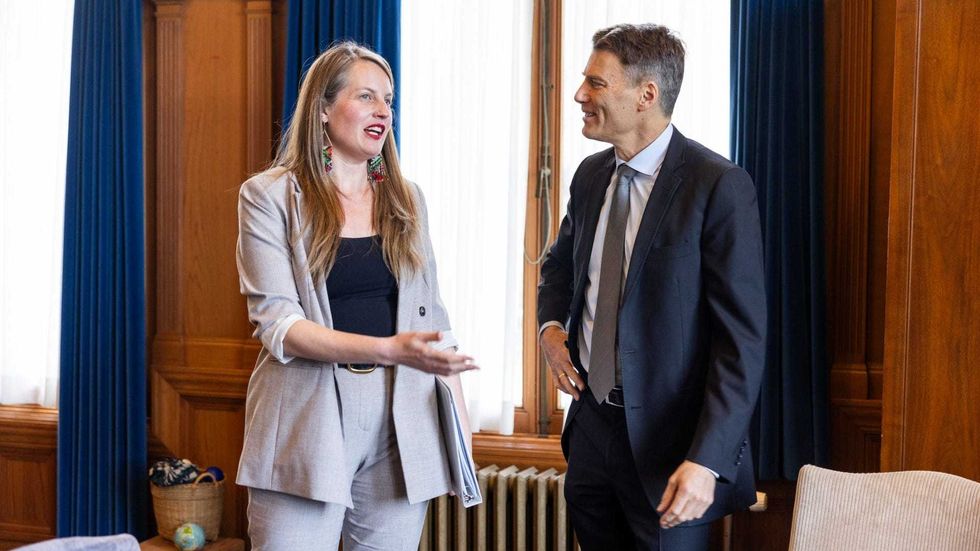 Christine Boyle and Gregor Robertson. (Government of British Columbia)
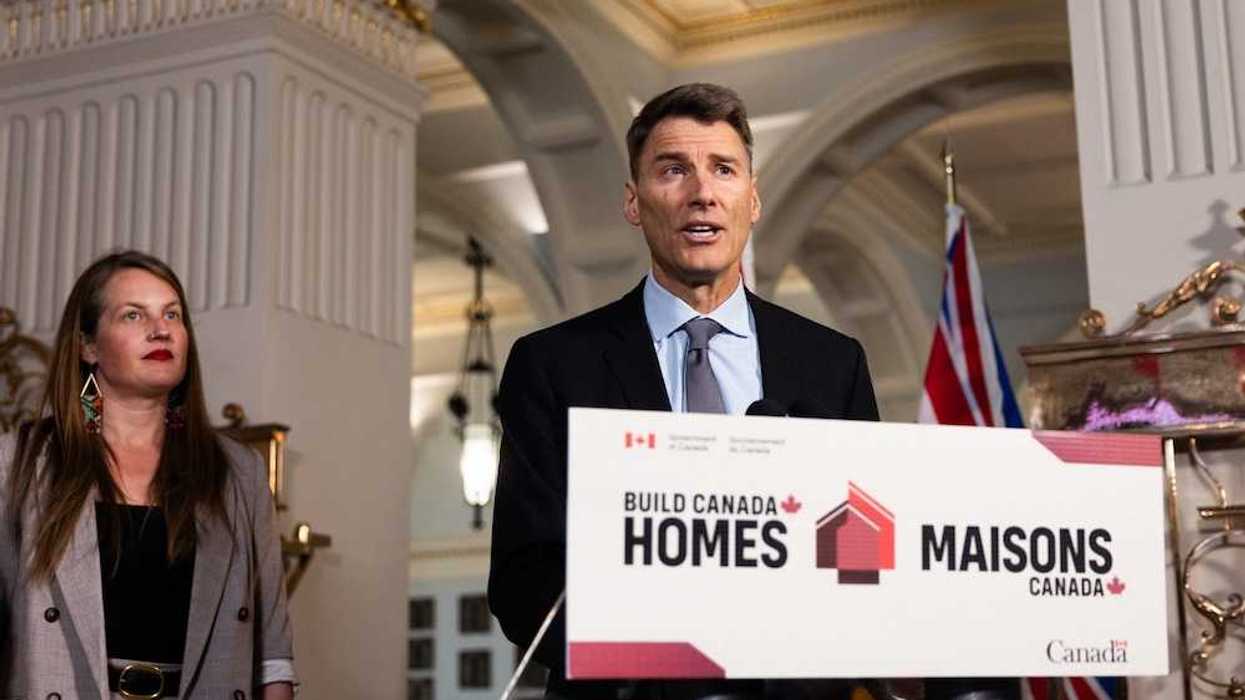
Following the Budget unveiling, on Wednesday, the Province and the Government of Canada jointly announced a big partnership on via Build Canada Homes, the new federal housing entity the federal government established last year.
The partnership, described as the “first phase of a shared commitment” between the two governments, is focused on quickly delivering dwellings. The two governments said they are committing to building a minimum of 700 shovel-ready supportive and transitional homes set to begin construction within the next 12 months, and will also partner on delivering 400 affordable rental homes using the Digitally Accelerated Standardized Housing (DASH) program the Province launched in November 2025.
The DASH program in an online platform that supports the designing of buildings up to six storeys more quickly, and with components manufactured in BC. Using digital review, standardized designs, and prefabricated building components, the program says it can cut development timelines from three years down to just one year.
Although Wednesday’s announcement did not list the projects that will be delivered through the partnership, last week, the Province launched a request for proposals for a 40-unit affordable rental project in Prince George, and a 50-unit women’s transitional housing project in Abbotsford.
As part of the partnership, the Government of Canada will contribute $170 million in capital costs through Build Canada Homes, while the Government of British Columbia will contribute $640 million in capital and operating cost through BC Housing. The latter amount consists of $200 million in capital, $27 million per year in operating subsidies for 10 years, and $170 million to support the DASH program.
The announcement was made by federal Minister of Housing and Infrastructure Gregor Robertson and BC Minister of Housing and Municipal Affairs Christine Boyle, both of whom were appointed to their posts last year. Both have also served on Vancouver City Council, although not at the same time. Robertson served as mayor from 2008 to 2018, while Boyle was elected as a councillor for the term after Robertson left office; she served until 2024.
“This new funding marks a meaningful collaboration with Canada that shows confidence in the work we’re doing here in BC to deliver homes for people,” said Boyle. “With many BC projects already prepared to move into construction, this additional support means we can break ground faster and deliver more homes sooner for the people who need them most.”