Toronto’s countless windowless dens – often marketed as “+1s” – are used for everything from home offices and nurseries to yoga spaces and closets. While some may call these spaces essential entry-level inventory, and a selling point when it comes time to move, industry experts say many of today’s condo dens are dysfunctional.
Criticisms range from wasted space to lack of light and temperature control. With the development world's newfound focus on end user livability over investor spreadsheets, could today’s tiny windowless condo den become a thing of the past?
What’s a Den, Anyway?
The term “den” once conjured images of wood-panelling, a big comfy couch, and informal family movie nights (oh, the nostalgia). With Toronto’s condo boom, dens have evolved, dramatically shrinking in size in the process. Realtors and landlords have long called a space of any size or shape a den – even those that barely pass for a nook, or that resemble a foyer.
"Dens are still, and always have been, pretty subjective when it comes to condo rooms,” says Toronto condo realtor Michael Camber. “It almost always starts with the builder, and owners tend to use whatever definition they were given at the time of purchase.” Builders often label these spaces as “study areas” or “media nooks” in floorplans, which allows them to market a one-bedroom unit as a “1+1,” commanding a price premium even if the total square footage remains the same.
“Years ago, dens and solariums were pretty interchangeable,” says Camber. “Solariums were basically internal balconies with sliding glass doors that led to a separate interior room with windows facing the outdoors.” These are common in Toronto’s older, larger condos along the waterfront, in the St. Lawrence Market neighbourhood, and in the Bay Street corridor.
Camber highlights how over the years, dens moved away from the windows and became separate internal rooms that generally lacked both a closet and a window. “Having both would change the definition to a bedroom,” he says. Yet, many were the size of bedrooms – often up to 100 sq. ft in some units. “These spaces were highly usable as guest bedrooms, offices, and TV areas,” says Camber. “We started seeing less of this around 2010.”
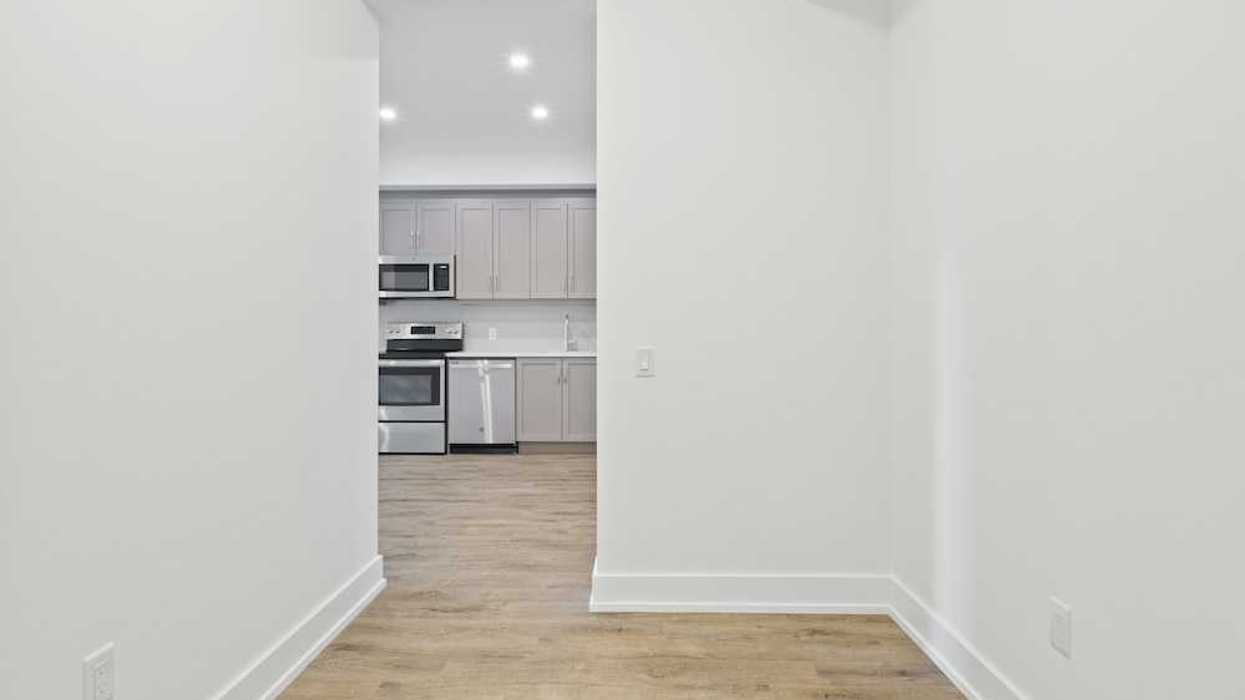
Enter, the new(ish) age of den: An open-concept, windowless interior area within the main living area or entry hallway that lacks any discernible separation from the rest of the condo. “That's not exactly what today's buyers have in mind when they think ‘den’,” says Camber.
Between the mid-90s and 2022, the average Toronto condo dropped in size 35%, from 1,100 sq. ft to 700 sq. ft. In the four years between 2020 and 2024, it shrunk to just 616 sq. ft – something that helps explain the rise of today’s micro dens (or “dents”).
The den’s transformation comes down to economics and floorplan efficiency. For years, the long, deep “bowling alley” design was the investor gold standard for Toronto condos and their once plentiful investors. This pushed dens onto the dark interior core to maximize unit counts. In many cases, the priority was unit counts over human comfort and livability.
A Hot Topic
Windowless dens have been criticized, by everyone from architects to end users, for their lack of light, air flow, and temperature control. Research from Marianne Touchie, Associate Professor of Civil Engineering and Mechanical and Industrial Engineering at University of Toronto, finds that condo dwellers often report uneven interior temperature distributions. Those who live in heavily glazed (floor-to-ceiling glass) condos report significantly higher discomfort due to solar heat gain.
Because windows have much lower thermal resistance than opaque walls, solar radiation and heat transfer through glass façades can significantly influence interior temperatures in modern condo buildings. Research on thermal comfort in high-rise residential buildings has also found that occupants frequently report uneven temperature conditions within their suites. Interior rooms, particularly those located away from windows, can feel noticeably different from the rest of the unit, depending on how air circulates through the space.
While a 26°C standard has been in place for years, Toronto’s updated Indoor Temperature Standards bylaw (effective April 30, 2025, fully unified June 2026) strengthens indoor temperature rules and cooling requirements. All condos with air conditioning provided by the landlord/owner must maintain a maximum temperature of 26°C June 1 through September 30. The City can levy fines of up to $100,000 – and daily penalties of $10,000 – against landlords or condo boards if buildings fail to maintain habitable temperatures throughout the unit.
Windowless dens can reveal weak spots in a building’s cooling system. Tenants who find these spaces consistently too hot can call 311, prompting inspections to ensure the HVAC system maintains comfort and compliance throughout the suite.
In older condo designs, interior dens were sometimes treated as ancillary spaces and did not always receive dedicated supply air from the HVAC system. Newer buildings generally provide mechanical ventilation or airflow to all habitable rooms under the Ontario Building Code, though airflow strategies can vary. Even with vents, interior rooms without windows can remain warmer, especially in heavily glazed, sun-exposed downtown condo towers.
Temperature aside, dark rooms aren’t consistent with a focus of wellness-first design. Architectural research on high-density housing shows that deep residential floorplates with central corridors (i.e. bowling alley design) often produce units with limited daylight penetration, leaving interior rooms dependent on artificial lighting and ventilation. Studies reveal that individuals in windowless environments report significantly poorer sleep quality and physical well-being. University of Toronto’s Faculty of Architecture also highlighted that circadian lighting – a design that mimics the natural path of the sun – is becoming a non-negotiable for the “work from home generation.”
“I believe windowless ‘bedrooms’ are a compromise to the developer, buyers, and renters,” says Toronto urban planner and architect Naama Blonder. “It’s something most people want to avoid. If you had the choice, most wouldn’t raise their child in a windowless bedroom.”
Livability Over Investors
With investors disappearing from the pre-construction equation, a growing number of developers are now focused on livability in their condo designs. According to Urbanation, new condo sales in the Greater Toronto Area (GTA) have plummeted to their lowest levels since 1991, dropping 91% below the 10-year average.
This has triggered a pivot toward end-user buyers who prioritize breathable layouts and functional spaces. According to Urbanation, 33% of all new condo sales in 2025 were for units at the occupancy or registration stage – a signal that buyers are moving away from speculative paper units toward tangible, finished spaces. A shift in the condo world means a renewed focus on larger suites, and away from the cookie-cutter investor shoebox units (and their tiny dens).
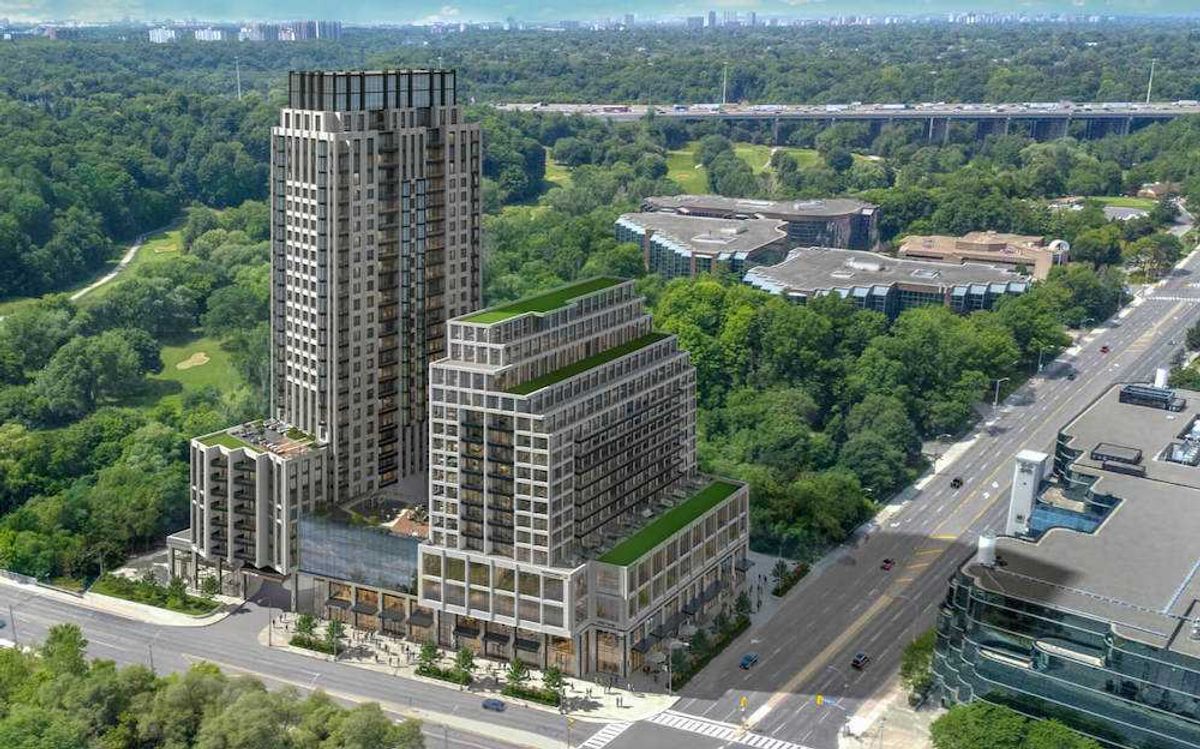
Just this week, Gupta Group announced tweaks to its Yonge City Square project in North York in favour of larger family-sized units. But while it may be the way of the future, Blonder says we aren’t currently seeing this type of functional new product hitting the Toronto market – not yet, at least. There’s a lag between design and delivery, especially in this climate.
“We’re just not seeing condos built for the end user yet in the market,” says Blonder. “Due to things like interest rates, general affordability, bans on foreign buyers, reduced immigration targets, construction costs, and the gap between average income and home costs, it’s become very expensive to build. I think we have more obstacles to face.”
What Buyers Actually Want
For today’s end users, it may make more sense to scrap the den and use the square footage elsewhere. Instead of attempting to make use of an awkward and dark space, many buyers would rather have more living space and room for a dining table. Or perhaps a kitchen island. Others simply want a den that doesn’t double as a closet.
“Many end users are actually looking for dens, not those tiny ‘nooks’ just big enough for a desk in the main living area,” says Toronto realtor James Milonas. “They want a proper setup for either an office or a TV space. A 1+1 buyer isn’t looking for a den that doubles as a second bedroom; they want a guest space with a pullout couch beside their desk.”
Milonas says many of his condo buyers specifically avoid the windowless dens because they predominantly work from home. “No one wants to sit in darkness for an eight-hour shift,” says Milonas. “The best den layouts are those that are inset from the kitchen, like the ones at X Condos on Jarvis and Charles, which allow natural light from the living room. Alternatively, some older condos on Bay Street feature a proper +1 den.”
Newer condos may offer a glazed wall between the den and the kitchen to let more light in. Other layouts feature glass sliding doors or windows placed high on an interior wall that allow the den to feel private while still harvesting light from the primary windows.
Among Camber’s clients, the concern relates less to airflow or natural light and more to having a separated, usable space, he says. “While many of today's builders market floor plans with ‘open-concept’ dens, today's buyers aren't fooled and don't value them as much as a separate space, even if that space lacks a door,” says Camber. “After all, many realtors are happy to include the following description because it almost always generates more interest: ‘Den can easily be used as a 2nd bedroom!’"
Milonas says the demand for windowless dens will continue, as long as they are reasonably sized. “A den that’s only 3’ wide by 5’ deep isn’t a den; it’s a walk-in closet, which isn’t functional for anyone,” says Milonas. “However, windowless dens are great for young families needing a nursery, or for bachelors and bachelorettes looking for the ultimate entertainer’s condo. They can transform the den into a lounge or bar area. Ultimately, any space can be made functional with the right vision.”
In short, it comes down to an end-user’s needs. “If my 1+1 buyers need natural light for a home office, the den might not be directly by the window, as in a typical two-bedroom unit,” says Milonas. “However, it could be inset, facing the living space, rather than a front hallway den with no natural light and three walls of drywall.”
On industry forums, experts say the solution is to build shallow and wide, to ensure optimal sunlight throughout the space. This design prioritizes a longer window wall, allowing light to reach deeper into the unit and eliminating the need for a dark, central core. While this design reduces the number of units a developer can fit on a single floor, the current market reality suggests that buyers are willing to pay a premium for things like sunlit home offices, leaving the windowless den behind.
As we move forward – hopefully, into better market conditions – the fate of windowless condo dens will likely be a case of survival of the fittest: Only those that combine light, flexibility, and true functionality will survive.
So long, tiny windowless nooks (RIP).