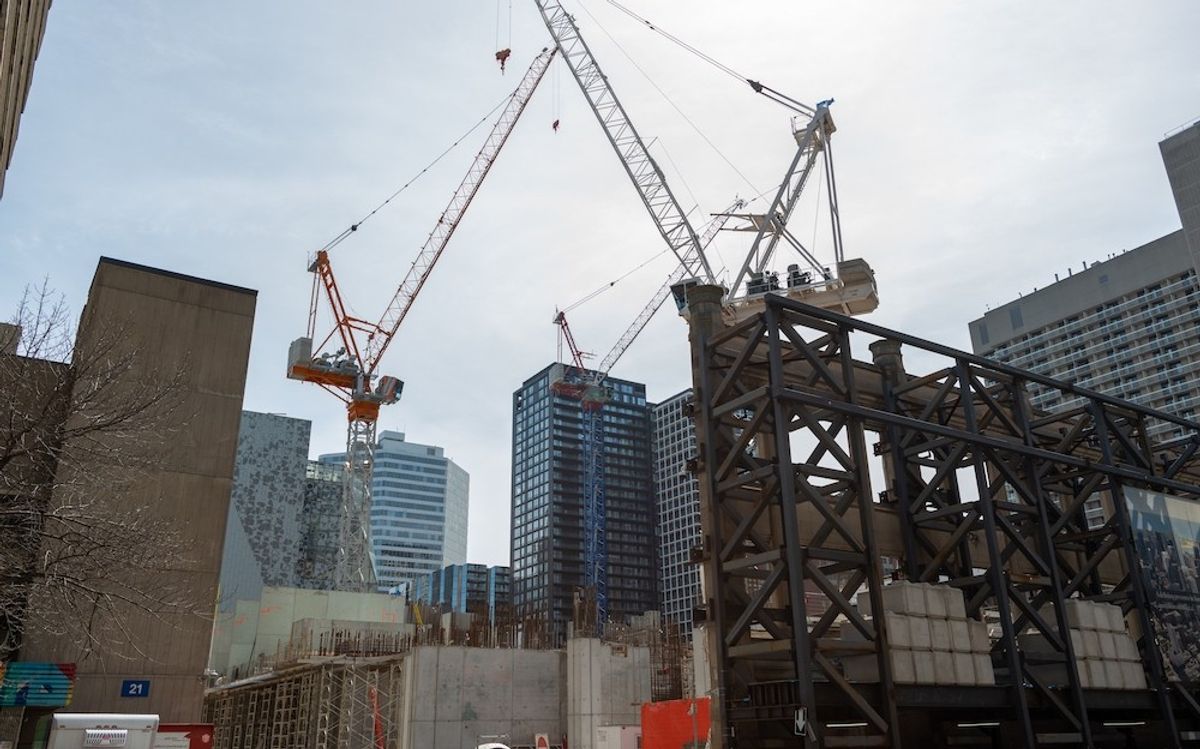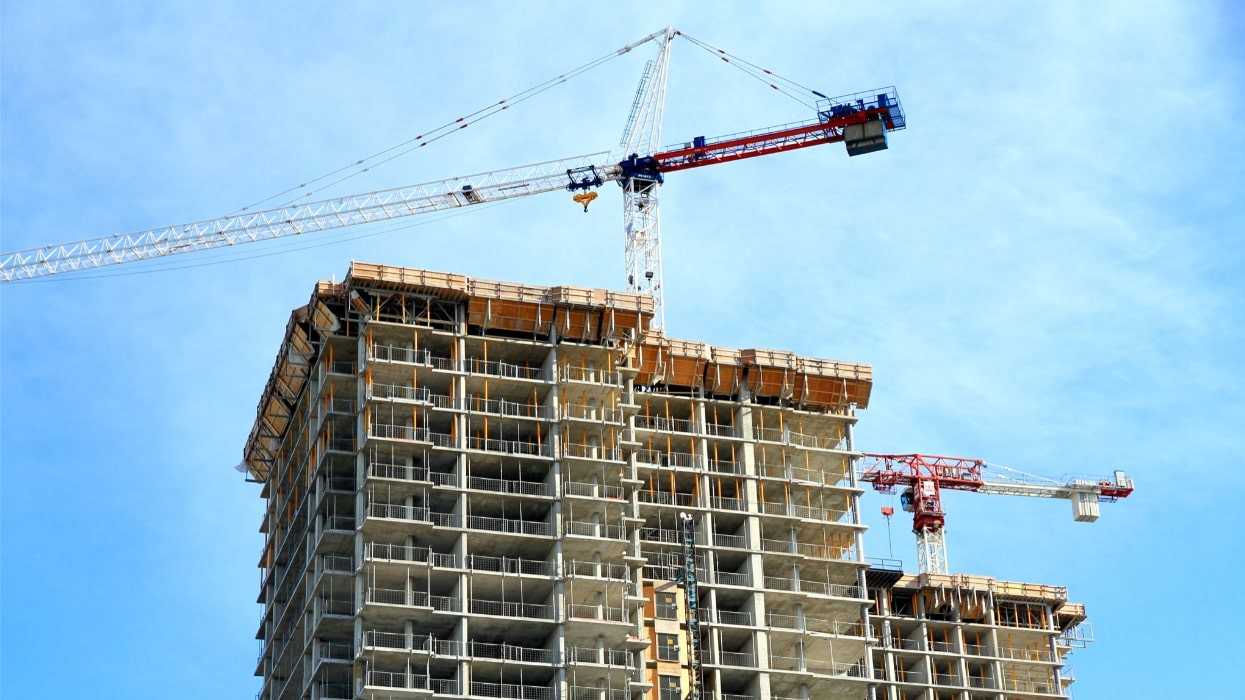
The housing market in Ontario is not cooling. It is collapsing under the weight of taxes, regulatory drag and financial barriers that have choked off new supply precisely when it is needed most.
If the province is serious about restoring affordability and protecting thousands of skilled trades jobs, it must adopt a bold measure: a three-year HST holiday on the purchase of new homes up to $1.3 million.
That’s what RESCON is proposing following the release of a report by the Canadian Centre for Economic Analysis that indicates such a move would preserve nearly 26,000 industry jobs, result in a marked improvement in housing starts and completions, and support roughly $3.9 billion of GDP.
Disturbingly, the report warns that if no action is taken, the province stands to average 21,500 fewer housing starts every year over the next decade compared to the recent 10-year average. The shortfall would account for about 390,000 fewer Ontarians being housed by 2035.
The proposal is straightforward. Suspend the provincial portion of the HST on new home construction for three years to jumpstart activity, preserve jobs, and inject urgency into a market that has ground to a halt. It’s a win-win proposition. And it doesn’t cost anything to implement.
Research in the report suggests that the policy would be revenue-neutral for governments, as increased economic activity and preserved employment offset forgone tax revenue. More importantly, it would save construction jobs at a time when tens of thousands have already been lost.
The scale of the downturn cannot be overstated. In the Greater Toronto Hamilton Area, single-family home sales have plunged 71%, while condominium sales are down 90%.
The province is looking at a potential 1.5 to 2.5% reduction in GDP between 2026 and 2027, tied directly to the collapse in residential construction. These are not normal cyclical adjustments.
The consequences extend well beyond the balance sheets of builders. Residential construction supports a vast ecosystem of tradespeople, suppliers, engineers, planners and small businesses.
When projects stall, apprenticeships dry up and experienced workers leave the construction industry. The C.D. Howe Institute recently cautioned that prolonged declines in housing starts risk permanent loss of skilled trades capacity, increasing long-term economic vulnerability. The Institute’s Housing Policy Working Group found that regulatory, financial and structural barriers are constraining new supply and pushing costs onto both buyers and renters.
Municipalities rely heavily on development charges levied early in the construction process to finance infrastructure. These upfront costs are embedded in the price of new homes, forcing buyers to finance infrastructure through high-cost private mortgages rather than spreading those costs over the life of the asset.
In high-growth regions such as Ontario, this model has become self-defeating. The heavier the charges, the higher the prices; the higher the prices, the fewer the sales; and the fewer the sales, the weaker the municipal tax base.
Layer onto that slow and fragmented approvals processes — Canada ranks near the bottom of OECD countries for development timelines — and the result is predictable. Supply can not respond to demand in a timely way.
The affordability data bear this out. A recent analysis in The Globe and Mail tracking price-to-income ratios across major North American cities shows that Toronto’s steepest deterioration occurred between 2005 and 2015, when historically low interest rates fuelled demand while supply remained constrained by zoning and land-use rules.
Unlike many U.S. cities where flexible land-use policies allowed builders to respond more quickly, Toronto’s regulatory environment limited expansion. When supply is slow to adjust, prices surge and remain elevated.
Today, Ontario’s housing cost-to-income ratio exceeds 9:1. For many young families, ownership has moved from aspirational to unattainable.
The erosion is especially stark at the entry level. According to the Missing Middle Initiative, newly built family-sized starter homes across 23 Canadian metropolitan areas are now more than twice as expensive relative to income as they were in 2004.
Prices at the lower end of the new-home market have risen 265% over that period, while young dual-earner incomes have increased just 76%. Even if prices stopped rising tomorrow, it would take the average metro area 16 years to return to a 4:1 price-to-income ratio — and roughly 25 years to restore 2004 levels of affordability.
In Toronto and surrounding communities, the cost of a modest new starter home now routinely approaches or exceeds $1 million. That price embeds not just land and labour, but layers of HST, development charges, parkland levies, community benefit charges, and land transfer taxes.
Governments tax new housing at rates comparable to alcohol and tobacco — hardly the treatment one would expect for a basic economic necessity.
A three-year HST holiday would not solve every structural flaw in Ontario’s housing system. But it would provide immediate, visible relief at the point of purchase, creating a window of opportunity for buyers and a clear signal for builders to restart projects that are currently shelved.
Ontario now stands at a crossroads. It can allow a battered residential sector to sink deeper, shedding jobs and shrinking GDP, or it can intervene decisively.
Richard Lyall is president of the Residential Construction Council of Ontario (RESCON). He has represented the building industry in Ontario since 1991. Contact him at media@rescon.com.