This article was written and submitted by Cameron Levitt, a Toronto-based real estate agent with RE/MAX Hallmark who writes about housing dynamics, market trends, and the Canadian economy.
Every new year brings a surge of real estate predictions and forecasts. They will all attempt to boil down the market into average prices and sales volumes. This isn't a forecast. It's a framework to cut through those forecasts and interpret what the actual data reveals as 2026 unfolds.
The structure of the GTA real estate market has fundamentally shifted. If you're looking to navigate housing decisions in 2026, you need to know what's driving the market and what signals to watch as the year unfolds. The market has fragmented, and how we talk about it needs to change accordingly.
A Fragmented Market
For years we got used to the idea of the GTA real estate market moving as a cohesive whole. In reality, it's always been a collection of micro markets across different areas, price points, and housing types. It was accurate enough to say real estate overall operated in a "rising tide lifts all boats" environment, but higher interest rates shattered the cohesive market. Aggregate statistics now show lower prices, lower volume, and higher inventory, but these measures obscure what's happening across different micro-markets. Some segments remain stable with strong demand and tight supply, while others have distressed sellers and frozen activity. Most fall somewhere in between.
Structural Changes to Buyers and Sellers
In the absence of extremely cheap credit, wealth dictates market participation. It enables buying and removes urgency to sell, while a lack of it can force selling and prevents buying. Who participates in the market and how they behave has shifted notably.
The buyer pool has shrunk and become far more selective, driving persistently low sales volume. The most critical change is that investor and speculator demand has effectively disappeared. The math doesn't work anymore, and the momentum-chasing behaviour has stopped. This has removed a massive source of demand that operated independently of end-user housing needs. The impact concentrates in segments that absorbed heavy investor activity during the run-up: condos, entry-level price points, and secondary locations.
What remains is end-user demand from people buying a home to live in, and that pool has also shrunk. Higher mortgage rates automatically exclude a whole cohort of people who would like to purchase a home but can no longer qualify. The buyers who can still participate tend to be higher income professionals, often with accumulated wealth or family support. They make decisions based on lifestyle fit and long-term usability rather than pure investment potential. Their preferences funnel demand toward a narrow band: well-located, turnkey homes that require minimal work. Everything outside those segments faces far weaker competition.
On the seller side, the picture inverts. The seller base has increased. Much of this comes from investors exiting positions and owners deleveraging under dramatically higher mortgage payments. These sellers concentrate in specific sectors and locations: primarily areas that absorbed heavy investor demand during the run-up, entry-level price points where buyers are now priced out, and properties purchased by people without significant prior equity. These are the segments where sellers face the harshest reality, competing against other distressed or motivated sellers for a dramatically smaller buyer pool than when they purchased. Some segments have tight inventory and strong demand while others are flooded with listings chasing a much smaller pool of qualified buyers.
Average Price: Why Aggregates Mislead
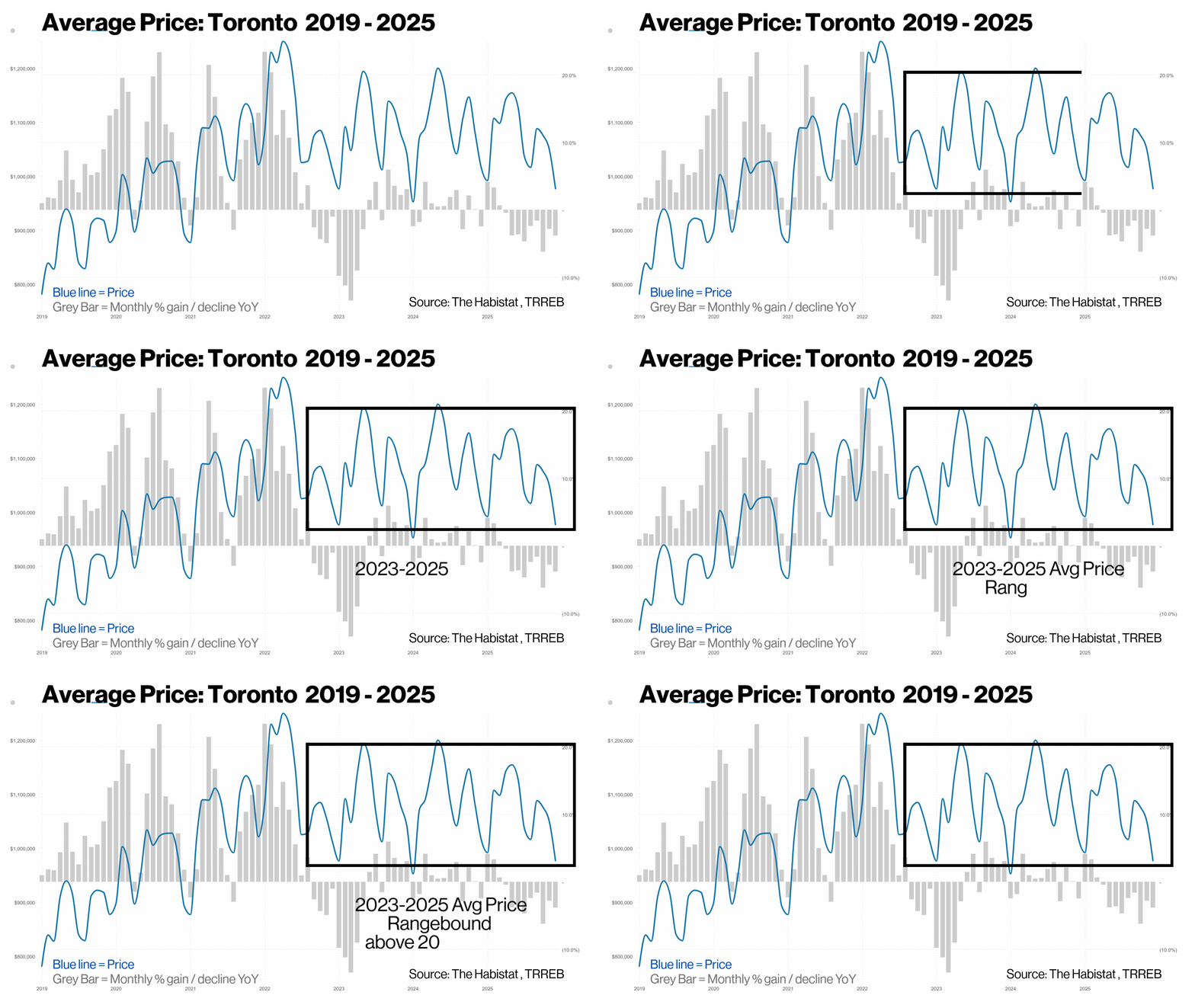
For the past 3 years since our market fragmented, Toronto has been stable and range-bound, oscillating in a seasonal pattern above the 2020 levels.
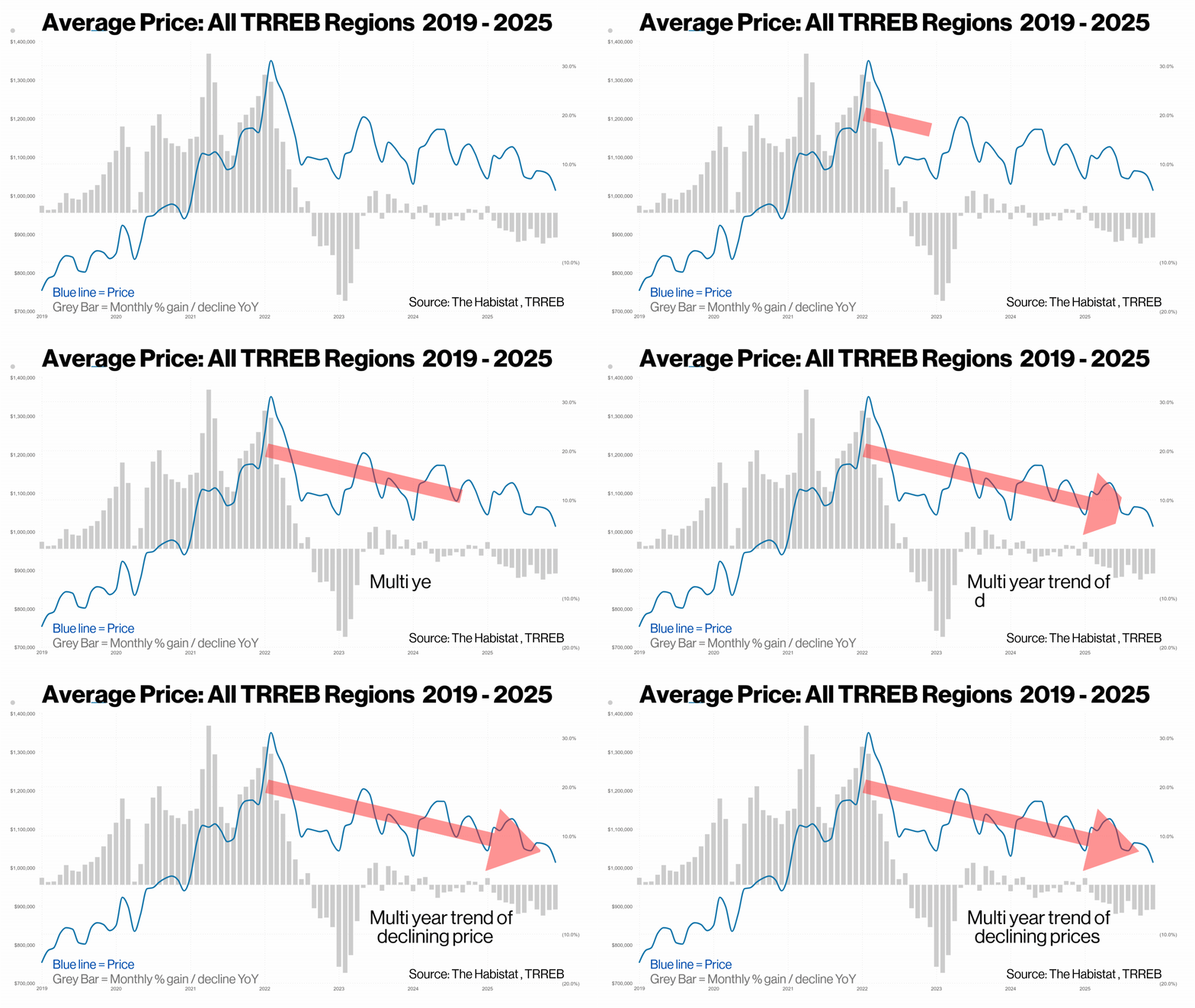
The broader TRREB area, which includes Durham, Halton, Peel, and York regions, shows a clear declining trend since the 2022 peak. One market held while the other declined, yet both get averaged together into a single "GTA average price" that obscures this divergence entirely.
Location matters most, followed by state of repair, renovation quality, and long-term usability operating as equally important factors. Properties in established, well-located areas generally held value while secondary locations weakened. Location provides a floor even for neglected properties. A rundown home in a prime area may still attract buyers willing to invest in restoration for long-term location value, albeit at discount.
Condition operates on two levels: state of repair and aesthetic appeal. Deferred maintenance on major systems like roofs, windows, and mechanical elements create severe penalties that updated finishes can't overcome. The buyers for fixer-uppers were often speculators looking for renovation projects, and that demand is gone.
Beyond condition, long-term usability is equally important. End user buyers distinguish between properties that check boxes on paper and good homes they can actually live in for decades. The number of bedrooms means nothing if the rooms are unusable, parking doesn't help if it's inaccessible, and layout matters more than square footage. The selective buyer pool drives this uneven price performance. Properties that satisfy these priorities hold value while those that don't decline. These patterns of price divergence illustrate how the market operates at the segment level through a sorting mechanism that average prices obscure entirely.
When evaluating 2026 forecasts and data, focus on what's happening in specific micro-markets, not aggregate price movements. Toronto prices could push higher while suburban weakness drags down the overall TRREB average, masking a recovery. If the divergence narrows, the wealth-based sorting is easing. If it widens, those structural forces are intensifying.
Sales Volume: Is the Buyer Pool Actually Expanding?
While average price reveals where value is holding or declining across segments, sales volume directly reflects the size of the active buyer pool. For volume to grow meaningfully, either affordability has to improve, or sentiment has to shift enough to bring willing participants off the sidelines.
Affordability improvements are most likely to come from lower prices. Lower interest rates could also bring marginalized buyers back into qualification range, but the Bank of Canada has signalled it's on hold. Wealth effects from other asset markets matter only for the asset-owning cohort.
Sentiment shifts could come from several sources. The Canadian economy showed surprising resilience with modest growth through the end of 2025, and if that continues it could rebuild confidence. Clarity on the U.S. trade situation, which caused significant sentiment shock in 2025, could also remove a major source of uncertainty. The clarity that rates won't drop further might bring fence-sitters to act once "waiting for better conditions" loses its logic. Media coverage also directly shapes buyer psychology, so changes in how the media frames the housing market could help to shift sentiment.
The critical question isn't just whether volume grows, but which segments see the growth. Growth concentrated only in premium segments signals the wealth-based sorting continues, whether from the same narrow pool getting more active or from improving conditions for the asset-owning class. Volume growth in lower-priced segments would show that affordability improvements or sentiment shifts are bringing marginalized buyers back into the market, not just activating the wealthy cohort that could already transact.
Inventory Levels: Understanding Supply?
Along with average price and sales volume, the other metric quoted constantly is inventory; the number of listings for sale. These three tell the complete story: volume shows the size of the buyer pool, inventory shows the supply of available choices, and price shows how those two forces sort themselves out in the market.
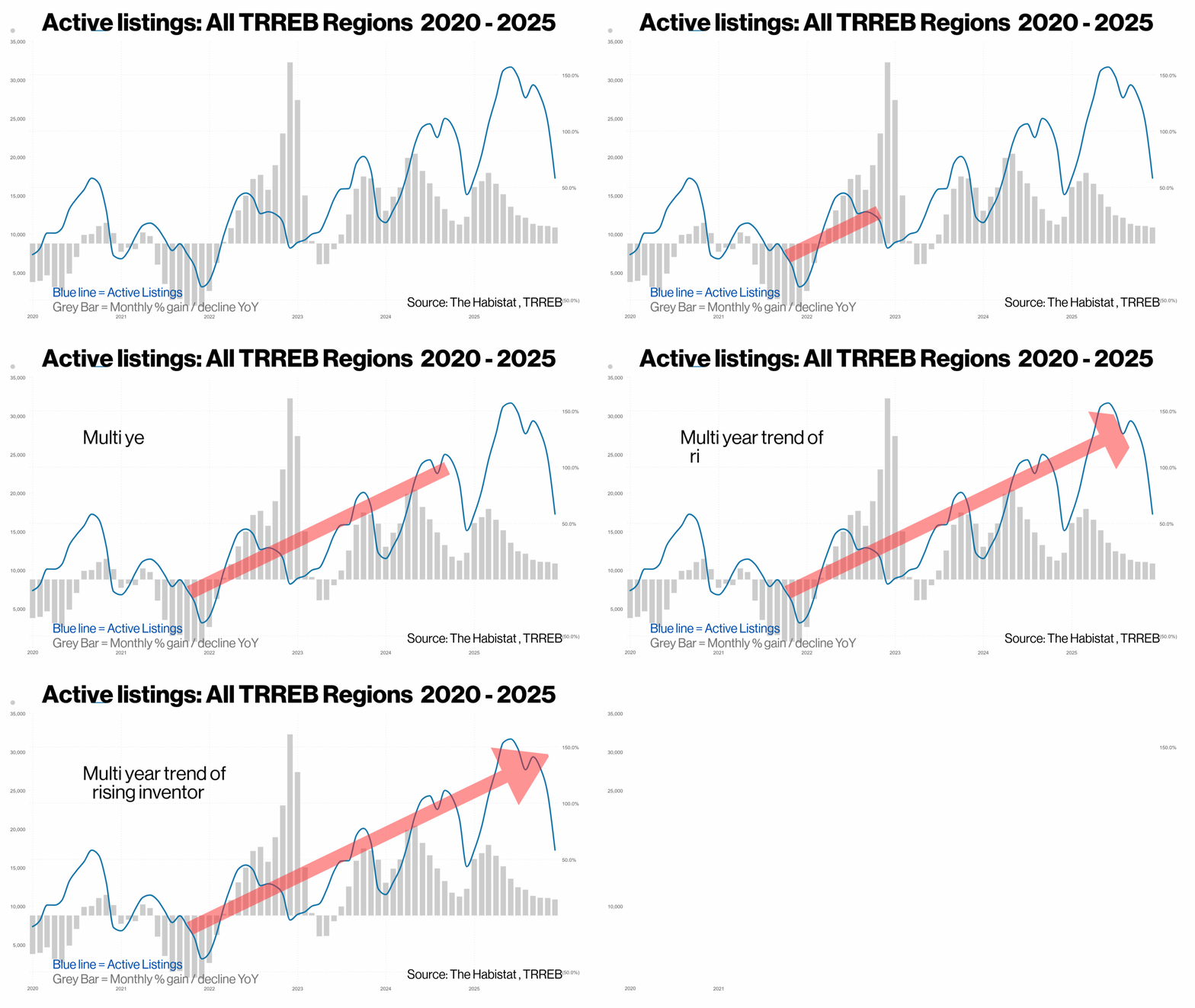
For the past four years, inventory has followed a clear pattern: higher highs and higher lows, even accounting for seasonal variation. Whether this continues, flattens, or reverses in 2026 signals important market dynamics.
Total inventory matters, but segment-level breakdown reveals more. Condos may continue building inventory while houses flatten, or new supply may concentrate in specific locations or price points. If the four-year pattern breaks with lower highs or lower lows compared to previous years, supply forces are easing. If it continues climbing, those forces persist.
A common misconception is that the surge in listings only signals distressed and urgent sellers, but the reality is more nuanced. Rising inventory reflects both expanded supply and slower absorption. More sellers are entering the market through investor exits and forced deleveraging. At the same time, absorption has slowed as properties in weaker segments sit longer without buyers.
Many listings sit on the market at aspirational prices from sellers who would like to sell but don't need to. Truly motivated sellers have to meet the market where buyers see value. Properties that languish on market at firm pricing may eventually see price cuts as sellers exhaust their patience, or they simply withdraw and wait. How this plays out depends on the broader economic landscape.
The Operating Context
All of this operates within a specific constraint: the overall health of the Canadian economy. Economists are forecasting modest economic growth in 2026, with significant uncertainty remaining. If that scenario materializes, the structural dynamics persist. If growth meaningfully exceeds or falls short of expectations, the framework still applies by adjusting which direction the pressure moves.
The market follows established seasonal patterns. Without significant fundamental shifts like dramatic rate changes or major economic developments, 2026 will likely maintain this rhythm. Don't confuse predictable seasonal movements with market shifts. A summer price dip or winter slowdown is the calendar, not a signal.
Throughout 2026, you'll see forecasts and monthly data attempting to capture market direction in a single number. Use this framework to evaluate what those statistics reveal. The GTA market operates by segment, driven by selective buyers, varied seller motivations, and wealth-based sorting. Understanding these forces matters more than tracking aggregate trends. How this applies depends on your position in the market.
What This Means For You
For Buyers: Don't expect broad market weakness to create opportunity in the segments you actually want. Discounts concentrate in compromised inventory — properties requiring work, less desirable locations, functional issues. Premium segments stay competitive regardless of headlines. Negotiating leverage comes from individual seller motivation and extended days on market, not from market narratives.
For Sellers: Sellers outside premium segments face downward pressure. Aspirational pricing gets punished with extended days on market and eventual price cuts below where proper pricing would have landed. Professional presentation, proper pricing strategy, and honest assessment of your competitive position are required to transact efficiently.
For Buy-and-Sell Movers: Transacting in two different micro-markets, which may be acting very differently, can expose you to significant transactional and financial risk. Understanding which segment you're selling in and which you're buying into determines how you structure the deals to keep yourself protected. It is crucial to work with someone who evaluates both sides of your move specifically, not someone applying a standard strategy regardless of your situation.
For Homeowners Not Planning to Move: Take care of your house. Buyers today are end-users prioritizing turnkey properties, and they view deferred maintenance as costs significantly higher than the actual repair expense. Protecting your home's value now means actively maintaining it, not passively assuming appreciation will cover neglect.