Alto and its partner Cadence — the corporations behind Canada’s first proposed high-speed rail network — announced in late March that they would be moving forward with the next phase of the project’s environmental study, including requesting access to private properties to determine the best pathway for track laying.
The $60-$90 billion project, which was first announced last February, will span roughly 1,000 km between Toronto, Peterborough, Ottawa, Montreal, Laval, Trois-Rivières, and Quebec City. Travelling at speeds of 300 km/h or more, the electric rail network will reduce the travel time between Toronto and Montreal to just three hours.
This enhanced mobility is expected to result in economic growth, increased housing construction and reduced congestion and pollution within the Toronto–Québec City corridor. Alto estimates the project will generate an annual GDP uplift of 1.1% — or $24.5 billion, boost tourism by $800 million per year, and create 50,000 jobs during construction.
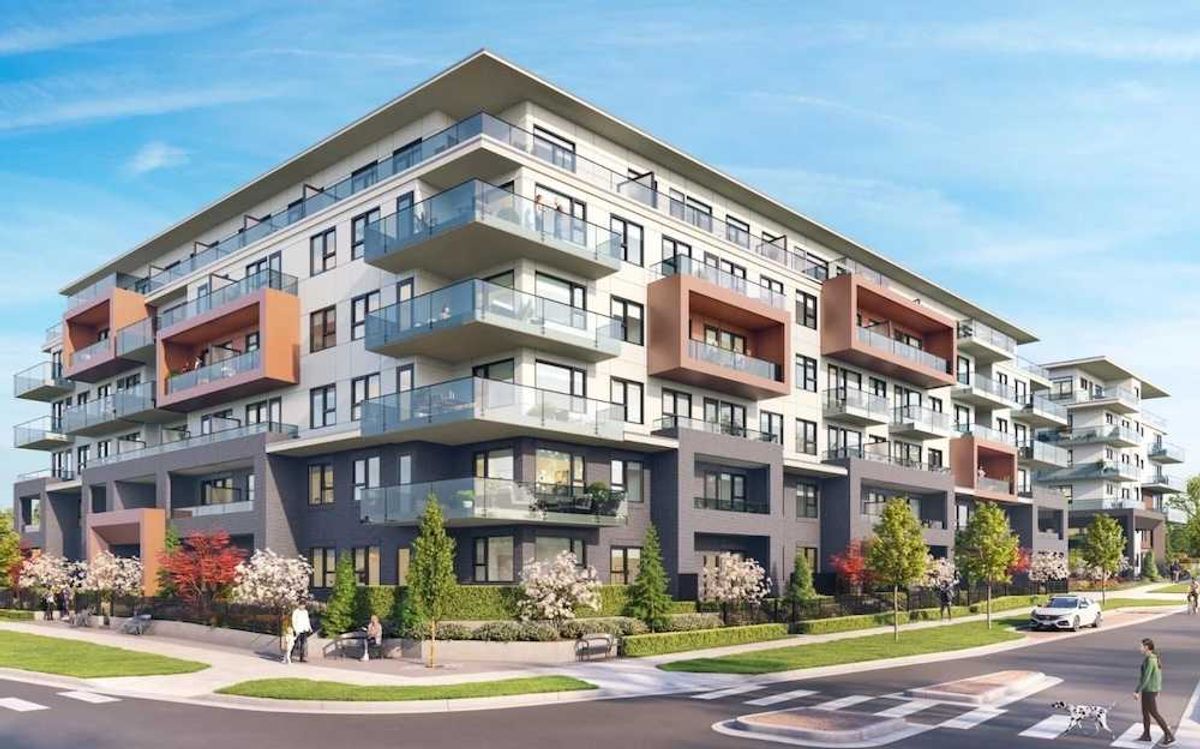
On the housing and development front, Alto says the construction of high-speed rail stations will attract real estate investment centred around transit-oriented growth, resulting in more than 60,000 new housing units, which will contribute to property taxes in the cities and towns along the rail path.
Needless to say, it’s a huge deal. Which is why the Mayor of Kingston, Bryan Paterson, is so keen for Alto to include his city on the high-speed rail route, which it currently is not. “Historically, development follows along transportation corridors,” Paterson tells STOREYS. “There's a reason why most of the communities in eastern Ontario run along Highway 401. It's ease of access.”
Not only would residents benefit from having increased access to other communities and regions for employment, business, or travel, but businesses and investors benefit as well, says Paterson. “Any time I talk with a business that's interested in locating to or investing in Kingston, access is one of the first things we discuss — how easy it will be for customers and employees to get to and from their community.”
Paterson also sees the Alto project teeing Kingston up as a more viable option for affordable living, compared to expensive cities like Toronto. “Kingston is a very attractive place to live. And if you've got a good transportation network to get you to where you need to go work-wise, I think that a lot of people will find that attractive,” he says. “I expect it will lead to transit-oriented development and, hopefully, more housing units for people.”
With all this hype around Alto’s potential impact on the cities its rail path touches, what might this actually mean for housing and development, how will markets respond, and where are the limitations to growth?
The Agglommeration Effect
When cities are better connected by something like a high-speed rail network, they will often see increased economic growth. This is known as the agglomeration effect, explains David Jones, senior fellow at the Toronto-based independent public policy think tank the C.D. Howe Institute.
“When people are effectively closer, there is evidence that they will engage in more business activity, more business collaborations,” Jones tells STOREYS. “People can transact with each other more easily, meet more easily, and it drums up economic activity.”
This effect often drives job growth, higher wages, and increased innovation and knowledge sharing. And when business thrives, there’s the potential to drive activity in commercial real estate as companies invest in more office space, retail space, or industrial complexes. But Jones cautions that the extent to which high-speed rail projects impact commercial real estate markets is also dependent on factors like local economic demand and government policy.
If there’s existing demand and policies in place to encourage commercial development, a project like Alto could intensify that demand and resulting market activity. This was the case after the UK’s high-speed West Coast Mainline was upgraded, and its Manchester Piccadilly station redeveloped between 2004 and 2008. In the following years, there was major development of high-quality mixed-use office and commercial real estate around the new station.
At the same time, Jones says agglomeration effects sometimes benefit larger centres like Toronto or Montreal over smaller cities like Peterborough. In the UK, for example, the high-speed rail line High Speed 1 connects to mainland Europe and passes through London. It also passes through a smaller town called Ashford that would be comparable to the proposed Peterborough stop on the Alto line. Studies found that once the line was up and running, economic growth skewed heavily towards London. “Rather than creating a mini bustling city out of Ashford, it actually just resulted in more people living there so they could commute to London or other, bigger cities,” says Jones.
Property Values
On the home price front, cities with stations along Alto’s network can expect to see some growth. This is for the same reason that properties located within close proximity to GO stations in the GTA often nab higher prices, which is that transit-oriented developments justify price premiums.
Jones says studies that have analyzed residential price growth around high-speed rail stations generally report a 5% to 10% jump in prices. But there’s a limit to how far price growth spreads in any given community. “Price gains are concentrated in the area around the station development. Often, when you go a bit wider, that effect drops off,” says Jones.
As for when price growth may start to emerge, it’s possible there will be speculative purchasing of properties after the rail route is solidified and before construction begins. “You might get some people who see it as a bit of a long-term investment and buy before the prices increase,” says Jones.
But more intense price growth, he says, could occur if developers are unable to meet demand upon the project’s completion. “If the station's built, but the additional housing hasn't been built yet, then you might get an increase in demand, but supply will be the same. So you’d get a bit of a price spike,” says Jones.
That being said, prices could shift in unexpected ways as mobility across the Toronto–Québec City corridor improves. While home prices might increase in currently more affordable commuter towns like Peterborough, there is the potential that more expensive locales like Toronto would see some relief as residents move farther down the tracks.
Limits to Growth
Alto’s estimate that the project will spur the construction of 60,000-plus housing units is dependent on a few factors. The ongoing housing crisis has demonstrated that desire for housing means little if the numbers don’t pencil, and regulatory frameworks hinder development.
Despite the recent commitment from the federal and provincial governments to lower development charges by up to 50%, it will be up to municipalities to decide whether or not to meet them halfway. If certain cities continue to push back on DC reductions, the high cost to build could result in less units than projected. Meaningful up-zoning in areas around stations will also be required to hit the 60,000 unit mark.
“Enabling more people to live [near stations] does depend on the potential for housing developers to build more housing, which depends on things like zoning regulations, but also associated infrastructure, parks, etcetera,” says Jones.
We are also undergoing a period of heightened economic uncertainty, marked by global conflict and trade wars. Uncertainty means less investment activity, and volatile markets that can drive up construction costs, including the price of oil, steel, concrete, and labour. These conditions, however, could dramatically shift over Alto’s projected ten-year construction period, set to culminate in the early 2040s.
As the Alto project moves forward with field studies and takes concrete next steps towards making the line a reality, it will be up to station cities, as well as higher levels of government, to make the regulatory and policy changes necessary to fully capitalize on all the line has to offer.
Whether or not these 1,000 kilometres of rail result in meaningful housing and development gains will depend on governments’ willingness to embrace density — and the resilience of the construction sector against rising costs.