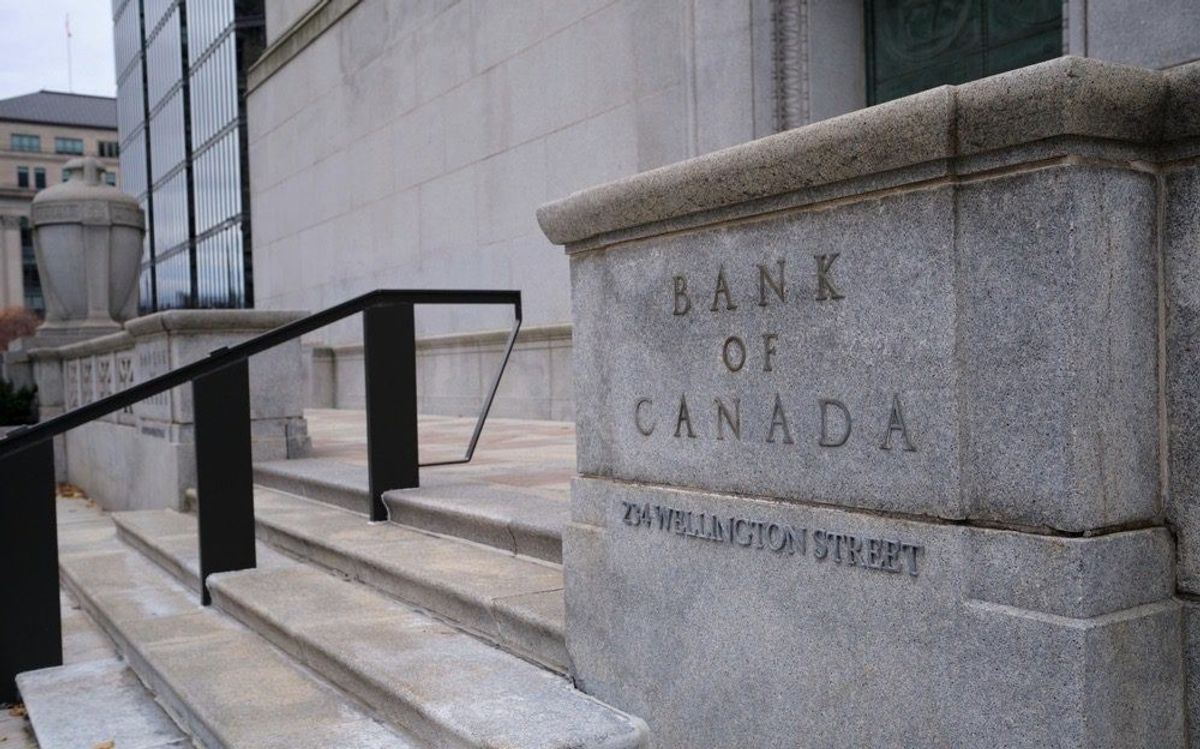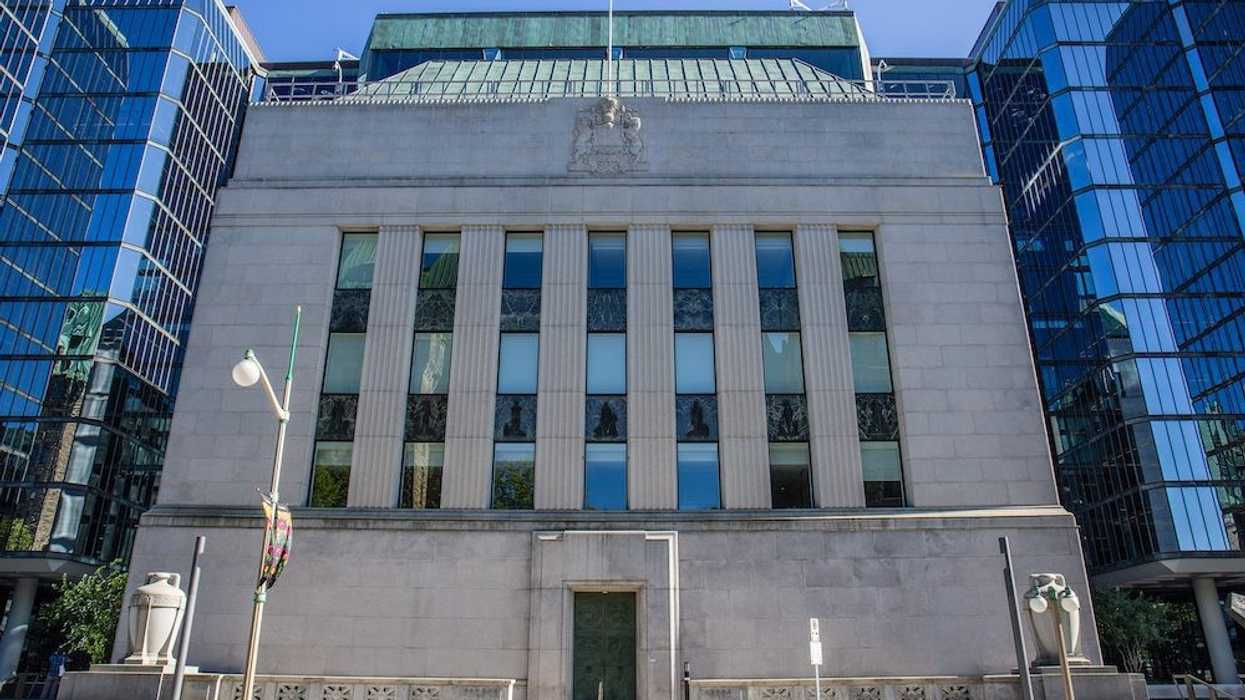
The Bank of Canada’s (BoC) decision to hold the policy interest rate steady at 2.25% last month was a welcomed one for Canadians. The only thing that would have been more welcomed would have been an interest rate cut.
But the likelihood of another cut any time soon seems slim, with many economists insisting that the central bank will stay on the sidelines through 2026.
And then there’s another camp of economists cautioning what nobody wants to hear: more hikes aren’t out of the question.
A brief timeline of major rate hikes, holds, and cuts:
- March 2022: The BoC raises the policy interest rate by a quarter-point to 0.50%. This was the first of 10 rate hikes that ultimately landed the benchmark rate at 5.00% by July 2023.
- September 2023: The BoC halts the hike cycle, maintaining the policy interest rate at 5.00%. This was the first of six consecutive holds.
- June 2024: The BoC delivers the first cut of the cycle, lowering the policy interest rate by a quarter-point to 4.75%. This kicked off a series of rate cuts that ultimately landed the benchmark rate at 2.75% by March 2025.
- October and December 2024: The BoC opts for ‘super-sized’ half-point rate cuts at both meetings, bringing the benchmark rate down to a tidy 3.00% to ring in 2025.
- April 2025: The BoC pauses the policy interest rate once again, marking what would be the first of three pauses until the September 2025 decision.
- September and October 2025: The Bank of Canada opts for quarter-point cuts at both meetings, bringing the benchmark rate down to today’s rate of 2.25%. This was followed by pauses at the December 2025 and January 2026 meetings.
A strong case for the end of easing
We rounded out January with Statistics Canada’s (StatCan) latest release on gross domestic product (GDP), which showed that the economy stagnated in November, on the heels of a 0.3% month-over-month decline in October.
And more weakness is expected to come. In a recent commentary, TD Economist Marc Ercolao called for only a “slight uptick” of around 0.1% month-over-month in December, which puts the Canadian economy on track for a “mild contraction” for the fourth quarter of 2025.
“We don't think today's data moves them off of their current policy stance, even as they acknowledge that considerable uncertainty around trade and overall economic growth is still present,” Ercolao said. “All told, we maintain our view that the BoC has reached the end of their interest rate easing cycle.”
TD Economists are in good company with this call. Also responding to the GDP numbers, RBC’s Claire Fan said that although they “remain cautiously optimistic” about improving economic conditions in Canada, they’re also mindful of slower population growth, which will undercut any economic momentum. The BoC’s own forecast calls for GDP growth of just 1.1% through 2026.
“For the Bank of Canada, this subdued growth backdrop supports keeping the policy rate on hold through 2026 as officials balance a fragile output outlook with underlying inflation trends that have still been running slightly above target rates,” Fan said.
The potential for more hikes
Although 2026 is widely expected to be an uneventful one for policy interest rate activity, economists with Capital Economics are erring hawkish. And in fact, the North American specialist of the global firm Bradley Saunders wrote in a recent publication that rate hikes could end up being “warranted” this year.
Saunders pointed to the central bank’s latest quarterly consumer and business surveys, which indicate that the Canadian economy is adjusting to tariffs. This, in combination with strong inflationary forces like high food prices, could drive inflation up.
Already, food inflation is pulling plenty of weight in the overall Consumer Price Index (CPI). The metric came in at 2.4% year over year in December, but CPI excluding food is just 1.6%. And according to Capital Economics, the recently announced increase of the GST rebate will bolster food inflation further.
“The Bank’s current positioning — at the bottom-end of the 100bp neutral range estimate — also gives it scope to fine tune policy without necessarily changing the overall policy stance, should it see fit,” Saunders added. “Nudging the policy rate back towards the midpoint of this range could help send a signal that the Bank is wary of upside risks, under the guise of ‘policy normalization.’”
That all said, Capital Economics is not expressly calling for a rate hike this year, as much as they are cautioning that one is on the horizon — be that sooner or later.
“We do believe the policy rate’s next move will be up. However, we do not expect this to come until 2027,” said Saunders. “If the Bank ends up moving much sooner, we still see further easing as the more likely outcome.”
The next interest rate decision is scheduled for Wednesday, March 18. The full schedule for 2026 can be found here.