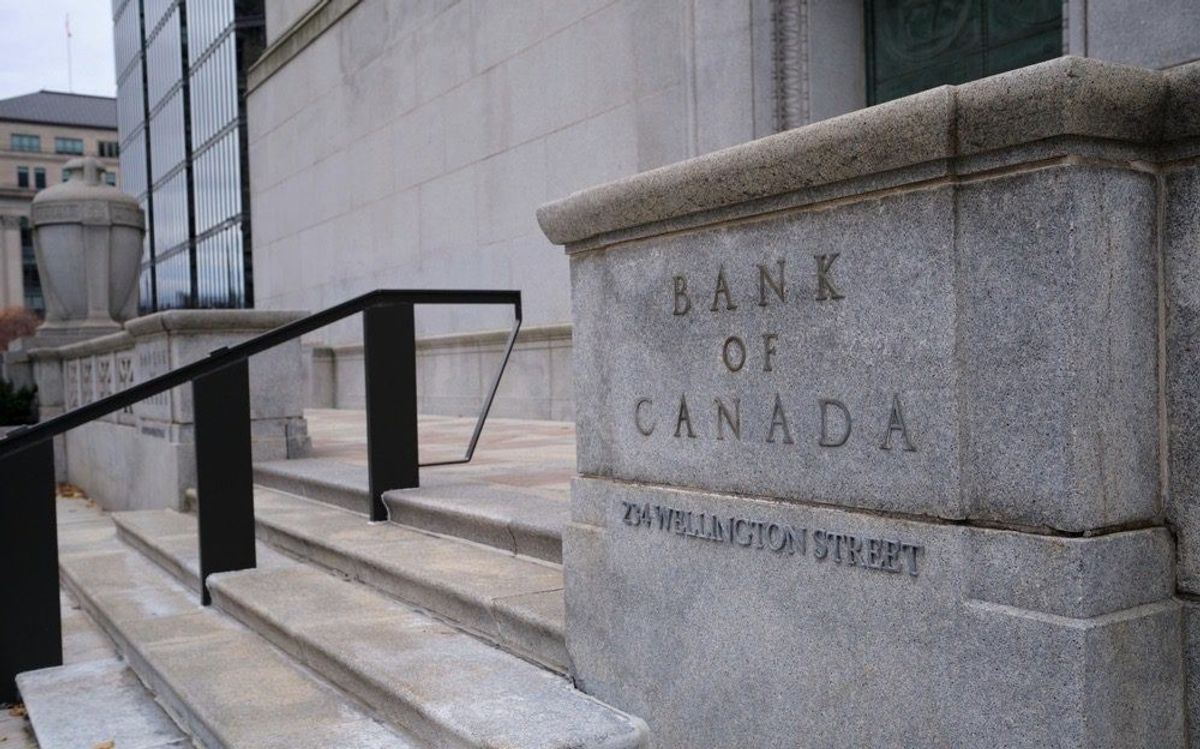
After a month hiatus, another Bank of Canada (BoC) interest rate announcement is scheduled for tomorrow morning — Wednesday, March 18. We’re going into this decision with a policy rate of 2.25% after two consecutive holds at the December and January 2025 announcements.
“Governing Council judges the current policy rate remains appropriate, conditional on the economy evolving broadly in line with the outlook we published today,” the BoC said in a statement in January. “However, uncertainty is heightened and we are monitoring risks closely. If the outlook changes, we are prepared to respond.”
That’s all to say that there wasn’t a ton of certainty about future rate announcements in January — a lot can and has happened in the two months that have elapsed since. That said, economists by and large believe there would have to be extenuating circumstances to justify another rate cut any time soon.
The most recent Consumer Price Index print from Statistics Canada only reinforces that view. Here’s what the major economists are thinking ahead of tomorrow’s announcement.
TD: Oil shock adds uncertainty, but data at home is soft
Economists at TD Economics are flagging rising global uncertainty — but domestic data remains soft. In its latest Weekly Bottom Line, TD points to escalating conflict in the Middle East as a key wildcard, with disruptions at the Strait of Hormuz sending oil prices sharply higher and making the near-term outlook “highly uncertain.”
While that’s typically a boost for Canada’s energy sector, TD notes the flip side is already felt at the consumer level, with gasoline prices rising quickly. At home, the data isn’t giving the BoC much reason to act. TD highlights a soft run of recent indicators, including flatlining home sales in February and a dip in fourth-quarter productivity.
Taken together, it’s a balancing act: external pressures could push inflation higher, but the domestic economy continues to show signs of fatigue.
RBC: Inflation cooling won’t be enough to prompt a move
RBC economists also expect the BoC to stay put — and don’t see the latest inflation data changing that. In its latest weekly preview, RBC says the February inflation print is “unlikely to sway” the central bank from holding its benchmark rate at 2.25%.
That’s because inflation is hovering around the Bank’s 2% target, giving policymakers room to remain on the sidelines — at least for now. RBC points to stabilizing (but not particularly strong) economic conditions in Canada and the U.S. as a bigger factor in the decision.
It’s a wait-and-see moment: inflation isn’t the primary concern, but the economy isn’t showing enough strength to justify a shift in policy either.
Scotiabank: Weak inflation now, but an oil-driven rebound is coming
Economists at Scotiabank say the latest inflation data may already be outdated and shouldn’t give the BoC too much comfort. In its Scotia Flash, the bank notes that February’s CPI came in softer than expected, with headline inflation at 1.8% and underlying price pressures easing.
But that softness may not last. Scotiabank warns inflation is likely to “surge” in the coming months, driven largely by higher oil prices and the knock-on effects that follow. That puts the BoC in a tricky spot. While current data suggests inflation is under control, policymakers will need to assess whether the recent oil shock proves temporary or starts feeding more persistently into core inflation.
For now, Scotiabank expects this uncertainty will keep the central bank on hold as it waits for clearer evidence on how pressures evolve.
CIBC: Soft growth keeps the BoC firmly on the sidelines
CIBC economists are also in the “no move” camp, emphasizing a lack of economic momentum. While inflation has largely settled near target, recent data points to a slowdown toward the end of 2025 and early 2026.
That softer backdrop, combined with ongoing uncertainty around global trade and tariffs, suggests the BoC has little incentive to act. Markets have started pricing in a higher risk of future rate hikes rather than cuts — but that doesn’t mean a move is imminent. Instead, the Bank is likely to stay on hold while assessing whether the slowdown deepens or stabilizes.
It’s a familiar holding pattern: inflation isn’t forcing the BoC’s hand, and growth isn’t strong enough to justify tightening.
BMO: A prolonged pause as growth stays sluggish
BMO is also expecting no change and suggests the BoC could be in for a longer hold than many initially thought. In its latest commentary, BMO points to a Canadian economy that continues to grow modestly, with activity struggling around the turn of the year and broader momentum still lacking.
That softer backdrop is a key reason why the Bank is unlikely to move, particularly as inflation has settled close to target and no longer requires aggressive action.
Uncertainty tied to global trade and tariffs continues to hang over the outlook, making it harder for policymakers to justify any near-term shift in rates. All of that points to a BoC firmly in wait-and-see mode — not just for this meeting, but potentially for some time.