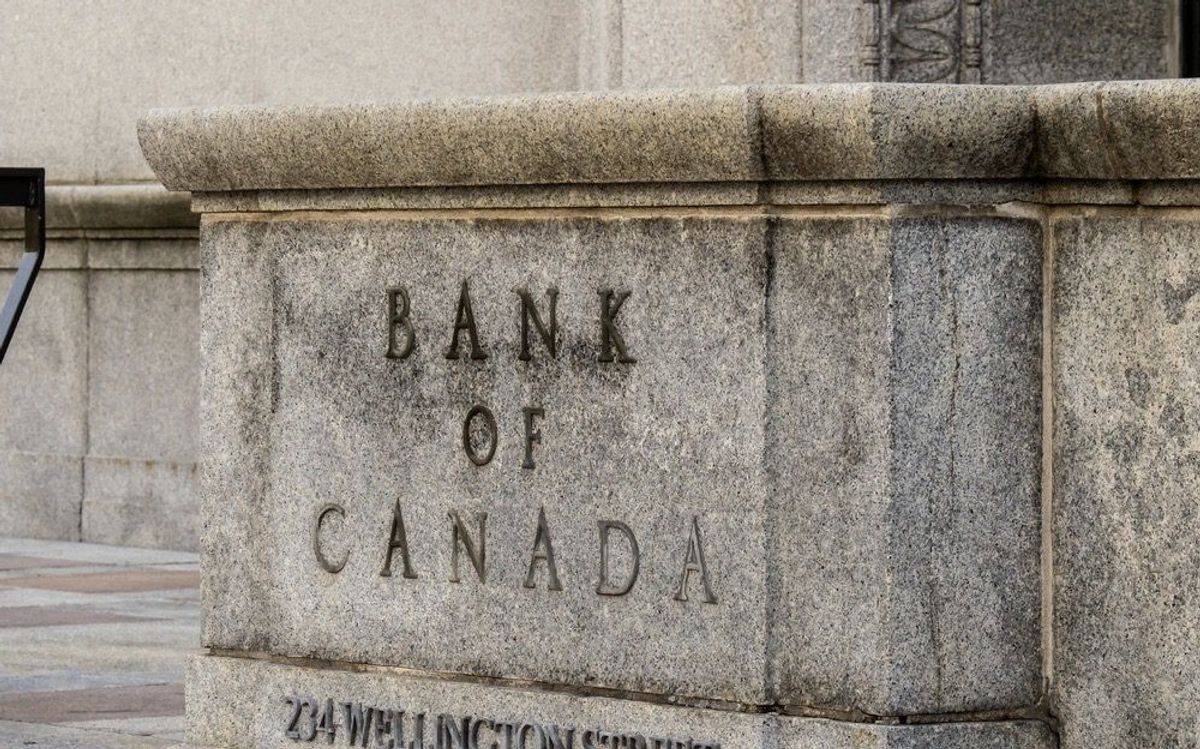
On Wednesday, the Bank of Canada held its policy rate at 2.25%, following a series of cuts in 2025 that brought the benchmark overnight rate to its current level.
Leading up to the announcement, many major Canadian banks — including RBC, TD, and CIBC — came into 2026 expecting the Bank to maintain a steady policy stance.
Alongside the announcement came the Bank's Monetary Policy Report, in which the Bank said the economic outlook is largely unchanged since fall — but remains vulnerable to unpredictable US trade policies and geopolitical risks.
The report notes the US economy is outperforming expectations, driven by AI investment and steady consumer spending, though tariffs are keeping inflation elevated. Europe is growing on strong service-sector activity and fiscal support, while China’s GDP is slowing as weaker domestic demand offsets export gains.
Overall, global growth is projected to average about 3%.
At home, growth is modest — slowed by US trade restrictions and broader uncertainty. After a strong Q3, GDP likely stalled in Q4.
The report explains exports are constrained, domestic demand is picking up, and employment is rising, though the unemployment rate remains 6.8% with few businesses planning new hires. The Bank projects 1.1% growth in 2026 and 1.5% in 2027, with trade uncertainty around the Canada-US-Mexico agreement still a risk.
Inflation ticked up to 2.4% in December due to last year’s GST/HST holiday, but core measures are easing — down from 3% in October to about 2½%. Overall, 2025 inflation averaged 2.1%, and the Bank expects it to stay near 2% as trade pressures are offset by excess supply.
Monetary policy remains focused on keeping inflation on target while supporting the economy through adjustment. The current policy rate is considered appropriate, but the Bank says risks are being monitored closely, with action poised to maintain price stability.
The next interest rate decision is scheduled for Wednesday, March 18. A full 2026 schedule can be found here.
- Bank Of Canada Holds Interest Rate For First Time In A Year ›
- Where Every Big Bank Stands On Wednesday's Interest Rate Announcement ›
- Majority Of Big Banks Forecasting More Interest Rate Cuts This Year ›
- Where Every Big Bank Stands On July's Interest Rate Announcement ›
- Third Straight Hold: Bank Of Canada Keeps Interest Rate At 2.75% ›